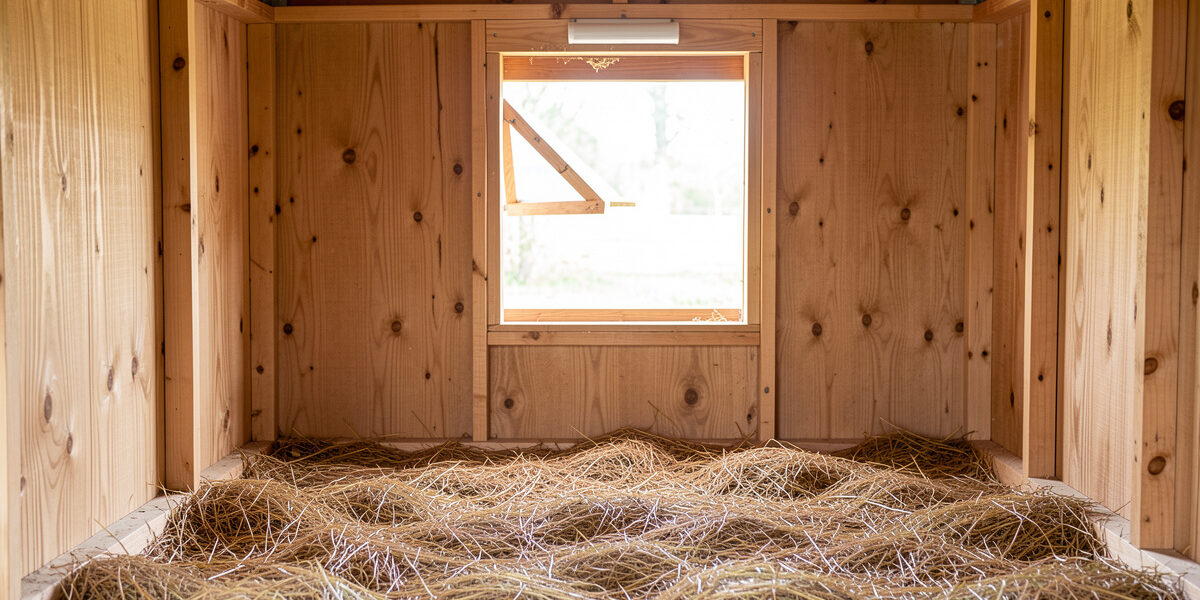
A chicken coop should smell faintly of earth and warm birds — never of ammonia. That sharp, eye-watering note isn’t a cosmetic problem you mask with a spray; it’s a diagnostic reading telling you the litter has gone wrong, and the birds have been breathing irritant gas at roost height for days before your nose caught it. Poultry guidance puts the safe ceiling at roughly 25 ppm, and most people can’t smell ammonia until it’s already near that level (poultry extension resources), so the flock is irritated long before you are. Odor control isn’t about air freshener. It’s about fixing the moisture-and-carbon imbalance that’s producing the smell. Here’s how to read it and kill it at the source.
On my flock in Sweden, the coop almost never smells, and it’s not because I scrub it daily — it’s because the litter stays dry, carbon-balanced, and aerated, and the air moves. When a coop does start to smell, treating the symptom (sprays, deodorizers, more frequent token cleaning) accomplishes nothing because the chemistry that’s making the smell is still running. This guide treats odor the way it should be treated: as the most useful early-warning signal your coop maintenance system gives you.
What Ammonia Smell Actually Means
The smell is chemistry. Chicken droppings are loaded with nitrogen, and when that nitrogen breaks down without enough oxygen and carbon to balance it, bacteria convert it to ammonia gas. So ammonia is the signature of two failures at once: the decomposition has gone anaerobic (not enough air), and the carbon-to-nitrogen balance has tipped too far toward nitrogen (not enough bedding). A coop can look perfectly tidy and still reek, because the problem is in the wet layer underneath, not on the surface.
This matters because birds are far more sensitive to ammonia than we are. By the time a human nose clearly registers it at standing height, the concentration down at roost and floor level — where the flock lives — has been irritating their eyes and respiratory tracts for a while. Ammonia damages the respiratory lining and opens the door to infection, which is why chronic coop odor and chronic respiratory problems travel together. Killing the smell isn’t about pleasantness; it’s flock health.
The Diagnostic Ladder: Find the Source
When a coop smells, work down a short ladder of causes rather than reaching for a deodorizer. First and most common: too much nitrogen, not enough carbon. The litter is overloaded with droppings relative to bedding — the fix is a thick layer of fresh carbon (pine shavings) and turning what’s there. Second: the litter is too wet. Damp litter can’t compost aerobically and goes straight to ammonia and sour rot. Find the water source — almost always a leaking or splashing waterer, condensation from poor ventilation, or ground moisture wicking up — and fix it before you do anything else.
Third: the poop board hasn’t been scraped. Since the flock drops most of its overnight manure in that one concentrated spot, a neglected poop board is a dense ammonia source all by itself; the daily 60-second scrape is the single biggest odor-prevention habit there is. Fourth: a dead-air pocket — a corner or under-roost zone where moisture collects and never dries because air doesn’t move through it. Each of these has a specific fix, and none of them is a spray.
The Real Fix: Carbon, Oxygen, Dry, Airflow
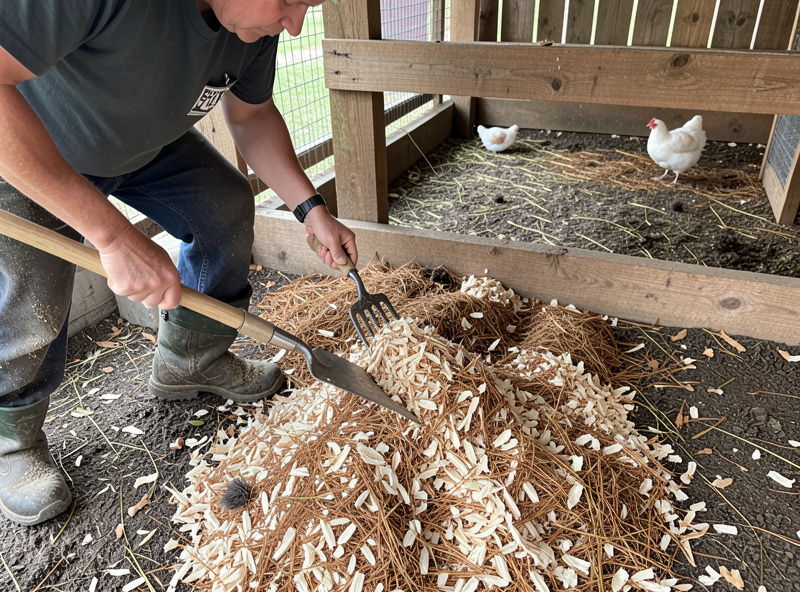
Every genuine odor fix is one of four moves, and usually a combination. Add carbon: fresh bedding absorbs moisture and rebalances the C:N ratio, giving the nitrogen something to compost against instead of off-gassing. Add oxygen: turn the litter so decomposition goes aerobic; the difference between an earthy smell and an ammonia smell is largely whether air is reaching the breakdown. Remove moisture: fix the leak, the spilled waterer, the condensation, the wet corner — standing moisture is the root of most coop odor. Improve airflow: get the humid, gas-laden air out of the building.
That last one is structural and it’s where cold-climate keepers go wrong. The winter instinct is to seal the coop tight against the cold, which traps every bit of moisture the birds and litter produce — and a sealed, humid coop is both a smell factory and a frostbite risk, because moisture, not cold, is what frostbites a comb. I aim to keep coop relative humidity under about 70% even at −20 °C, and once it climbs the ammonia smell follows within a day or two. Proper ventilation pulls the bad air out without drafting the roosting birds; if your coop smells in winter, airflow is the first thing to check. My coop ventilation guide covers sizing the vents to dump moisture, and a healthy deep litter floor is itself an odor-suppression system when it’s managed right.
Ammonia Binders: A Supplement, Not a Cure
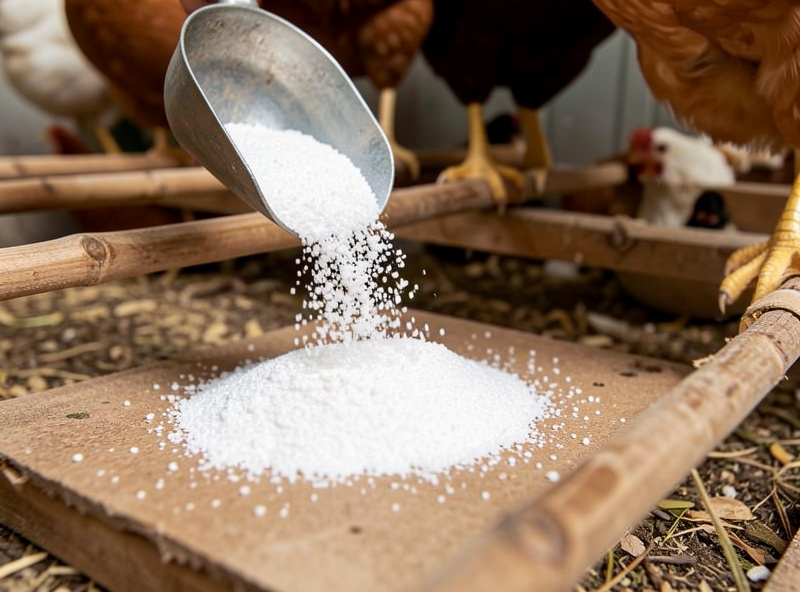
There’s a legitimate tool that helps: zeolite, sold for coops as PDZ (a granular mineral), chemically binds ammonia and traps it. Sprinkled on the poop board and under the roost, it buys you time between scrapings and noticeably knocks back the smell. I use it on the poop board through the worst of winter when everything’s a bit damper and slower to dry.
But understand what it is: a supplement that manages the symptom while you fix the cause, not a substitute for the cause. If you’re relying on zeolite to keep a chronically wet, carbon-starved, poorly ventilated coop smelling acceptable, you’ve just masked a flock-health problem. Use it as the finishing touch on a coop that’s already dry and balanced, where it polishes the last of the odor — not as the thing holding back a tide. The same goes for the various “coop refresher” powders: helpful on a healthy coop, useless as a fix for a broken one.
What Not to Do
Skip the air fresheners, scented sprays, and candles entirely — at best they mask the warning signal you actually want to hear, and at worst the fragrances and aerosols are themselves respiratory irritants in an enclosed space full of birds. The goal is not a coop that smells like lavender; it’s a coop that smells like nothing much, because the underlying chemistry is healthy.
Also resist the urge to “fix” odor by stripping and bleaching the coop every week. A healthy deep-litter coop runs on beneficial microbes that actively suppress the smell-causing anaerobic bacteria; nuke them weekly and you remove your own allies and accomplish nothing the dry bedding wasn’t already doing. Over-cleaning is a symptom of an unsolved moisture problem, not a solution — the answer is the right cadence, which is laid out in my coop cleaning schedule.
When Odor Means Something Else
Two odor patterns point beyond litter management. A persistent fly problem alongside the smell almost always means a wet, anaerobic pocket — the same fix (dig it out, dry it, add carbon, improve airflow) handles both, which is why I treat flies and odor together with coop pest control. And a sour, rotten, or unusual smell that doesn’t respond to carbon and drying — especially with a bird looking unwell — is worth taking seriously as a possible health issue rather than a husbandry one. Flock health questions belong with an avian vet, not a deodorizer.
Most of the time, though, coop odor is simple and self-inflicted, and it’s genuinely good news: it’s the cheapest, earliest signal you’ll get that the moisture balance has slipped, days before it would show up as a sick bird. Treat the smell as information, fix the cause, and a no-spray, no-mask, genuinely fresh coop is completely achievable even in a sealed-up northern winter.
Frequently Asked Questions
Why does my chicken coop smell so bad?
A bad ammonia smell means droppings are breaking down anaerobically, without enough oxygen and carbon to balance the nitrogen. The usual causes are too few bedding shavings relative to droppings, wet litter from a leaking waterer or condensation, an unscraped poop board, or a dead-air corner. The fix is correcting those, not spraying air freshener.
How do I get rid of ammonia smell in a chicken coop?
Add fresh carbon bedding to rebalance the litter, turn it to reintroduce oxygen, eliminate the moisture source, and improve ventilation so humid gas-laden air leaves the coop. Scrape the poop board daily. Zeolite or PDZ on the poop board helps bind ammonia as a supplement, but only on a coop that is already dry and balanced.
Is chicken coop ammonia dangerous to the birds?
Yes. Birds are far more sensitive to ammonia than people, and by the time a human nose registers it at standing height, the concentration at roost and floor level has been irritating the flock’s eyes and respiratory tracts. Ammonia damages the respiratory lining and increases infection risk, which is why coop odor and respiratory problems go together.
Does deep litter make a coop smell?
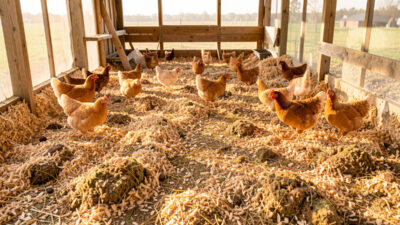
A properly managed deep litter floor smells earthy, not bad, because the beneficial microbes suppress the smell-causing anaerobic bacteria. Odor from deep litter means it has gone too wet or too nitrogen-heavy. Add carbon bedding, turn it for oxygen, and check that ventilation is carrying moisture out of the coop.
Can I use air freshener or candles in a chicken coop?
No. Scented sprays, fresheners, and candles only mask the warning signal you want to hear, and the fragrances and aerosols can themselves irritate birds’ respiratory systems in an enclosed space. A healthy coop smells like very little because its chemistry is balanced. Fix the moisture and carbon balance instead of masking the smell.
Keep Reading
- Coop Cleaning, Bedding & Maintenance: The Complete System
- The Deep Litter Method: A Complete Guide
- The Chicken Coop Cleaning Schedule
- Coop Ventilation Guide
- Coop Mite and Pest Control
Related Guides

How to Compost Chicken Manure for the Garden
Fresh chicken manure is the richest free fertilizer you’ll ever produce — its nitrogen runs roughly 1.1–1.5%, hotter than cow…
The Chicken Coop Cleaning Schedule That Actually Works
A chicken coop cleaning schedule should take about five minutes a day, fifteen minutes a week, under an hour a…
The Deep Litter Method: A Complete Guide for Chicken Coops
The deep litter method is a system where you let the bedding and droppings compost in place on the coop…