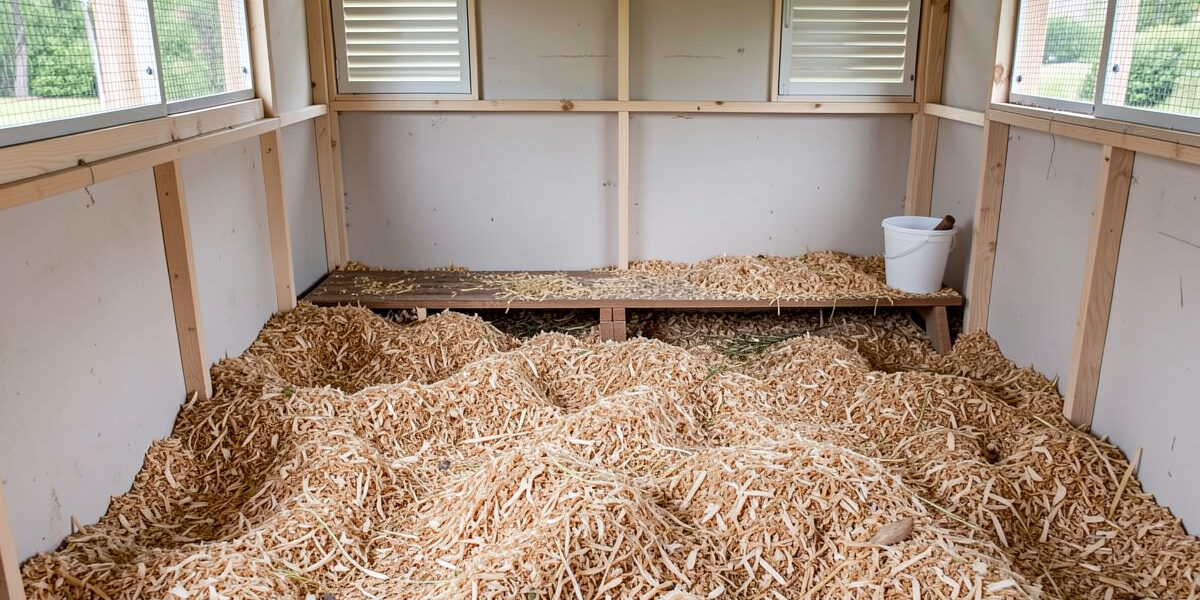
Controlling coop ammonia and humidity is mostly about keeping the litter dry and the air moving: ammonia forms when wet droppings break down, and high humidity is what lets it linger. If you can smell ammonia at chicken height, the air is already past the roughly 20-25 ppm level a human nose detects — and it has been irritating your birds’ airways below that.
These two problems are really one problem with two faces: moisture. The same wet litter that drives humidity up also feeds the bacteria that release ammonia, and the same poor airflow that traps moisture traps the gas. In the coop I run, I treat them together — dry deep litter as the first line, strong passive ventilation as the second, and a hygrometer on the wall so I am working from numbers, not a hunch. Here is the system.
Why ammonia matters more than the smell suggests
Ammonia is the sneakiest threat in a coop because it harms birds below the level you notice. Chickens breathe close to the litter where the gas is most concentrated, and their respiratory system — a network of air sacs running through the body — is unusually delicate. Chronic low-level exposure inflames the airway lining, suppresses the natural defences in the trachea, and leaves birds far more vulnerable to respiratory infection, which I cover from the husbandry side in chicken respiratory illness. By the time that sharp, eye-watering stable smell hits you when you open the door, the concentration down at bird level has likely been elevated for a while. That is why I never use my nose as the alarm — I use ventilation and dry litter to keep it from forming, and a sensor to confirm conditions, rather than waiting for a smell that arrives too late.
Keep the litter dry: the deep-litter method
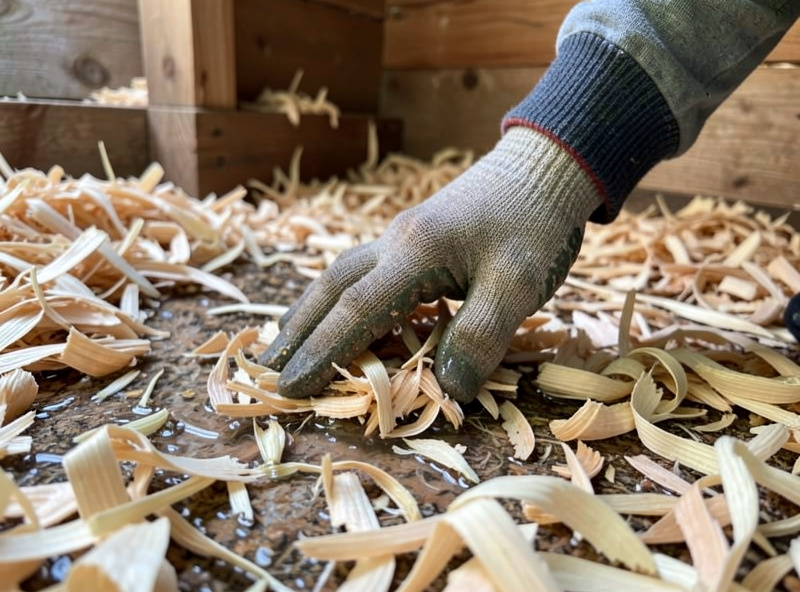
Dry litter is the foundation, because ammonia and humidity both start with moisture in the bedding. The deep-litter method works with this rather than against it: you start with a deep layer of carbon-rich bedding like pine shavings or chopped straw, turn it regularly so droppings mix in and break down aerobically, and top it up as it composts in place. Managed well, the litter stays dry, odour stays low, and the slow composting even generates a little warmth in winter. The keys are starting deep, keeping the carbon-to-manure balance right by adding fresh bedding, and never letting a wet spot sit — spilled water under a drinker will sour a patch fast. Poop boards under the roost catch the heavy overnight load so the bulk of the droppings never hits the floor at all. My full bedding breakdown, including which materials hold up, is in the coop bedding guide.
Ventilation carries the rest away
Even perfect litter produces some moisture and gas, and that is what ventilation removes. Warm, humid, ammonia-laden air is buoyant, so high vents at the ridge or upper gable let it rise and leave on its own, pulling fresh air in through low intakes. This is the same passive system that prevents winter frostbite, working a second job. The mistake to avoid is sealing the coop in cold weather to keep it warm — that traps exactly the moisture and ammonia you are trying to clear. Keep the high venting open year-round and only block low openings that draft the roost; the distinction between the two is important enough that I gave it its own article, ventilation versus draft. The sizing math — roughly a square foot of vent per ten square feet of floor — lives in the coop ventilation guide.
Measure it: humidity targets and a hygrometer
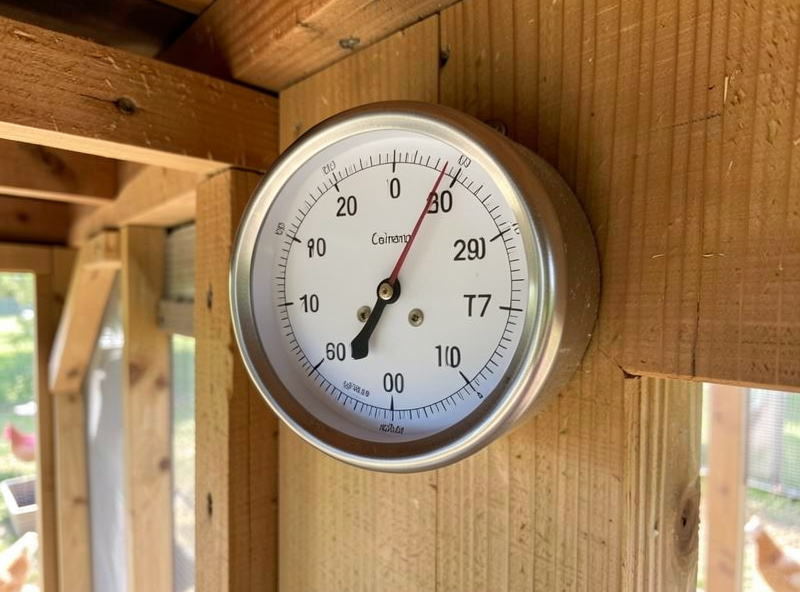
You cannot manage what you do not measure, and humidity is easy to measure. As an Amazon Associate I earn from qualifying purchases. A cheap coop hygrometer and thermometer on the wall turns “it feels damp in here” into a number you can act on. The target I aim for is coop humidity tracking within about 10 points of the outside air and comfortably in the 50-70% range; when the indoor reading climbs 20 or 30 points above outside, the coop is not clearing moisture fast enough and ammonia is sure to follow. In my setup the sensor also feeds Home Assistant, so a humidity spike pings me before the litter goes sour — the same monitoring approach I use for temperature, detailed in coop temperature alerts. A reading is worth a dozen guesses.
Common causes and quick fixes
When ammonia or damp creeps up, the cause is almost always one of a short list. Here is what I check, in order.
| Cause | Sign | Fix |
|---|---|---|
| Wet litter | Damp, matted, smelly bedding | Remove wet spots, add dry bedding, turn it |
| Leaking or spilled waterer | Soaked patch near the drinker | Switch to horizontal-nipple waterer; raise it |
| Too little ventilation | Condensation, humidity 20+ points over outside | Add high vents; clear blocked ones |
| Overcrowding | More birds than floor and vent area allow | Reduce density or expand coop and venting |
| Manure build-up | Thick droppings under the roost | Add poop boards; scrape daily |
| Poor drainage | Damp ground, run flooding | Improve grading and run drainage |
The waterer is the hidden culprit
If one thing quietly wrecks a coop’s humidity, it is an open waterer. Birds tip them, splash from them, and an open font evaporates constantly into the coop air, soaking the litter directly beneath it. Switching to a horizontal-nipple or cup waterer all but eliminates the spilled-water problem, keeps the bedding dry, and as a bonus keeps the water cleaner. In winter I run a thermostatically heated version so it does not freeze solid, but the principle holds year-round: a closed water system is one of the biggest single upgrades you can make for litter dryness. Keep the waterer outside the coop or in the run where practical, and the floor stays drier still. It is the least glamorous fix on this page and one of the most effective — chase it before you blame the ventilation.
Why winter is when ammonia spikes
Counterintuitively, the coop gasses up worst in the cold, not the heat — and it is almost always self-inflicted. The instinct to seal the box against a −15 °C night is exactly what traps the moisture and ammonia indoors, and a flock drinking from a heated waterer and respiring in a closed coop can push overnight humidity 20 or 30 points in a few hours. On my flock the worst readings of the year land on still, sub-zero mornings, usually after someone was tempted to shut a vent against the wind. The fix is the one that feels wrong: keep the high venting fully open through the cold. A dry −15 °C coop is far healthier than a damp 0 °C one, because moisture, not cold, is what frostbites a comb and what concentrates ammonia down at roost level where the birds breathe.
The routine that holds it in check is dull and it works: I turn the deep litter weekly through winter, scrape the poop boards every morning so the heavy overnight load never sits and sours, and let the wall hygrometer — not how the air feels to me in a coat — decide when something needs attention. If a reading climbs and stays 20-plus points over outside, I am adding dry bedding or opening venting that same day, not waiting for a smell. Cooperative Extension poultry housing resources land on the same trade-off: in cold weather, ventilation to strip out moisture outranks holding heat, and a slightly colder dry coop beats a warm wet one every time.
Frequently Asked Questions
How do I get rid of ammonia smell in a chicken coop?
Tackle the moisture: remove wet litter, fix or replace any leaking waterer, add dry carbon-rich bedding, and increase high ventilation so the gas can escape. If you can smell ammonia, levels are already irritating your birds, so act on airflow and litter rather than masking the odour.
What humidity should a chicken coop be?
Aim to keep coop humidity within about 10 points of the outside air and comfortably in the 50 to 70 percent range. If the indoor reading climbs 20 to 30 points above outside, the coop is not clearing moisture fast enough and ammonia will follow.
Is ammonia in a coop dangerous to chickens?
Yes. Ammonia harms birds below the level humans can smell. It inflames their delicate airways, weakens natural respiratory defences, and increases vulnerability to infection. Chickens breathe close to the litter where it concentrates, so good ventilation and dry litter are essential.
Does the deep-litter method reduce ammonia?
Managed well, yes. Starting with deep carbon-rich bedding, turning it so droppings break down aerobically, and topping it up keeps litter dry and odour low while it composts in place. The key is keeping it dry; a wet deep-litter floor produces more ammonia, not less.
Why is my coop always damp?
The usual causes are a spilling or open waterer soaking the litter, too little high ventilation, overcrowding, or manure building up under the roost. Check the waterer first, then airflow and stocking density. A wall hygrometer helps you confirm whether humidity is actually high.
Related Articles
Related Guides
Best Fan for a Chicken Coop in Summer
The best fan for a chicken coop in summer is a thermostat-controlled exhaust fan sized to roughly 5 to 8…
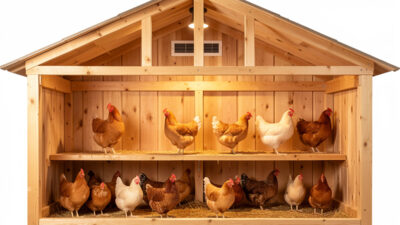
Chicken Coop Ventilation vs Draft: The Difference That Saves Combs
The difference between ventilation and a draft is direction: ventilation is air moving above your birds, a draft is air…
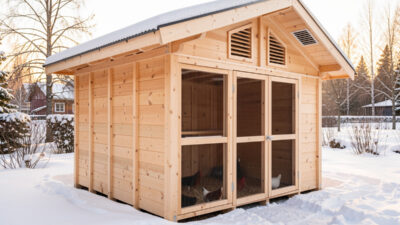
Coop Ventilation Guide: Climate Control for a Healthy Flock
Coop ventilation is the single system I design first, because it is the one that quietly kills birds when you…