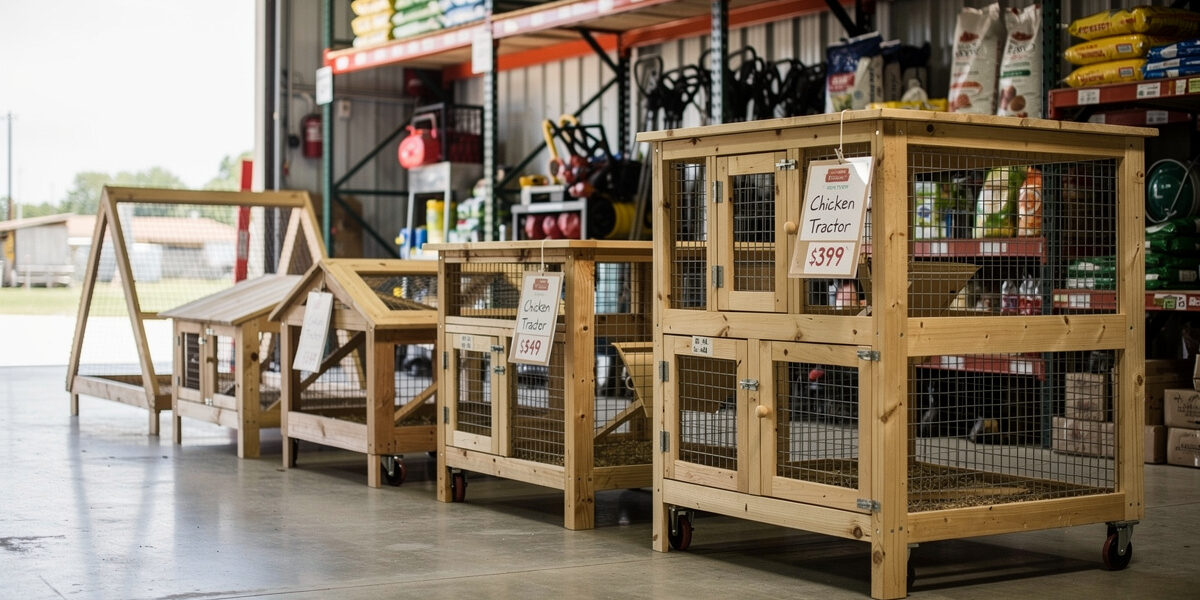
Chicken tractors for sale fall into five buying channels — big-box farm stores like Tractor Supply, online marketplaces like Amazon and Wayfair, custom Amish or Mennonite builders, local craigslist or Facebook Marketplace builders, and direct-from-manufacturer specialty brands. Each channel has predictable price tiers, quality patterns, and buyer traps. Knowing which channel to use for your situation heads off most of the regret buyers report after the fact.
This guide covers where to actually buy a chicken tractor in 2026, what each channel charges and delivers, the seven specific quality markers to verify before paying, common scams and how to spot them, and the seasonal timing that meaningfully undercuts retail. For tractor designs and rotation math, see our chicken tractor design guide.
Where to Buy a Chicken Tractor in 2026
The five buying channels each fit a specific buyer scenario. Picking the wrong channel for your situation is the most common cause of $300+ purchase regret.
| Channel | Typical Price Range | Quality Pattern | Best For |
|---|---|---|---|
| Big-box farm stores (Tractor Supply, Rural King) | $280-$650 | Entry-level, thin lumber, 2-3 yr life | First-time buyers testing the format |
| Amazon / Wayfair / online marketplaces | $200-$900 | Highly variable, capacity often inflated | Specific models you’ve already researched |
| Custom Amish/Mennonite builders | $700-$1,800 | Heavy hardwood, 10+ yr life, traditional designs | Long-term keepers, premium quality |
| Local Craigslist / Facebook Marketplace | $100-$500 | Variable, mostly used or DIY builds | Budget-conscious, willing to inspect in person |
| Specialty brands (Eglu, Omlet, Carolina Coops) | $1,200-$3,500 | Premium materials, long warranty, modern features | Design-conscious buyers, smart-coop integrators |
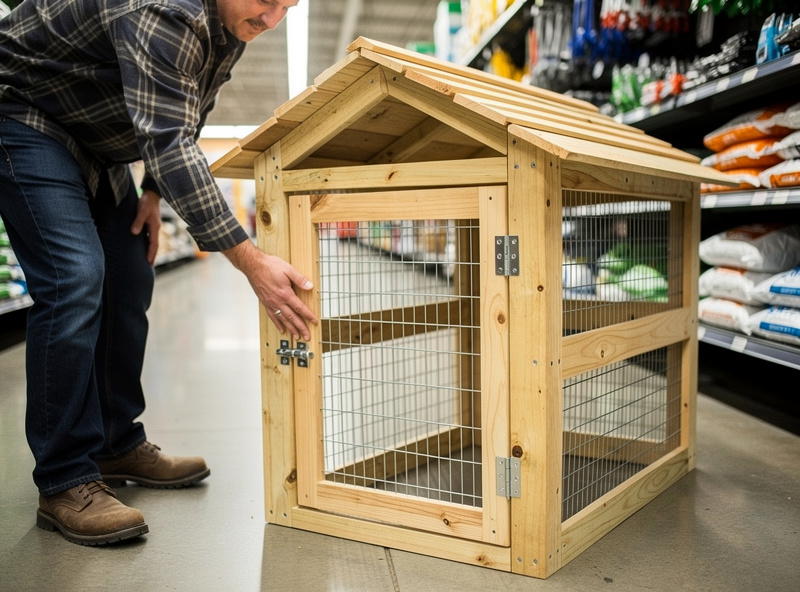
Big-box farm stores dominate volume because shoppers can see the product before buying — but every chain stocks the same 3 to 5 entry-level models with thin pine framing and chicken wire (not hardware cloth). Online marketplaces have the widest selection but require careful spec-sheet reading because dimensions and capacity claims are often exaggerated. Custom Amish builders deliver the longest service life but require driving to rural builders or paying $200+ shipping. Local marketplaces are hit-or-miss but can deliver a $500 tractor for $150 if you’re patient. Specialty brands cost the most but pair best with smart-coop automation features.
Seven Quality Markers to Verify Before Buying
Whether you buy at Tractor Supply or from a custom builder, these seven specs determine whether the tractor lasts 2 years or 10. Verify before paying — you’ll lose return options once it’s assembled.
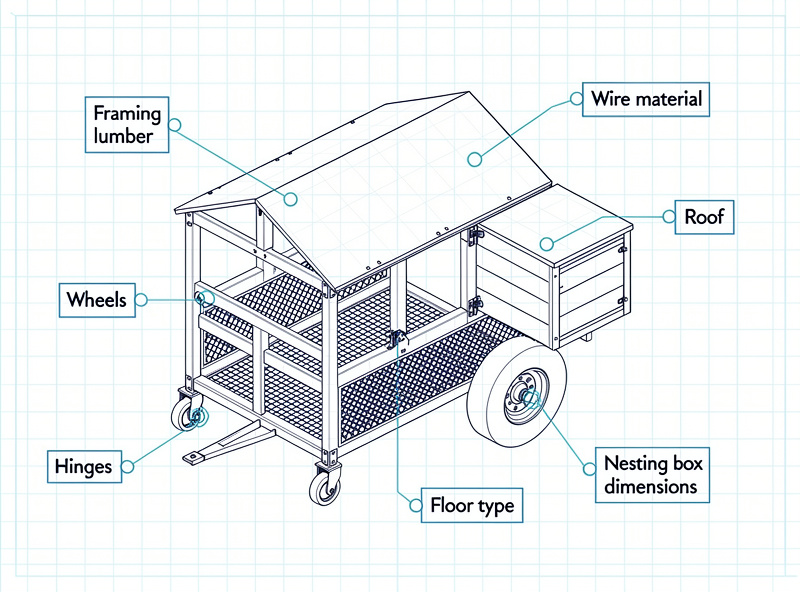
1. Framing lumber size: Look for 2×2 minimum framing for A-frames under 4×8 ft, 2×4 framing for anything larger. Sub-2×2 framing (1×2 or 1×3 pine) fails within 18 to 24 months under typical use.
2. Wire panel material: Verify 1/2 inch galvanized hardware cloth, not chicken wire. Chicken wire is sized to keep chickens IN, not predators OUT — a determined raccoon quickly bends or tears through it, while proper hardware cloth actually holds (Garden Betty). This single spec separates real tractors from decorative ones.
3. Wheel quality (if wheeled): Look for solid rubber or pneumatic tires at least 10 inches in diameter. Plastic wheels under 8 inches fail within 6 to 12 months of daily use. Pneumatic wheels need occasional inflation but tolerate rough ground far better than solid.
4. Roof material: Galvanized corrugated metal lasts 15+ years, treated plywood lasts 5 to 8 years, untreated plywood lasts 2 to 3 years before water damage. Tarp roofs (common on PVC hoop tractors) tear within 12 to 18 months.
5. Door hardware: Cabinet-grade hinges (steel, not pot metal) and 2-point latches (not single-spring catches). Single-spring latches are the weak point raccoons work out fastest — a 2-point latch is basic, cheap insurance (Garden Betty). Pair with a battery-powered automatic coop door if the tractor has an enclosed sleeping section.
6. Floor (or lack thereof): True chicken tractors have NO floor — they sit directly on the ground for daily fresh forage. Coops with bottoms aren’t tractors, they’re portable coops. This affects predator-proofing strategy significantly.
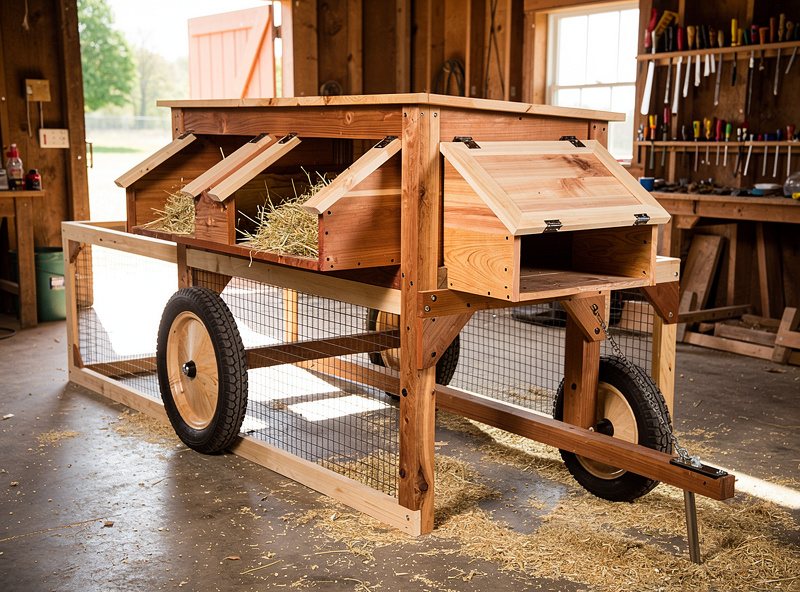
7. Nesting box dimensions: Look for 12x12x12 inch box minimum. Boxes smaller than 10×10 inches force hens to lay outside the box, defeating the purpose. Many entry-level tractors cram nesting boxes into 8×8 inch corners.
Common Chicken Tractor Buying Scams
Chicken tractors are big enough purchase tickets that scams exist, especially in the online and used markets. Three patterns account for most reported scams.
Capacity inflation: “Fits 8 chickens” listings on Amazon and Wayfair where the actual interior is sized for 3 to 4 birds. Always verify interior square footage and divide by 6 to 8 sq ft per standard bird (the real tractor density target). For exact sizing math, see our chicken coop size guide.
Photo fraud on used listings: Local marketplace listings using stock photos or photos of different models. Always inspect the actual tractor in person before paying, or insist on additional photos with a current newspaper or specific dated reference visible.
“Amish-built” branding without verification: Online listings claim “Amish craftsmanship” using stock photos and offshore-built products. Real Amish-built tractors come from specific Pennsylvania, Ohio, Indiana, or Illinois builders — verify the build location with a phone call before paying any deposit.
Best Times to Buy a Chicken Tractor
Chicken tractor pricing is seasonal, the way most outdoor/lawn-and-garden equipment is. Buying at the right time of year gets you a meaningfully better price on the same model.
Best time: October through February. Off-season for chicken keeping. Big-box stores discount remaining inventory, online marketplaces run end-of-year clearance, and custom builders have empty schedules and accept smaller orders. Expect a real discount off summer prices.
Worst time: March through May. Peak chick-buying season. Tractor demand spikes, prices firm up or climb over off-season levels, and inventory sells out at popular price points. Avoid buying at this window unless you have no other choice.
Sweet spot for online marketplaces: late August through early October. Sellers who failed to move inventory during peak season drop prices to clear before winter. Best window for premium specialty brands like Eglu and Omlet that rarely discount during peak demand.
Custom builder timing: Order in November or December for spring delivery. Builders schedule work during winter slowdown, which gives you 4 to 6 month lead time at off-season prices. Trying to order a custom tractor in April for May delivery typically costs noticeably more and gets pushed to June or July anyway.
Should You Buy New or Used?
Used chicken tractors are typically much cheaper than new but require more inspection effort and carry higher fail-faster risk. I check the same things buying used gear for the coop as I do for anything else in the shop — hinge play and ground-contact rot are the two that quietly bite you a season later. The math:
Buy new when: You want a 5+ year service life, you live somewhere with limited used market, you need a specific feature (automatic door integration, particular dimensions for an HOA setback, smart-coop wiring provisions), or you’ll be moving the tractor across rough terrain that punishes worn wheels and stressed framing.
Buy used when: Your budget caps under $300, you can inspect in person before paying, you have basic carpentry skills to repair worn parts, or you’re testing the chicken-tractor format before committing to a long-term build. Used tractors from sellers who are exiting chickens (downsizing, moving, kids leaving home) often go for $100 to $250 in good condition.
What to inspect on used tractors: Wire panels for rust or sagging, framing lumber for rot at ground contact points, hinges for play and rust, roof material for water damage, wheel hubs for cracks. Walk around the tractor and lift each end — listen for cracking sounds and watch for visible flex. Anything that creaks or moves significantly under one-end lift will fail within 6 to 12 months. Our backyard chickens beginners guide covers the broader new-vs-used decision for chicken-keeping equipment.
Smart Tractor Buying: Verify Smart-Coop Compatibility
If you plan to add smart-coop automation, verify compatibility before buying. Most chicken tractors are NOT designed for smart-coop integration and require modifications that add $80 to $200 to the project budget.
Auto-door provisions: The enclosed sleeping section needs a flat wall area at least 16 inches tall by 14 inches wide for a standard automatic chicken door. Many A-frame tractors have angled walls throughout, which makes auto-door mounting awkward or impossible without custom adapter plates.
Power source: Tractors move daily, which kills wired electrical. Plan for battery-powered or solar-charged smart hardware. Verify the tractor has flat roof or sun-exposed wall surfaces for a small solar panel mount (typical 10W panel needs 12×10 inches of unshaded surface).
Sensor mounting: Wireless temperature, humidity, and motion sensors need flat interior surfaces with line of sight to the rest of the coop interior. A-frames with peaked interiors and limited flat-wall space limit sensor placement options. The complete smart-tractor layout patterns are in our portable chicken coops hub, with full smart-coop architecture in the smart chicken coop pillar guide.
Frequently Asked Questions
Where can I buy a chicken tractor?
Chicken tractors are sold at big-box farm stores (Tractor Supply, Rural King) for $280 to $650, online marketplaces (Amazon, Wayfair) for $200 to $900, custom Amish or Mennonite builders for $700 to $1,800, local Craigslist or Facebook Marketplace for $100 to $500, and specialty brands like Eglu and Omlet for $1,200 to $3,500.
How much should a chicken tractor cost?
A quality chicken tractor for 3 to 5 standard hens costs $400 to $900 new. Entry-level tractors at $280 to $400 use thin lumber and chicken wire that fails within 2 to 3 years. Premium tractors above $1,200 deliver 10+ year service life with smart-coop integration features. DIY builds cost $120 to $250 in materials.
What is the best chicken tractor brand?
Brand quality varies more by retailer than by name. The most consistent quality comes from custom Amish builders in Pennsylvania, Ohio, Indiana, and Illinois. Specialty brands like Eglu, Omlet, and Carolina Coops deliver premium materials and modern features at higher prices. Avoid sub-$280 commercial tractors regardless of brand – they typically use chicken wire that any raccoon defeats.
When is the best time to buy a chicken tractor?
October through February is the best time to buy chicken tractors, with prices meaningfully below peak-season levels. Avoid March through May when chick-buying season drives demand. Custom builders have shortest lead times and best prices when ordered in November or December for spring delivery.
Are used chicken tractors worth buying?
Yes, when budget caps under $300 and you can inspect in person. Used tractors from sellers exiting chickens often go for $100 to $250. Inspect for: rust on wire panels, rot at ground-contact framing, hinge play, roof water damage, and wheel hub cracks. Anything that creaks or flexes under one-end lift will fail within 6 to 12 months.
Can I buy a chicken tractor at Tractor Supply?
Yes. Tractor Supply stocks 3 to 5 entry-level chicken tractor models year-round, priced $280 to $550 for 3 to 5 bird capacity. The trade-off is thin pine framing and chicken wire (not hardware cloth) – typical 2 to 3 year service life. Best for first-time buyers testing the format before committing to higher-quality custom builds.
Bottom Line: Match the Channel to Your Buyer Profile
The right chicken tractor for sale depends on your budget, time horizon, and inspection ability. Every chicken tractor for sale falls into the five channels above, and the channel matters more than the brand. Big-box stores work for first-time buyers testing the format. Custom Amish builders deliver the longest service life. Online marketplaces win for specific researched models. Local marketplace finds beat retail when you can inspect in person. Specialty brands suit smart-coop integrators with bigger budgets. Pick the channel that matches your situation, verify the seven quality markers, and time the purchase for off-season pricing.
For tractor design and rotation math, see our chicken tractor design guide. For other portable formats, the portable chicken coops hub compares wheeled, skidded, and PVC hoop alternatives.
Related Guides
- Portable Chicken Coops & Tractors: Complete 2026 Guide
- Chicken Tractor: A-Frame Designs, Plans & Best Picks
- Chicken Coop Size Guide: How Many Chickens Per Square Foot
- Small Chicken Coops: Best Picks for 2-4 Birds
- Automatic Chicken Coop Doors: Complete Buyer’s Guide 2026
- Backyard Chickens for Beginners: Everything You Need to Know in 2026
Related Guides
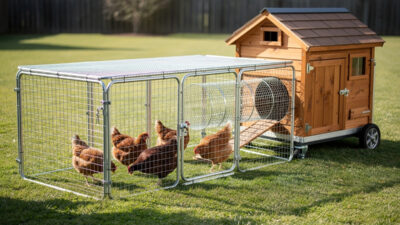
Portable Chicken Run: Modular Picks for Mobile Coops
A portable chicken run is a movable outdoor enclosure that connects to or follows a chicken coop, providing relocatable forage…
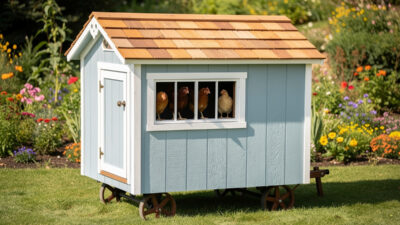
Portable Chicken House: Cottage, Plastic & Barn Picks
A portable chicken house is a movable enclosed structure focused on the housing/sleeping area, distinct from a portable chicken tractor…
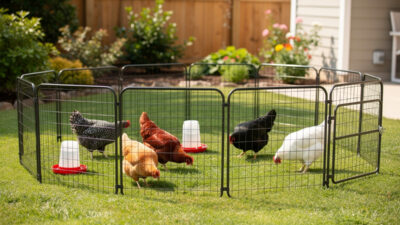
Portable Chicken Pen: 5 Best Picks for Daily Setup
A portable chicken pen is a lightweight enclosed outdoor area that hens can use during daylight hours, distinct from a…