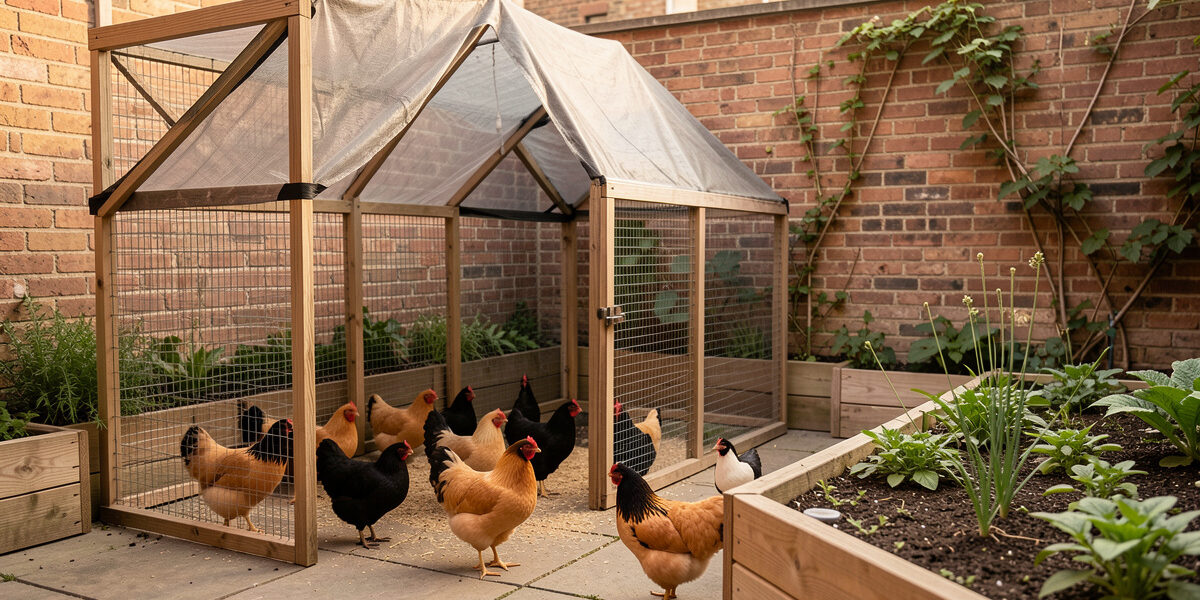
Bantam chickens for small spaces are the answer when you want a real flock but have a courtyard instead of an acre. A bantam is a miniature chicken — roughly a quarter to a third the weight of a standard hen — so you can keep four bantams in the floor space two full-size birds would need, and they still lay, forage, and run the same backyard drama at a smaller scale.
The catch most small-space guides skip is that “small” changes the engineering, not just the cuteness. A 700-gram bird flies far better than a 3.5 kg Orpington, needs a fully covered run, and is a bite-sized target for every hawk and cat in the neighborhood. I keep heavy cold-hardy birds as my main flock, but I have run bantams alongside them, and the small-space build is its own discipline. Here is how to pick the breed and size the setup so the little birds thrive instead of just surviving.
Why Bantams Work in Tight Spaces
Bantams need roughly half the room of a standard hen: budget about 0.2 m² of coop floor and 15–20 cm of roost bar per bird, against the 0.35–0.4 m² and 25–30 cm a heavy breed demands. That density is the whole appeal — an urban keeper with a 2 m² coop footprint can responsibly house six to eight bantams where they could fit only three or four large fowl.
They also eat proportionally less, produce less manure, and do less damage to a small garden when they forage. What they do not do is lay less often — a good utility bantam still lays most days in season — the eggs are simply smaller, at roughly half to two-thirds the size of a standard egg. Two bantam eggs stand in for one large egg in the kitchen, which is a fair trade for fitting a flock into a footprint that would otherwise hold none.
True Bantams vs Miniatures
Not all bantams are the same animal, and the distinction matters when you buy. A “true bantam” has no large-fowl counterpart — it only ever exists in miniature. A “miniature” is a scaled-down version of a standard breed. Both are sold as bantams, but they behave differently in a small-space flock. The American Bantam Association maintains the breed standard that draws this true-bantam versus miniature line.
True bantams — Sebright, Dutch, Belgian d’Uccle, Nankin — tend to be the tiniest, the most ornamental, and the most flighty. Miniatures of standard breeds — bantam Wyandotte, bantam Orpington, bantam Rhode Island Red — keep much of the parent breed’s temperament and laying habit in a smaller body, which makes them the more practical pick if you want eggs as well as charm. If your goal is a productive small-space layer, start with a miniature of a known utility breed rather than a pure ornamental.
The Best Bantam Breeds for Small Spaces
The breed you choose decides whether your small-space flock is a calm, productive joy or a flighty, fragile handful. These are the bantams I steer small-space keepers toward, sorted by what they are actually for.
Pekin (Cochin Bantam)
The Pekin is my default recommendation for a first small-space flock, especially with children around. It is a round, feather-footed, true-bantam ball of calm that rarely flies, tolerates confinement well, and goes broody at the drop of a hat. The feathered feet are the one maintenance item — in a wet or muddy run they cake up and need a dry, well-bedded floor to stay healthy. Keep the run dry and the Pekin is close to ideal.
Bantam Wyandotte
If you keep birds in the cold, the bantam Wyandotte is the standout. It carries the same tight rose comb as its full-size parent — the comb shape that resists frostbite far better than a tall single comb — in a body small enough for a courtyard. It lays a respectable number of small brown eggs and keeps the steady, unflustered Wyandotte temperament. This is the bantam I would run in my own climate.
Bantam Orpington and Sussex
Miniature Orpingtons and Sussex bantams bring the friendly, heavy-breed personality I value in my standard flock into a small-space package. They are docile, handleable, and decent layers of small eggs. They feather densely enough to handle cool weather and are confident without being aggressive — good companions for the friendly, family-suited birds covered in the friendliest breeds guide.
Silkie
The Silkie is the famous fluffy bantam, beloved as a pet and an unbeatable broody mother. Be honest with yourself before you buy one for cold country, though: that hair-like plumage does not shed water and gives almost no insulation when wet, so Silkies need a dry, draft-free coop and are a poor choice for an exposed, damp winter setup. As a pet and a broody in a sheltered run, they are wonderful; as a hardy outdoor layer, they are not.
Bantam Breeds at a Glance
Use this to match a bantam to your priority — eggs, cold tolerance, or pure pet appeal. Laying figures are typical small-egg output in season, not large-fowl numbers.
| Bantam breed | Type | Eggs (small)/yr | Temperament | Cold tolerance |
|---|---|---|---|---|
| Pekin (Cochin) | True bantam | 100–150 | Very calm, broody | Good (keep feet dry) |
| Bantam Wyandotte | Miniature | 150–180 | Steady, calm | Excellent (rose comb) |
| Bantam Orpington | Miniature | 120–160 | Friendly, docile | Very good |
| Sebright | True bantam | 60–80 | Active, flighty | Fair |
| Silkie | True bantam | 100–120 | Gentle, broody | Poor when wet |
The Small-Space Build: Where Bantams Are Different
The single biggest mistake with bantams is treating the run like a scaled-down large-fowl run. It is not. A light bantam can clear a 1.2 m fence from a standing start and will happily roost in your neighbor’s apple tree, so a small-space bantam run has to be fully covered — netted or roofed — not just walled. That cover does double duty, because the same small body that flies well is exactly what a hawk wants.
Predator-proofing matters more, not less, at this size. A weasel-class predator that could not reach a heavy hen through 25 mm mesh can take a bantam, so I run 13 mm (half-inch) hardware cloth on every opening — never chicken wire — with a buried apron, the same standard I detail in the hardware cloth guide and the broader predator-proofing guide. For overhead threats specifically, the hawk protection guide covers covered-run geometry that keeps a small flock safe.
Nesting and Roosting for Small Birds
Bantams will share a nesting box happily and need smaller ones — roughly 25 × 25 cm is plenty against the 30 × 30 cm a large hen wants. You still want one box per three or four hens to avoid squabbling, and the same rule about keeping boxes lower than the roost applies so birds sleep on the perch, not in the nest. The nesting box guide has the sizing and count math, which scales straight down for bantams.
Set roost bars lower and closer than you would for heavy birds — a fat-bodied Pekin is not a strong flyer and a high perch invites a clumsy landing and a bumblefoot risk. Mine sit bantams on a 40–50 cm roost rather than the higher bars heavy breeds use.
Mixing Bantams With Standard Fowl
The question I get most from keepers with an existing flock is whether bantams can live with large hens. They can, but it is not automatic, and the size gap is the whole problem. A 700-gram bantam at the bottom of a pecking order that includes 3.5 kg birds can get pushed off feed and water, and a clumsy heavy hen can injure a bantam in a squabble that would be harmless between equals.
I make mixed flocks work by removing the usual flashpoints: multiple feeders and waterers so a bantam can never be cornered away from both, enough total space that smaller birds can keep their distance, and separate low roosting options so the bantams are not forced to perch among the heavies. Avoid pairing bantams with the genuinely assertive large breeds; the calm, friendly heavy breeds — Orpington, Sussex, Brahma — are far better flock-mates. Watch the integration closely for the first week, because the first few days decide whether the arrangement settles or has to be undone.
A Note on Health
Bantams are generally robust, but the feather-footed breeds and the soft-plumaged Silkies carry their own quirks — scaly-leg mites hide more easily in feathered feet, and wet plumage chills a small bird fast. I treat a dry coop, a good dust bath, and routine leg-and-foot checks as basic husbandry. Anything past that — a limping bird, swollen foot, or respiratory signs — is a question for an avian vet, not a breed chart. I keep the birds; the diagnosis is the vet’s job.
Frequently Asked Questions
Are bantam chickens good for small spaces?
Yes. Bantams need about half the room of standard hens, roughly 0.2 square metres of coop floor and 15 to 20 cm of roost each, so a small 2 square metre coop can responsibly house six to eight bantams instead of three or four large fowl.
Do bantam chickens lay eggs?
Yes, productive bantams lay most days in season, but the eggs are small, about half to two-thirds the size of a standard egg. Utility breeds like the bantam Wyandotte give 150 to 180 small eggs a year; ornamentals like Sebrights lay far fewer.
Which bantam breed is best for beginners?
The Pekin, also called the Cochin bantam, is the easiest starter bantam: calm, rarely flies, tolerates confinement, and is gentle with children. Its only real upkeep is keeping the feathered feet on dry bedding to prevent mud caking.
Can bantams handle cold winters?
Some can. The rose-combed bantam Wyandotte is excellent in cold, and dense-feathered miniatures like the bantam Orpington do well. Silkies are a poor cold-and-wet choice because their hair-like plumage gives little insulation when damp.
Do bantams need a covered run?
Yes. Light bantams fly well and can clear a 1.2 metre fence, so a small-space run must be netted or roofed, not just walled. The cover also protects these bite-sized birds from hawks, which target small chickens.
How many bantams can I keep in a backyard?
In a typical small backyard a covered 2 to 3 square metre coop with an attached run comfortably holds six to eight bantams. Plan for one nesting box per three or four hens and budget extra space, because chicken math applies to bantams too.
Keep Reading
- Chicken Breeds: Complete Comparison Guide
- Best Chicken Breeds for Backyards
- Friendliest Chicken Breeds for Families
- How Many Nesting Boxes You Actually Need
- Predator-Proof Chicken Coop: Complete Guide
Related Guides

How to Choose Chicken Breeds: A Keeper Decision Guide
Learning how to choose chicken breeds is really a requirements exercise, not a beauty contest. Before you look at a…
Heritage Chicken Breeds Compared: A Keeper Guide
A heritage chicken breeds comparison comes down to three things most lists never separate: a true heritage breed mates naturally,…
Dual-Purpose Chicken Breeds: Eggs and Meat From One Flock
Dual-purpose chicken breeds are the ones that earn their keep twice: a hen that lays 200 or more eggs a…