Learning how to choose chicken breeds is really a requirements exercise, not a beauty contest. Before you look at a single photo, answer five questions in order: your climate, your space, your priority (eggs, meat, or pets), the temperament you need, and your local rules. Get those five right and the breed list narrows itself from 60-plus options down to a handful — usually three or four breeds that genuinely fit.
I approach picking birds the same way I approach any build: write the spec first, then choose the parts. The mistake nearly every new keeper makes is reversing that — falling for a fluffy photo, then discovering the breed will not lay in their winter, will not tolerate confinement, or is illegal to crow in their town. This guide walks the decision in the order that actually matters, with the trade-offs named, so you end up with a flock that suits your life instead of a regret you have to rehome.
Step 1: Start With Your Climate
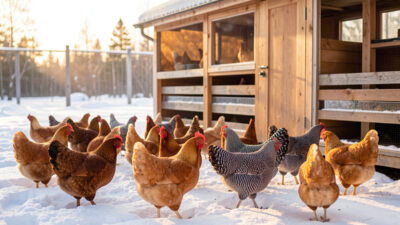
Climate is the first filter because it is the one you cannot change. If you keep birds where winters drop below freezing, comb type and body mass decide which breeds survive comfortably and which lose comb tips to frostbite. Cold-climate keepers should weight the decision toward heavy, small-combed breeds — Wyandotte (rose comb), Brahma and Buckeye (pea comb), Chantecler (cushion comb), and the dense-feathered Orpington.
Heat flips the logic. In hot climates the light Mediterranean breeds — Leghorn, Andalusian, Minorca — with their large combs and lean bodies shed heat well, while a 4.5 kg feather-footed Brahma suffers. There is no universally “best” breed; there is only the best breed for your thermometer. If you keep birds in genuine cold, my cold-hardy breeds guide sorts the field by winter survivability, and the reason small combs matter comes down to coop moisture, not raw temperature.
Step 2: Measure Your Space Honestly
Space sets your numbers and your size class. Standard hens need roughly 0.35–0.4 m² of coop floor and 25–30 cm of roost each; bantams need about half that. Measure your actual coop and run, then apply the rule I learned the hard way: plan for at least 50% more birds than you intend to keep, because chicken math is real and the coop built for six ends up holding ten.
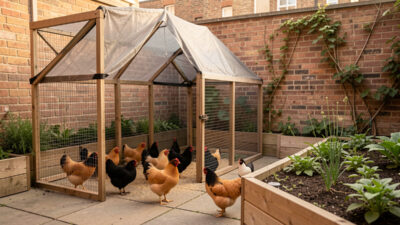
If your footprint is tight, the honest answer may be bantams rather than fewer large fowl — a covered courtyard run holds six to eight bantams where it would hold three large hens, as I cover in the bantam small-space guide. If you have room, larger dual-purpose breeds give you more flexibility. Either way, undersizing the coop is the root cause of most behavior problems keepers later blame on breed temperament.
Step 3: Decide Your Priority
Now the fun part — what is the flock for? Be honest, because chasing every goal at once gets you a flock that does nothing especially well. The three main priorities pull toward different breeds:
- Maximum eggs: production-leaning layers and the top heritage producers — Australorp, Rhode Island Red, Leghorn, Plymouth Rock. See the best egg-laying breeds guide.
- Eggs and meat from one flock: dual-purpose heritage breeds — Orpington, Wyandotte, Sussex, Plymouth Rock. The dual-purpose breeds guide ranks them.
- Pets and family birds: calm, handleable breeds — Orpington, Silkie, Cochin, Sussex. The friendliest breeds guide covers the gentlest.
Most backyard keepers land on dual-purpose, because it is the priority that compromises least — a competent layer that is also calm and useful. But name your priority out loud first; it is the question that does the most to shape the final list.
Step 4: Match the Temperament to Your Setup
Temperament is where keepers get burned because it does not show in a photo. A flighty, active breed like a Leghorn or a Sebright is a superb forager and a poor lap chicken; a calm Orpington is a wonderful family bird and a lazier forager. If you have children, want birds that tolerate handling, or keep a confined run, weight toward the docile breeds. If you free-range on open ground and value foraging and predator awareness, the active breeds earn their keep.
Mixing temperaments works if you respect the size and assertiveness gap — pair calm with calm, and avoid putting timid bantams in with assertive heavy breeds without extra space, feeders, and watch-time during integration. The friendliest mixed flocks I have kept were built entirely from the calm, heavy heritage breeds, which buffer each other and stay settled.
The Breed Decision Matrix
Use this to jump from your top priority straight to a shortlist. Match your situation in the left column to the breeds that fit, then read the dedicated guide for each before you buy.
| If your priority is… | Best-fit breeds | Why |
|---|---|---|
| Most eggs per year | Australorp, Rhode Island Red, Leghorn | 250–300+ eggs; lean, efficient layers |
| Eggs + meat (one flock) | Orpington, Wyandotte, Plymouth Rock, Sussex | Heavy bodies plus 200+ eggs |
| Cold-climate survival | Chantecler, Wyandotte, Brahma, Buckeye | Small combs resist frostbite |
| Hot-climate tolerance | Leghorn, Andalusian, Minorca | Large combs and lean bodies shed heat |
| Family pets / kids | Orpington, Silkie, Cochin, Sussex | Calm, docile, handleable |
| Small space | Pekin, bantam Wyandotte, bantam Orpington | Half the room of large fowl |
| Conservation / rarity | Dominique, Chantecler, Buckeye | Threatened heritage lines |
Step 5: Check Your Local Rules and the Quiet Details
Before you commit, two practical filters catch a surprising number of keepers. First, local rules: many towns and HOAs cap flock size, ban roosters outright, or require setbacks from property lines. Egg-color preference, broodiness, and noise are personality details that only matter after the legal ones — check whether you are even allowed a rooster before you fall for a breed you want to breed.
Second, the quiet trade-offs: do you want a self-renewing flock (choose broody heritage breeds), a particular egg color (Marans for dark brown, Ameraucana for blue), or the lowest noise profile (avoid roosters and the loudest layers)? These do not override the first four steps, but among breeds that already fit your climate, space, priority, and temperament, they make a fine tiebreaker.
Putting It Together: A Worked Example
Here is the framework on my own flock. Climate: Swedish cold, so small combs and heavy bodies. Space: a walk-in coop sized with the 50% buffer. Priority: eggs first, with the option to process surplus cockerels. Temperament: calm, because the flock is mixed and I want it settled. Rules: rural, no rooster ban. Run that spec and it lands almost exactly on the breeds I keep — Wyandotte, Orpington, Australorp, Sussex. The spec chose the birds; I just confirmed it.
Run a different spec and you get a different obvious answer. Picture a beginner in a mild suburb with a small garden, two children, an HOA that bans roosters, and a priority of friendly pets that also lay a few eggs. Climate: mild, so comb type barely matters. Space: tight, so smaller numbers or bantams. Priority: pets first, eggs second. Temperament: maximum docility. Rules: hens only. That spec points straight at a trio of sexed pullets — a couple of Pekin bantams and a calm Orpington, bought as point-of-lay birds to skip the brooder. Same five steps, completely different flock, and both are right for their keeper. Do the steps in order and your shortlist will be just as obvious.
Day-Old Chicks, Pullets, or Hatching Eggs?
Once you have a shortlist, how you buy the breed shapes the whole first year. Each route is a different trade between cost, speed, and certainty, and availability of your chosen breed varies sharply by route.
- Day-old chicks are the cheapest and most widely available way to get a specific breed, and you raise them imprinted and tame — but you need a brooder, six weeks of close care, and you accept that straight-run chicks will include cockerels you may not be able to keep.
- Point-of-lay pullets (16–20 weeks) cost more and offer fewer breeds, but they are sexed females, skip the brooder stage entirely, and start laying within weeks. For a first flock with no brooder setup, pullets are the low-stress choice.
- Hatching eggs give you access to the rarest heritage lines and the lowest per-bird cost, but hatch rates are unpredictable, you need an incubator or a broody hen, and you will not know your hen-to-cockerel split until weeks later.
For a beginner choosing a common breed, sexed pullets remove the most ways to go wrong. For a keeper chasing a threatened heritage line, hatching eggs from a dedicated breeder may be the only route that exists. Match the buying method to the breed’s rarity and to how much early-stage work you actually want, and read up on brooder care before any chicks arrive so the setup is ready the day they do.
A Note on Health and Sourcing
Whatever you choose, buy from a reputable source — a quality hatchery for a layer flock, a dedicated breeder for genuine heritage or rare stock — and start chicks on good husbandry. Breed choice does not exempt any bird from illness; coop hygiene, a dust bath, and routine condition checks are ordinary care, but a sick, lethargic, or injured bird is a question for an avian vet, not a breed chart. For a genuinely threatened heritage line, cross-check your choice against The Livestock Conservancy's conservation priority list before committing to a breeder. Pick the breed for your life, then keep it well.
Frequently Asked Questions
How do I choose the right chicken breed for beginners?
Start with calm, hardy, dual-purpose breeds like the Orpington, Plymouth Rock, or Sussex. They tolerate handling mistakes, lay well, and suit most climates, which makes them forgiving first birds while you learn flock management.
What is the most important factor when choosing a chicken breed?
Climate is the first filter because you cannot change it. In cold regions choose heavy, small-combed breeds that resist frostbite; in hot regions choose lean, large-combed Mediterranean breeds. Then layer space, priority, and temperament on top.
How many chicken breeds should I keep at once?
Most backyard keepers do well with two or three complementary breeds rather than one. A small mix of calm, similarly sized birds spreads your egg laying across the year and avoids the bullying that size or temperament mismatches can cause.
Should I choose one breed or a mixed flock?
A mixed flock of similar size and temperament is usually best for backyard keepers: it varies your egg colors and laying seasons and is easier to tell birds apart. Just avoid pairing timid bantams with assertive heavy breeds without extra space.
Can I keep different chicken breeds together?
Yes, if you match size and temperament and provide enough space, feeders, and waterers. Calm heavy breeds mix easily; problems arise mainly when much smaller or much more assertive birds are forced together in a tight run during integration.
Related Guides
- Chicken Breeds: Complete Comparison Guide
- Best Chicken Breeds for Backyards
- Dual-Purpose Chicken Breeds
- Heritage Chicken Breeds Compared
- Cold-Hardy Chicken Breeds
Related Guides
Heritage Chicken Breeds Compared: A Keeper Guide
A heritage chicken breeds comparison comes down to three things most lists never separate: a true heritage breed mates naturally,…
Bantam Chickens for Small Spaces: Best Small Breeds
Bantam chickens for small spaces are the answer when you want a real flock but have a courtyard instead of…
Dual-Purpose Chicken Breeds: Eggs and Meat From One Flock
Dual-purpose chicken breeds are the ones that earn their keep twice: a hen that lays 200 or more eggs a…