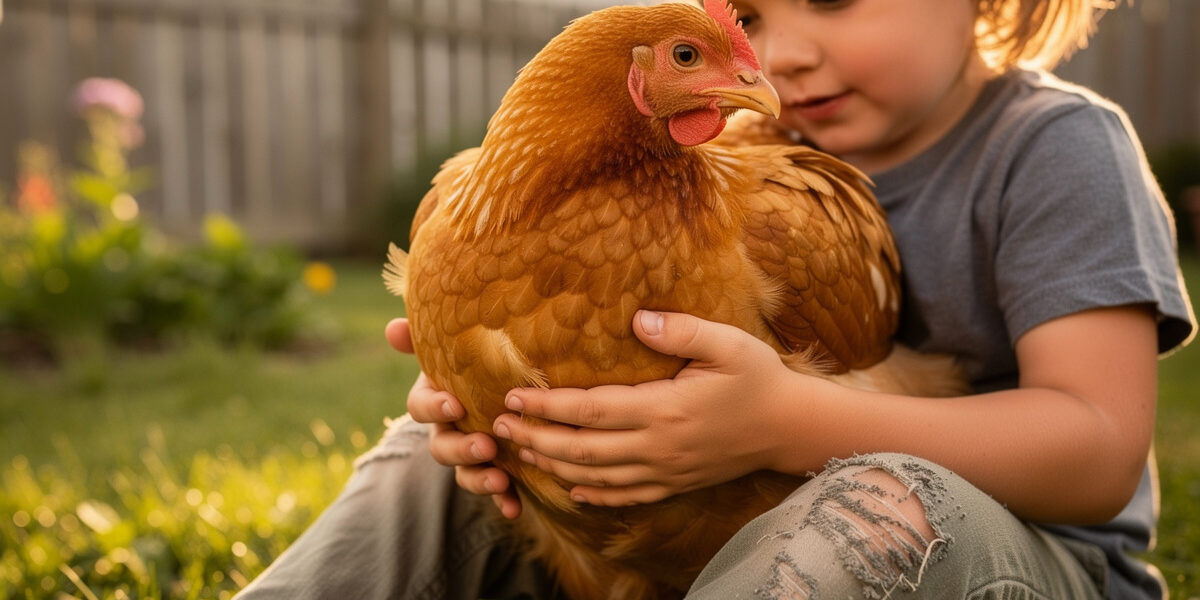
The friendliest chicken breeds tolerate handling by children, sit calmly when picked up, rarely peck or scratch, and integrate peacefully into mixed flocks. Three breeds dominate the friendly category: Buff Orpington (the family standard), Silkie (the pet bird), and Faverolles (the French gentle giant). This guide ranks the 8 friendliest breeds, the temperament traits to look for, and what handling experience to expect with each. My own flock in Sweden runs Orpingtons and an Australorp-type bird for exactly this reason — they’re the two breeds on this list I can speak to firsthand, and both hold up the reputation.
Quick Picks: Friendliest Chicken Breeds
- Silkie — Best lap chicken, pet-quality temperament
- Buff Orpington — Best family breed with productive eggs
- Faverolles — French heritage, exceptionally docile
- Cochin — Massive feathering, calm and slow-moving
- Brahma — Gentle giant, kid-friendly despite size
- Australorp — Calm with high egg production
- Sussex — Curious and people-oriented
- Plymouth Rock (Barred) — Friendly, hardy, productive
What Makes a Chicken “Friendly”
Three behavioral traits define a friendly breed:
1. Tolerance of Handling
Friendly breeds sit calmly when picked up, don’t struggle aggressively, and don’t peck at the person holding them. Less friendly breeds (Leghorn, Andalusian) flap, peck, and try to escape immediately when handled.
2. Approachability
Friendly chickens approach humans at feeding time without fear, cluster around feet, and may follow people in the yard. Many friendly breeds will eat treats from hands within 1-2 weeks of consistent feeding.
3. Low Aggression Within Flock
Friendly breeds rarely bully smaller flock members, don’t form strict pecking hierarchies that exclude weak birds, and integrate well with other gentle breeds.
For broader breed comparison, see our Chicken Breeds Complete Comparison Guide.
The 8 Friendliest Chicken Breeds
Mississippi State University Extension’s breed-selection guide names Orpington, Australorp, Wyandotte, and Brahma among the calm/docile breeds and flags Leghorn and Polish as flighty — that’s the extension-level confirmation behind the ranking below. The “Friendly Rank” column is my own call, built from handling these breeds myself where I have and pulling consistently from keepers I trust where I haven’t; treat it as an informed opinion, not a lab score.
| Breed | Size | Eggs/Year | Friendly Rank | Notes |
|---|---|---|---|---|
| Silkie | 3-4 lb | 100-150 | 1 | Best pet bird, often broody |
| Buff Orpington | 7-8 lb | 200-280 | 2 | Family standard, productive |
| Faverolles | 6-7 lb | 180-240 | 3 | French gentle giant, beard |
| Cochin | 9-11 lb | 120-180 | 4 | Massive bird, lap-sitter |
| Brahma | 9-12 lb | 150-200 | 5 | Gentle despite size |
| Australorp | 6-7 lb | 250-300 | 6 | Calm + productive |
| Sussex (Speckled) | 6-7 lb | 200-250 | 7 | People-oriented, curious |
| Plymouth Rock (Barred) | 7-7.5 lb | 200-280 | 8 | Friendly, productive |
Top 3 Friendly Breeds in Detail
Silkie — The Pet Bird
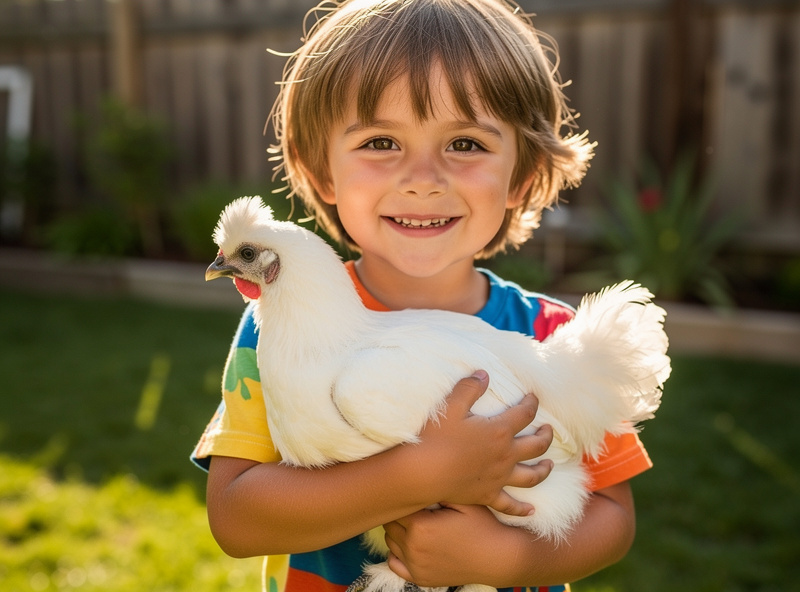
Silkies are 3-4 lb fluffy birds that look more like stuffed animals than chickens. Their down-soft feathers (which lack the standard chicken-feather barbules) give them a distinctive appearance. They’re naturally calm, sweet-tempered, and exceptional with children.
Children can carry full-grown Silkies under one arm without scratches or pecks. Silkies will sit on laps for extended periods. Many backyard families specifically buy Silkies as the “kid chicken.”
Tradeoffs: low egg production (100-150 cream eggs/year), frequent broodiness (sit on eggs for 3-5 weeks at a time, dropping production further), and unsuitability for free-range due to their inability to fly and escape predators.
Best for: families with young children, hobby keepers prioritizing pet quality, anyone wanting a broody mother to hatch eggs naturally.
Buff Orpington — The Family Standard
Buff Orpingtons are 7-8 lb gentle giants with golden-buff feathers. They’re calm, easy to handle, and surprisingly productive (200-280 brown eggs/year). They’re often described as “the golden retriever of chicken breeds.”
Buff Orpingtons handle being picked up, carried, and stroked. They sometimes follow people around the yard and beg for treats. Children can carry them easily. Mine are the birds that come running when I open the run gate, not the ones that scatter — that reputation is earned, at least in my flock.
The best all-around breed for families wanting both pet quality AND egg production. They tolerate cold well (heavy feathering), integrate peacefully into mixed flocks, and are available at every major hatchery.
For sizing context, see our Chicken Coop Size Guide.
Faverolles — The French Gentle Giant
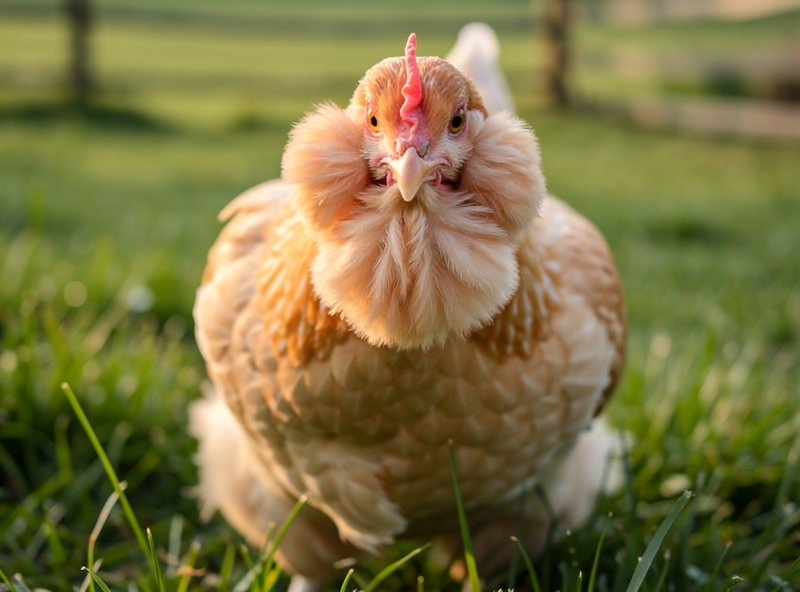
Faverolles are 6-7 lb French-heritage birds with feathered legs, beards around their faces, and salmon-colored bodies. They’re exceptionally calm and sweet-tempered.
Faverolles often described as “fluffy lap chickens” — they readily sit in laps, accept petting, and are very tolerant of handling. They lay 180-240 cream eggs/year.
Cold-hardy due to French heritage. Less common at standard hatcheries; usually available from Murray McMurray and Meyer Hatchery.
Friendly But Less Common Breeds
Cochin
Massive 9-11 lb birds covered in feathers from head to toe. Slow-moving, calm, and very gentle. Lay 120-180 brown eggs/year. Often described as “couch potato chickens” — they prefer to sit and observe rather than forage actively.
Brahma
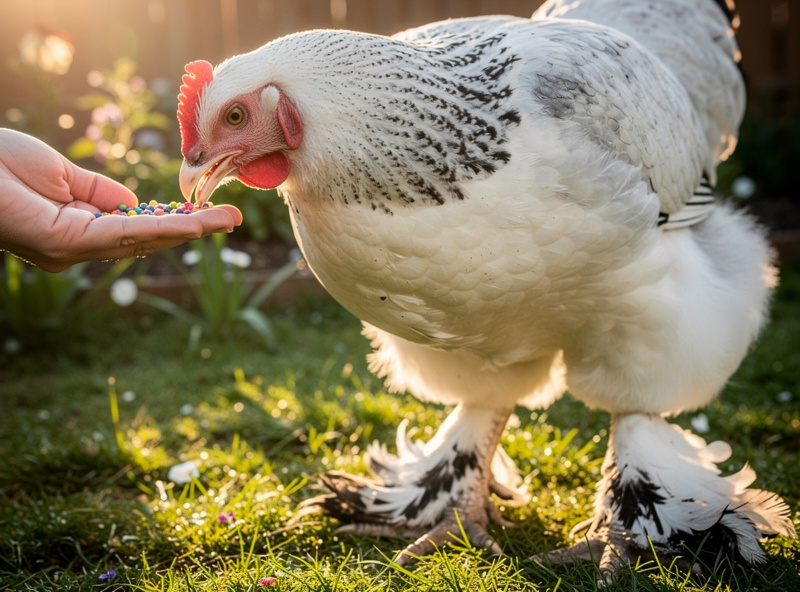
Despite their size (9-12 lbs), Brahmas are exceptionally gentle. Slow-moving, unflappable, kid-friendly. The pea comb makes them extremely cold-hardy. Often the largest birds in any flock.
Sussex (Speckled or Light)
People-oriented birds. Sussex hens often follow their owners around the yard and learn to come when called. Lay 200-250 cream eggs/year, dual-purpose body weight, hardy in most climates.
Breeds NOT in the Friendly Category
These breeds tend to be flighty, aggressive, or unsuited to handling:
- Leghorn: Mediterranean origin, flighty, escape-prone, struggle with handling
- Andalusian: Active, less interested in human interaction
- Modern Game and Old English Game: Bred for combat, can be aggressive
- Polish (any color): Crested feathers block vision, makes them startle easily and peck reactively
- Egyptian Fayoumi: Active foragers, less people-oriented
- Some Rhode Island Red lines: RIR roosters specifically have a reputation for aggression. Hens vary; some lines are very friendly, others assertive.
Note: individual chicken personality varies. A friendly breed may produce an unusually aggressive hen; an unfriendly breed may produce an unusually gentle hen. The breed averages above are reliable trends, not guarantees.
For broader management of mixed flocks, see our Best Chicken Coops 2026 guide.
Building Friendliness: Habituation Tips
Even friendly breeds become friendlier with consistent handling from a young age. The window matters more than most new keepers expect — chick imprinting research puts the sensitive period for bonding to a handler in the first several days post-hatch, tapering off after that. Every chick I’ve raised got the same routine, and it’s the single habit I’d tell a first-time keeper not to skip:
- Start with chicks (1-7 days old): Pick up gently, hold for 30 seconds, return to brooder. Repeat 2-3 times daily.
- Hand-feed treats from week 3: Mealworms, sunflower seeds, tomato pieces. Chickens learn to associate hands with food, not threat.
- Continue handling weekly through adolescence: Pick up, hold, examine for any health issues. Consistent positive interaction builds lifelong tolerance.
- Don’t chase: Chasing teaches chickens that humans are predators. Sit and wait — friendly breeds will come to you.
- Talk softly: Chickens recognize voices. Consistent gentle vocal interaction builds trust faster than handling alone.
By 12 weeks of age, friendly-breed chickens raised this way will sit calmly in laps, accept petting, and follow their primary handler around the coop area.
Friendly Mixed-Breed Flocks
For maximum kid-friendliness, build a flock of 4-6 birds from this list:
- 2 Buff Orpingtons (productive family standards)
- 1 Silkie (pet bird, broody mom backup)
- 1 Faverolles (French gentle giant)
- 1-2 Brahma OR Australorp (large body or productive layer)
Add up the whole flock’s production (not just the two biggest layers) and a single-Brahma-or-Australorp version of this mix lands around 830-1,250 eggs/year — go with two of the larger bird instead of one and you’ll clear that on the high end. Most of that is brown eggs, with a smaller share of cream eggs from the Silkie and Faverolles. It provides one designated pet (Silkie) and stays gentle for daily handling. All breeds tolerate cold and integrate peacefully — this is close to the flock composition I actually run, minus the Silkie.
For complete sizing, see our Chicken Coop Size Guide — these breeds need 4-6 sqft per bird in coop space.
Frequently Asked Questions
What is the friendliest chicken breed?
Silkie is widely considered the friendliest pet-quality breed — small, fluffy, calm, kid-friendly. For productive families wanting friendly + eggs, Buff Orpington is the standard pick (200-280 eggs/year, gentle temperament). Faverolles, Brahma, and Australorp follow close behind.
What chicken breed is best for kids?
Buff Orpington for productive family flocks (eggs + handling), Silkie for pure pet quality, Faverolles for gentle French heritage, Brahma for gentle giants. All four breeds tolerate carrying, petting, and inconsistent kid handling without scratching or pecking. Avoid Mediterranean and game breeds with kids.
Are friendly chicken breeds good egg layers?
Mostly yes. Buff Orpington (200-280), Australorp (250-300), Plymouth Rock (200-280), and Sussex (200-250) all combine friendliness with productive egg laying. The exceptions are Silkie (100-150 eggs) and Cochin (120-180 eggs) which trade egg production for pet quality.
How do I make my chickens friendlier?
Start handling from 1-7 days old, hand-feed treats from week 3, continue weekly handling through adolescence, talk softly during interactions, and don’t chase. By 12 weeks of age, friendly-breed chickens raised this way will sit in laps and follow their handler.
What chickens are not friendly?
Mediterranean breeds (Leghorn, Andalusian), game breeds (Old English, Modern Game), Polish (vision-blocking crests cause startling), and Egyptian Fayoumi. Some Rhode Island Red lines and Welsh Harlequins lean aggressive. Individual personality varies — these are breed averages.
Can I have just Silkies as my flock?
Yes for pure pet purposes, but expect very low egg production — roughly 2-3 eggs per bird per week, so 4-6 birds nets somewhere around 8-17 eggs a week. Silkies are also unable to fly, so free-ranging is risky (predator vulnerability). Best in a covered run with maximum predator protection. Most owners pair Silkies with productive layers like Orpingtons or Australorps.
Related Articles
- Chicken Breeds: Complete Comparison Guide
- Best Chicken Breeds for Backyards
- Cold-Hardy Chicken Breeds
- Chicken Coop Size Guide
- Best Chicken Coops 2026 Buyers Guide
Related Guides

How to Choose Chicken Breeds: A Keeper Decision Guide
Learning how to choose chicken breeds is really a requirements exercise, not a beauty contest. Before you look at a…
Heritage Chicken Breeds Compared: A Keeper Guide
A heritage chicken breeds comparison comes down to three things most lists never separate: a true heritage breed mates naturally,…
Bantam Chickens for Small Spaces: Best Small Breeds
Bantam chickens for small spaces are the answer when you want a real flock but have a courtyard instead of…