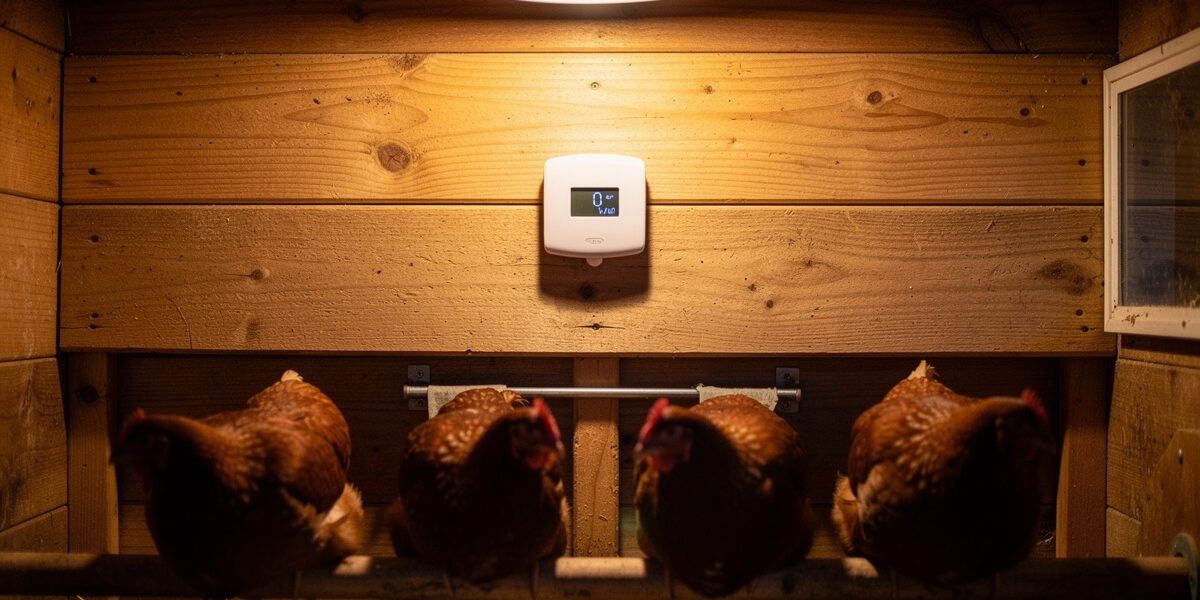
Chickens sit comfortably in a thermoneutral zone of roughly 21-28°C and begin acute heat stress once temperatures push into the 27-38°C range, according to University of Tennessee Extension’s poultry heat-stress research summary — but the temperature at which your specific flock actually suffers depends on breed, humidity, ventilation, and acclimation, and no sensor can tell you that on its own. My own alert thresholds sit at 27°C for a heat warning and -9°C for a cold warning, which gives me a couple of degrees to get out to the run before birds show visible distress. Set the sensor mid-coop at roost height — not near the door, not on an exterior wall, and not in direct sun through a window — because a sensor in the wrong spot reports numbers that have nothing to do with what your birds are experiencing.
My own setup runs through Home Assistant — the same hub that drives the auto-door’s sunrise/sunset offset and the freeze-watch automation on the heated waterer. The temperature and humidity sensors feed the same dashboard, and a LiFePO4 battery bank keeps the hub, the sensors, and the door running through a grid outage, which is exactly when a cold-stress alert matters most and mains power is least reliable. A push notification that never arrives because the hub lost power in the same storm that’s stressing the flock is worse than no sensor at all.
The Three Sensor Rules That Prevent False Alarms
A cheap temperature sensor in the wrong location will send you panic alerts while your chickens are perfectly comfortable — I learned this the annoying way. My first sensor sat on the ceiling above the roost because that’s where the mounting bracket happened to fit, and I got a heat alert nearly every clear afternoon that summer for a coop that was, on inspection, comfortably shaded and quiet. It took a week of walking out to a false alarm before I moved the sensor down to roost height and the notifications matched what I was actually seeing on the birds. Three rules have eliminated nearly every false alarm since. First, mount the sensor at roost-bar height, not ceiling height — heat rises, and a ceiling-mounted sensor reads several degrees higher than roost-level air, triggering heat alerts while your birds are fine. Second, protect the sensor from direct radiant sources — morning sun through a window, a heat lamp pointed at the sensor body, or even dark coop walls radiating stored afternoon heat will spike readings well above actual air temperature. Third, use a sensor with a short averaging window (mine runs a 2-minute moving average in Home Assistant) rather than instantaneous readings; doors opening, a hen flapping, or a gust of wind through a vent can momentarily spike or drop a reading, and you do not want push notifications for things that correct themselves before you can even check the app.
Heat Stress Thresholds by Breed Type
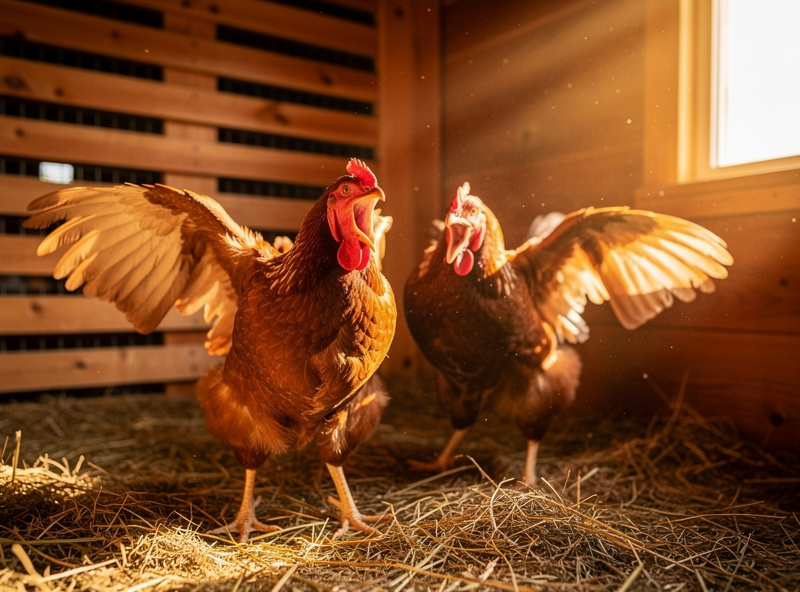
Heat stress kills chickens faster than cold, and the risk is not evenly spread across breeds. Physically, it comes down to heat dissipation: a large comb and wattles, minimal leg feathering, and a lighter body all help a bird shed heat, which is why Mediterranean breeds like Leghorns and Andalusians are consistently the most heat-tolerant class, while heavy, feather-footed, cold-climate breeds like Brahmas struggle first in a heat wave. My own cold-hardy flock (Wyandotte/Orpington/Australorp/Easter-Egger class, per the breeds I actually keep) falls on the heat-sensitive side of that spectrum, which is exactly why I set a conservative alert. Set your sensor alert thresholds to match your flock’s genetics, not a generic poultry textbook number, and if you run mixed breeds, set the alert for the most heat-sensitive bird — a Leghorn tolerates a conservative alert just fine, but a heavy breed will not survive a missed one.
The numbers in the table below are the practical alert thresholds I actually run and recommend — not lab-measured breed limits, since that granular a study doesn’t really exist — built around the general acute heat-stress range extension researchers document (roughly 27-38°C, worsening fast above 70% relative humidity) and adjusted down for the heat-sensitive end of the breed spectrum and up for the heat-tolerant end.
| Breed Category | Heat Alert Threshold | Emergency Threshold | Breeds |
|---|---|---|---|
| Cold-hardy heavy breeds | 27°C (80°F) | 32°C (90°F) | Brahmas, Wyandottes, Orpingtons, Australorps |
| Dual-purpose medium breeds | 29°C (85°F) | 35°C (95°F) | Rhode Island Reds, Barred Rocks, Sussex |
| Mediterranean light breeds | 32°C (90°F) | 38°C (100°F) | Leghorns, Andalusians, Minorcas, Anconas |
| Bantams (all types) | 29°C (85°F) | 35°C (95°F) | Silkies, Belgian d’Uccles, Sebrights |
| Meat birds (Cornish Cross) | 24°C (75°F) | 29°C (85°F) | Cornish Cross, Red Broilers |
Meat birds deserve special attention. University of Tennessee Extension’s poultry heat-stress research summary notes that fast-growing broilers with a large genetic potential for body weight are extremely susceptible to heat stress once temperatures exceed the thermoneutral zone, precisely because their metabolic and cardiovascular load is already high from the growth rate itself. Set meat-bird alerts several degrees lower than your layer thresholds, and treat any alert in the emergency range as requiring immediate water-and-shade intervention — these birds will not self-regulate by panting as effectively as a mature layer.
Cold Stress: When Insulation Is Not Enough
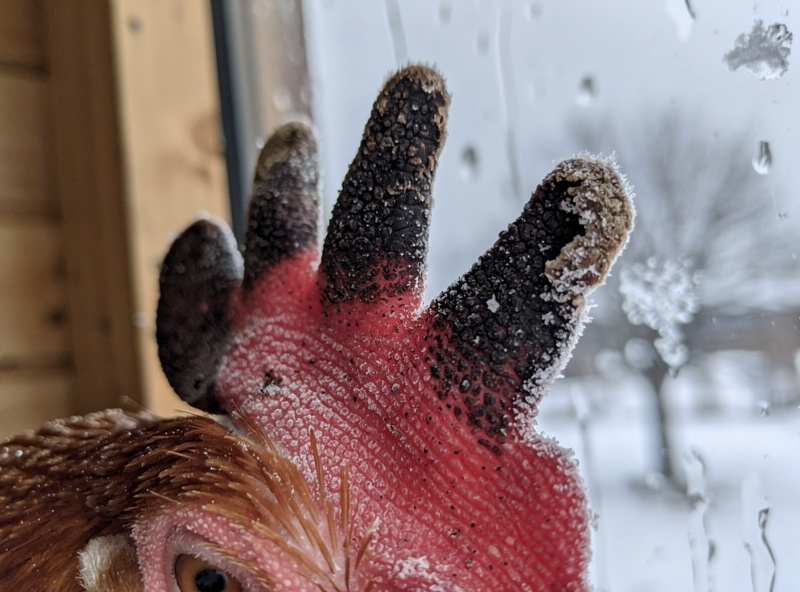
Chickens handle cold better than heat — a healthy, acclimated hen with access to dry shelter and unfrozen water can handle a genuinely hard Swedish winter without injury — but cold stress becomes dangerous when moisture, draft, and duration combine. A coop that is insulated but poorly ventilated builds humidity from respiration and droppings, and when the temperature drops below freezing, that moisture condenses on combs and wattles, setting up frostbite. eXtension’s poultry health guidance confirms the comb-type pattern I’ve seen firsthand: birds with smaller pea or rose combs get frostbite far less often than large single-comb breeds, and frostbite is worst overnight in a cold, poorly ventilated coop with damp bedding — which is exactly why I run my own coop’s deep litter and ridge/soffit ventilation to keep humidity down rather than sealing the place up tight against the cold. Set your cold alert around -9°C (15°F) for large-comb breeds (Leghorns, Andalusians, any single-comb Mediterranean) and -15°C (5°F) for rose-comb and pea-comb breeds (Wyandottes, Brahmas, Buckeyes) that resist frostbite naturally.
The sensor that triggers the alert should pair with a humidity reading. Temperature alone does not tell the full story — a cold, damp coop is a bigger frostbite risk than a colder, drier one. Most smart temperature sensors include a humidity sensor; if yours does not, add one. Mississippi State University Extension’s broiler-house cold-weather ventilation guidance — written for commercial houses, but the physics apply at backyard scale too — targets 50-70% relative humidity and flags condensation on walls or windows as the tell that ventilation needs to increase, regardless of what the thermometer alone says. If I see condensation on my coop windows in the morning, that overrides whatever the temperature alert did or didn’t say overnight.
For the full range of smart sensor options that handle temperature, humidity, and push notifications in one device, the best smart home sensors guide on HomeAutoCentral covers hardware selection, protocol compatibility, and installation specifics that apply to any monitoring application — including coops.
What I Actually Do When the Alert Fires
A threshold alert is only useful if it triggers an action, not just a notification you swipe away. On the heat side, a warning-level alert means I check water levels and open any manual vents on my way past; an emergency-level alert means I am out there with a fan and, if it is bad enough, ice bottles in the waterer. On the cold side, a warning-level alert is mostly a non-event for the flock itself — my birds have handled worse — but it is the trigger for me to check the heated waterer is actually cycling and not iced over, because a waterer that quietly fails at -15°C is a bigger risk than the cold itself. An emergency-level cold alert paired with a humidity spike is the one that gets me checking the ridge vent for ice blockage, since a blocked vent is usually the actual root cause, not the outside temperature.
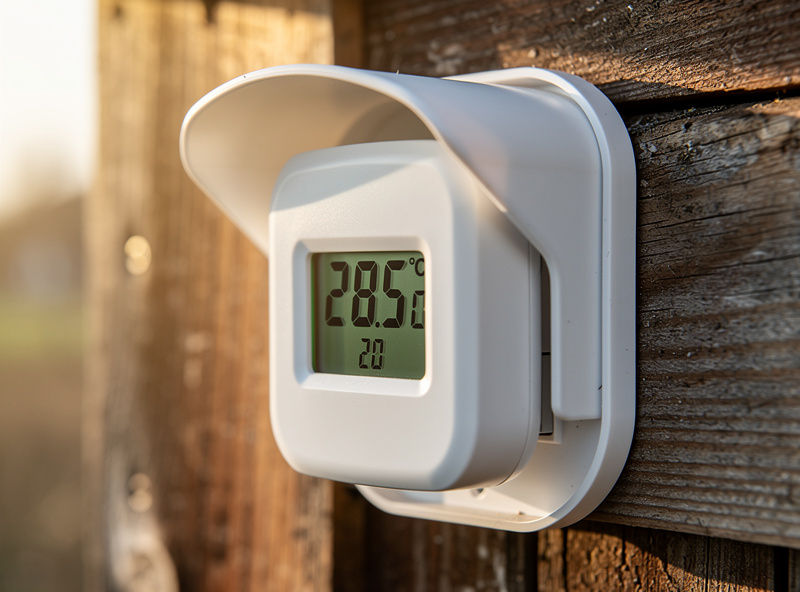
Sensor hardware matters more in a coop than almost anywhere else in a smart home. I have killed more than one battery-powered sensor to condensation because I mounted it without any standoff from a cold exterior wall — the metal back plate became the coldest surface in the coop and fogged up every morning. A cheap radiation shield (a slotted plastic cup works, a proper Stevenson-screen-style shield works better) and mounting the sensor an inch off any exterior wall solved it. Zigbee sensors have been more reliable through my coop’s hardware-cloth-and-plywood walls than Wi-Fi ones at the same range — fewer dropped readings, and the battery life holds up noticeably better through a Nordic winter, which matters when the coop is a walk out to the far end of the garden and not somewhere I want to be checking batteries weekly. I have also given up entirely on any sensor with an LCD screen out there; the display goes unreadable well before the electronics actually fail in deep cold, and it’s one more point of failure for no real benefit when the reading lives on my phone anyway.
Frequently Asked Questions
What temperature is too hot for chickens in a coop?
Heat stress begins around 27-29°C (80-85°F) for most breeds and becomes dangerous above 32°C (90°F), per extension research on poultry thermoneutral zones. Cold-hardy heavy breeds like Brahmas and Wyandottes show distress earlier, around 27°C. Meat birds like Cornish Cross need alerts several degrees lower still. Humidity makes heat stress worse at any given temperature, which is why a combined temperature-humidity reading is more useful than temperature alone.
Where should I place a temperature sensor in a chicken coop?
Mount the sensor at roost-bar height midpoint between side walls, protected from direct sun, heat lamps, and door drafts. A ceiling-mounted sensor reads 4-7°C too high. Use a small white plastic radiation shield or a yogurt container with ventilation holes to prevent the sensor body from absorbing radiant heat from coop walls.
What temperature is too cold for chickens at night?
Healthy, acclimated chickens in dry, draft-free coops tolerate genuinely hard cold well below freezing. The real danger is moisture, not the raw temperature — a cold coop with damp bedding and poor ventilation causes frostbite on combs and wattles that a colder but drier coop would not. Set cold alerts around -9°C for large-comb breeds and -15°C for rose-comb or pea-comb breeds, which resist frostbite naturally.
Can I use a regular smart home temperature sensor in a chicken coop?
Yes, but choose a sensor rated for -20°C to 50°C operating range and 10-90% non-condensing humidity. Zigbee and Z-Wave sensors work through coop walls better than Wi-Fi sensors at range. Avoid sensors with LCD screens — the display freezes below -10°C and the battery drains within days in sub-zero conditions.
How do I set up temperature alerts for my chicken coop?
Connect a compatible temperature sensor to your smart home hub and set two alert thresholds: a heat warning at 27°C-32°C (breed-dependent) and a cold warning at -9°C to -15°C (breed-dependent). Use a 2-minute averaging window to prevent false alarms from door openings or brief temperature spikes.
Do I need humidity monitoring along with temperature alerts?
Yes. Humidity is what determines whether cold temperatures actually cause frostbite — a damp, poorly ventilated coop is a bigger risk than a drier coop that reads colder on the thermometer. Monitor both values, and treat morning condensation on windows or walls as a ventilation problem that needs fixing regardless of what the temperature alert says.
Related Articles
- Smart Coop Door Schedules: Alexa, Google, Home Assistant
- Cold-Hardy Chicken Breeds: 10 Picks for Northern Climates
- Solar Panel Sizing for Chicken Coops
- Predator-Proof Chicken Coop: Complete Defense Guide
- Smart Chicken Coop Safety: Failsafes Every Setup Needs
Related Guides
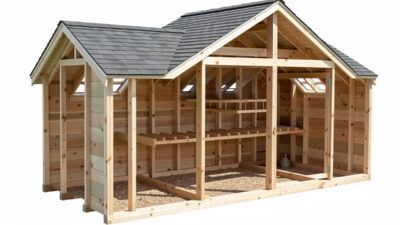
Chicken Coop Vent Placement Guide
Coop vent placement follows one rule above all: high exhaust, low intake, roost out of the line between them. Put…
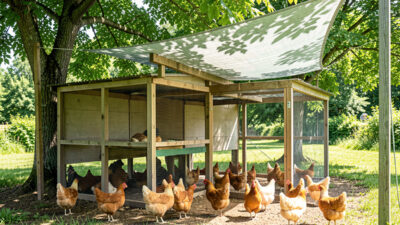
Cooling a Chicken Coop in Summer: Beat the Heat
Cooling a chicken coop in summer comes down to shade, airflow, and cool water — in that order. Chickens cannot…
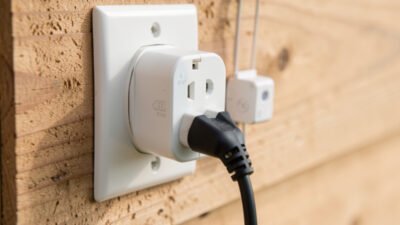
Smart-Plug Coop Heater Control: Temperature Triggers and Fail-Safes
Smart-plug coop heater control turns a dumb heater into a temperature-triggered, logged, fail-safe system: a sensor reads the coop, an…