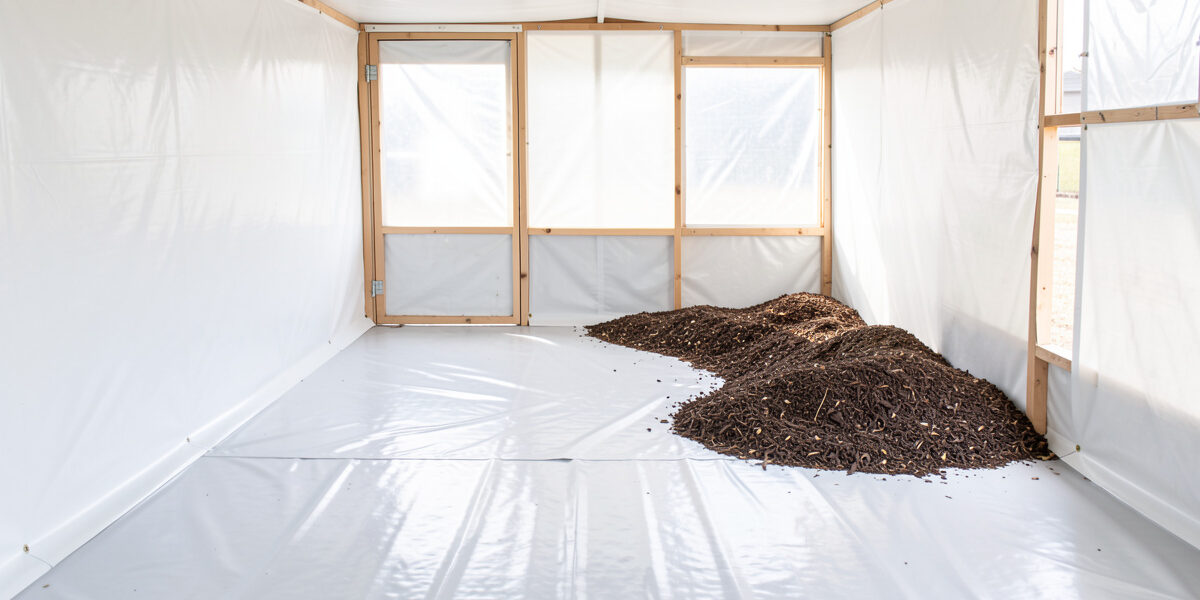
Sheet vinyl or linoleum over a plywood subfloor is the single best-value upgrade you can make to a coop floor: droppings and spilled feed wipe off a seamless surface in seconds, nothing soaks into the wood beneath, and it costs a fraction of what it saves you in cleaning time and rot. The catch is durability — chicken nails and sharp bedding grind through cheap vinyl in a few years — so you buy a heavier grade and cove it up the walls, and then it lasts. Done right, a vinyl floor is the closest thing to a wipe-clean coop there is.
I’ve laid vinyl over plywood in more than one coop, and every time it turned floor-cleaning from a scrubbing chore into a five-minute job. It also does something quieter but more important: it caps the plywood so the moisture that would otherwise rot the wood never reaches it. That’s why I treat vinyl not as a luxury but as insurance for the floor underneath. Here’s how to pick a grade that survives a flock, the coving trick that makes it genuinely waterproof, and the honest limits — where cheap vinyl fails and how long to expect the good stuff to last.
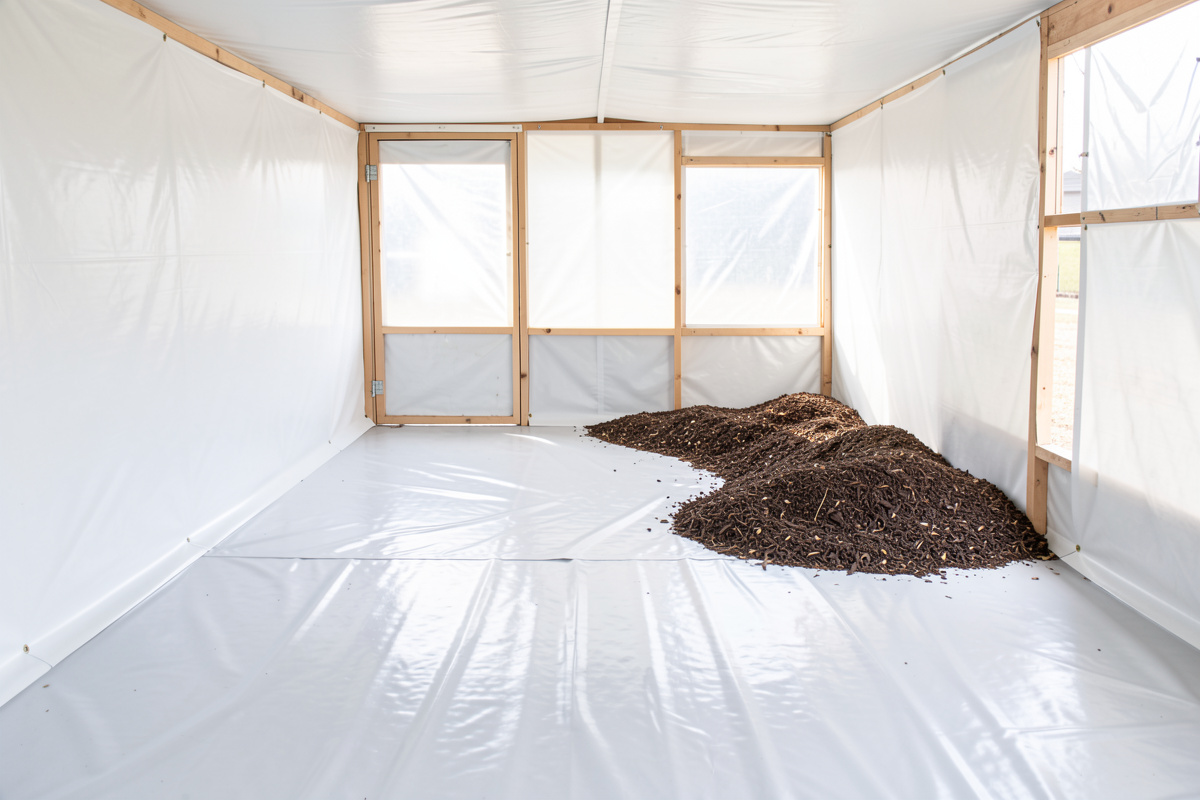
This is a spoke off my chicken coop flooring options guide, and it goes hand in hand with sealing a plywood coop floor — vinyl is essentially a peel-and-lay alternative to a painted sealer, giving you the same wipe-clean surface with a physical layer instead of a coating.
Why Put Vinyl or Linoleum in a Chicken Coop?
Vinyl gives you a seamless, non-absorbent surface that droppings and moisture can’t penetrate, so cleaning is a wipe or a scrape instead of a scrub, and the plywood beneath stays dry and rot-free. It’s the fastest-cleaning coop floor there is, and as a protective layer over wood it pays for itself by extending the subfloor’s life.
The magic is the continuous surface. A painted sealer can chip; a tiled floor has grout lines that pack with muck; bare wood absorbs everything. A single sheet of vinyl run wall to wall has no gaps for droppings to lodge in and nothing porous to soak up moisture, so a wide scraper takes the deep litter off and a damp cloth finishes it. Just as important, it’s a moisture barrier for the plywood — the wood underneath never gets wet, which is exactly the failure mode that rots unsealed subfloors, as I cover in the plywood sealing guide. For the low daily-maintenance system I aim for, vinyl slots right into the cleaning and maintenance routine as the surface that makes the whole thing fast.
Vinyl vs Linoleum vs Luxury Vinyl Plank: What’s the Difference?
Sheet vinyl is a flexible plastic roll that’s cheap and seamless but tears; true linoleum is a tougher, natural-material sheet that lasts longer; luxury vinyl plank (LVP) is rigid, very durable, but has seams between planks. For a coop, a heavy sheet vinyl or linoleum coved up the walls is usually the best balance of seamlessness and toughness.
| Material | Seamless? | Durability | Cost | Coop verdict |
|---|---|---|---|---|
| Sheet vinyl (cheap) | Yes | Low — tears, scratches | Lowest | Fine short-term; replace often |
| Heavy commercial sheet vinyl | Yes | Good — thick wear layer | Medium | Best all-round choice |
| True linoleum | Yes | High — tough, long-lived | Medium–high | Excellent, durable option |
| Luxury vinyl plank (LVP) | No — plank seams | Very high | Higher | Durable but seams trap muck |
For a coop I steer toward a heavier commercial-grade sheet vinyl or genuine linoleum, because the wear layer is what nails and grit attack. Manufacturers like Armstrong Flooring and Congoleum publish wear-layer thicknesses (measured in mils) on their sheet products — thicker is what survives a flock. LVP is tempting because it’s tough, but the plank seams defeat the whole point by giving muck a place to pack in, so if I use it I seal the seams. You can compare heavier commercial sheet vinyl rolls on Amazon’s sheet vinyl listings to see the wear-layer specs side by side.
As an Amazon Associate I earn from qualifying purchases.
How Do You Install Vinyl So It’s Actually Waterproof?
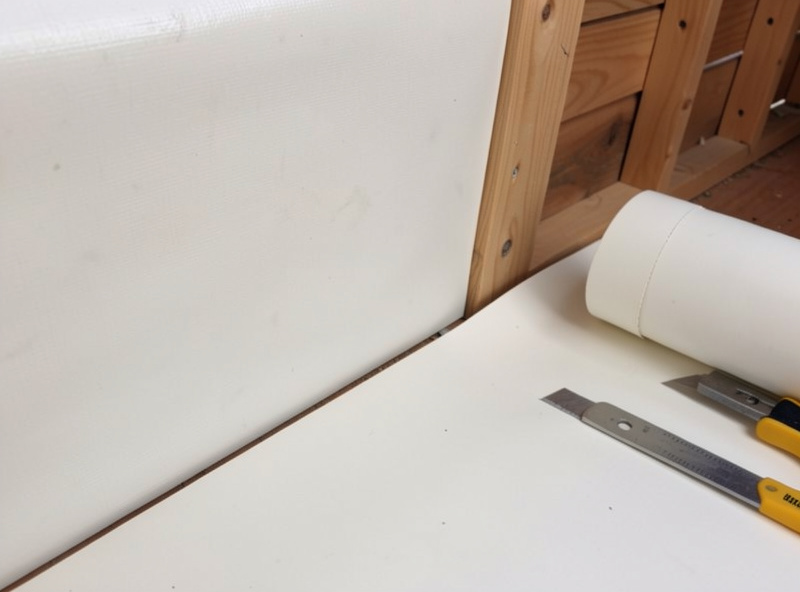
Lay the vinyl as one continuous sheet and cove it up the walls a few inches, so there’s no flat seam at the floor-wall joint for moisture and muck to reach. Glue it down fully to a clean, dry, smooth plywood subfloor, and seal any unavoidable seams. The coving is what turns a floor covering into a waterproof tray.
The coving is the detail that separates a real coop floor from a slippery liability. If you just lay vinyl flat to the wall, water and droppings work into that ninety-degree corner and eventually behind the sheet, wetting the plywood you were trying to protect. Instead I run the vinyl up the wall three or four inches and fix it there, so the floor and the base of the wall become one continuous, coved surface — a shallow tray with no crack anywhere. Full adhesion matters too: a loose-laid sheet ripples, and birds’ nails catch the ripples and tear them, so I glue the whole surface to a subfloor that’s clean, dry, and smooth (fill any screw dimples first, or they telegraph through and become wear points). Where two sheets must meet, I overlap and seal the seam. Get the coving and the adhesion right and the floor is genuinely waterproof — a spilled waterer just pools and wipes up instead of soaking into the coop.
How Long Does a Vinyl Coop Floor Last?
Expect roughly 5 to 10 years from a decent vinyl coop floor before nails, grit, and cold-brittleness wear or tear it enough to replace. Cheap thin vinyl can fail in a couple of years; heavy commercial sheet or true linoleum reaches the top of that range. It’s a wear layer, so plan on replacing it eventually — but relaying a sheet is a cheap afternoon.
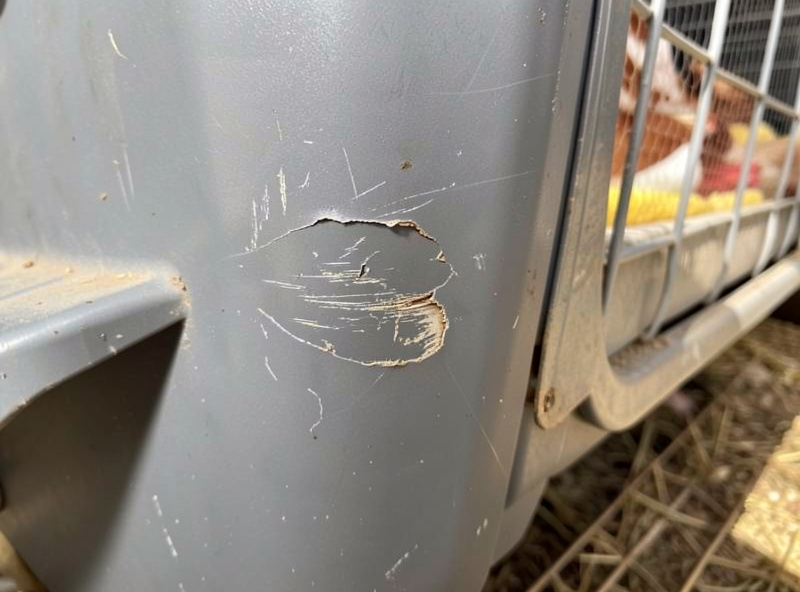
Vinyl is a consumable, and it’s honest to say so. The wear points are predictable: the traffic lane by the pop door, where nails and grit concentrate, goes first, and in a cold coop cheap vinyl gets brittle and can crack. I’ve pulled up a scratched, torn strip near the door on a floor that was otherwise fine — that’s the normal failure. You slow it down with a heavier grade, by keeping a rubber mat or extra offcut on the busiest lane, and by not letting sharp bedding grind under foot traffic. But even when it does wear out, replacing a sheet of vinyl over intact plywood is far cheaper and faster than dealing with a rotted subfloor, which is exactly what the vinyl prevented. That’s the deal: a modest, replaceable wear layer buys you a permanently protected, wipe-clean floor.
Is Vinyl Too Slippery or Too Cold for Chickens?
Bare vinyl is slick and offers little insulation, but neither matters in practice because you don’t keep chickens on a bare floor — you keep bedding on it. A few inches of shavings or deep litter gives the birds grip and warmth while the vinyl underneath does the waterproofing. The floor material and the bedding are two different jobs.
I mention this because keepers sometimes worry a smooth floor will hurt the birds’ footing or chill them, and on an exposed sheet it would. But no coop floor should be exposed — the litter is the surface the birds actually stand and scratch on, and the vinyl is the sealed layer beneath it that keeps the plywood dry. In a cold coop the deep-litter bed carries the insulation, not the floor, so a cold vinyl surface under 4 to 6 inches of composting shavings is irrelevant to the birds’ feet. The one time slickness matters is when you’ve cleared the floor to bare vinyl for a wash-down — then it’s slippery for you, so I keep that quick and put the bedding straight back. Think of the vinyl as the tray and the bedding as the floor, and the slippery-and-cold objection disappears.
Is a Vinyl Floor Worth It for Your Coop?
If you have a plywood-floored coop and want the fastest possible cleaning plus rot protection for the wood, vinyl is almost always worth it — a modest cost for a wipe-clean, waterproof surface. Skip it only if you’re running deep litter over a floor you never expose, or if you’d rather paint a sealer instead of laying a physical sheet.
For most keepers with a wooden coop, I’d put a coved sheet of heavy vinyl down without hesitation — it’s the cheapest way to make a coop genuinely easy to clean and to protect the subfloor at the same time. The only real alternatives are a painted sealer, which I cover in the plywood sealing guide, or accepting a bare floor under permanent deep litter. Between a painted coating and a vinyl sheet it’s largely preference: the coating is thinner and can be spot-repaired, the vinyl is a thicker physical barrier that’s faster to lay. Whichever you choose, cove the wall joint, keep the subfloor dry, and you’ve turned the coop floor from a chore into a wipe. Then top it with whatever bedding suits your climate from the bedding material guide, and the floor does its job for a decade with minutes of upkeep.
Further Reading
- Chicken Coop Flooring Options: What Actually Works
- Sealing a Plywood Coop Floor So It Cleans In Seconds
- Concrete vs Plywood vs Dirt Coop Floor
- Coop Cleaning, Bedding & Maintenance: The Complete System
- Best Chicken Coop Bedding: Complete Material Guide
Is vinyl flooring safe and good for a chicken coop?
Yes. A sheet of vinyl or linoleum over a plywood subfloor gives a seamless, non-absorbent surface that cleans in seconds and keeps the wood beneath dry and rot-free. Choose a heavier commercial-grade sheet or true linoleum for durability, glue it down fully, and cove it up the walls so there is no seam for moisture to reach.
How long does vinyl last in a chicken coop?
Roughly 5 to 10 years. Cheap thin vinyl can tear or crack within a couple of years, especially at the pop-door traffic lane and in cold coops where it gets brittle, while heavy commercial sheet vinyl or true linoleum reaches the top of that range. It is a replaceable wear layer, but relaying a sheet over intact plywood is quick and cheap.
Should I cove the vinyl up the coop walls?
Yes. Running the vinyl a few inches up the walls and fixing it there removes the flat floor-to-wall seam where moisture and muck would otherwise reach the plywood. Coving turns the floor into a shallow waterproof tray, so a spilled waterer pools and wipes up instead of soaking into the subfloor.
Is luxury vinyl plank good for a coop floor?
LVP is very durable but it has seams between the planks that trap droppings and moisture, which defeats the seamless advantage you want in a coop. If you use it, seal the seams. For most coops a heavy continuous sheet of vinyl or linoleum coved up the walls is the better choice.
Related Guides
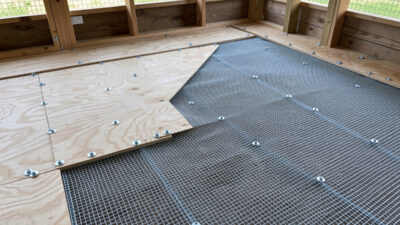
Rat-Proof Coop Floor: Stop Diggers Coming Up Through It
Rats don’t come over the coop wall — they come up through the floor, gnawing through plywood or tunneling under…
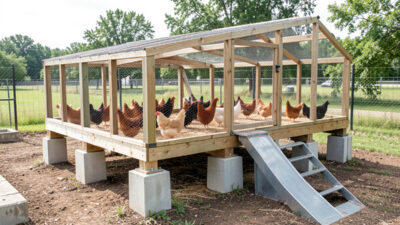
Raising a Coop Off the Ground: Footings & Skids
Every coop with a wooden floor should sit off the ground — a few inches at minimum, ideally enough to…
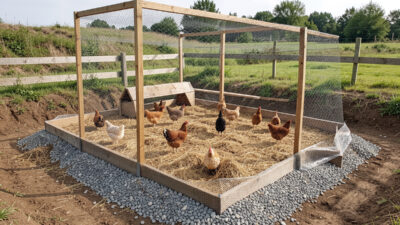
Dirt-Floor Coop Done Right: Drainage & Dig-Proofing
A dirt-floor coop only works if the water leaves and the diggers can’t get in — get those two things…