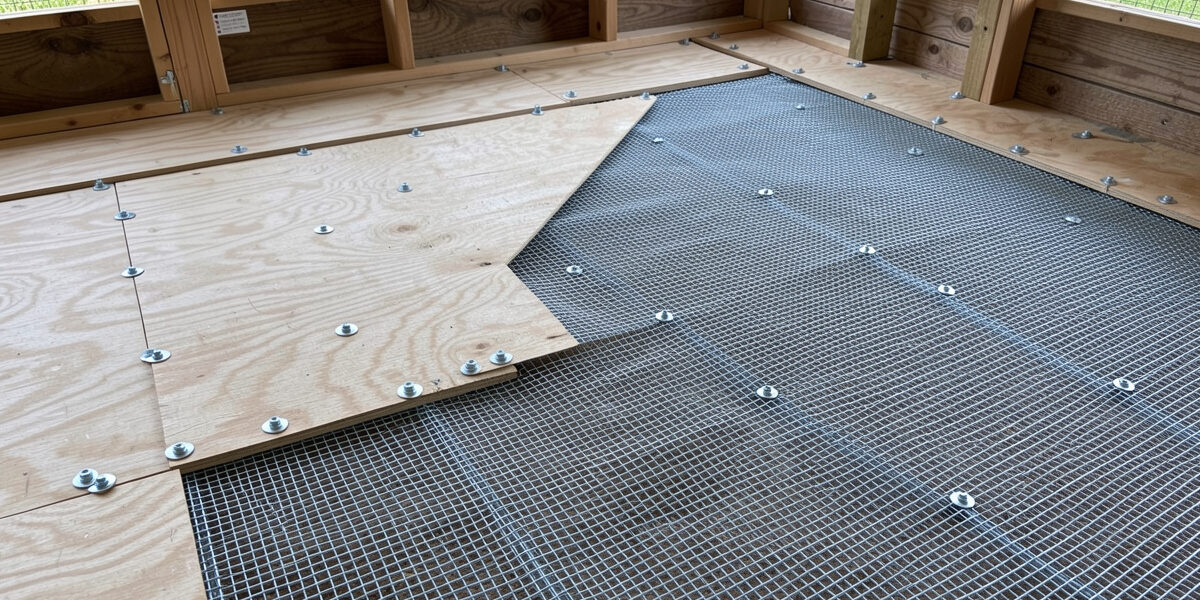
Rats don’t come over the coop wall — they come up through the floor, gnawing through plywood or tunneling under a dirt or sand base to surface right inside. You stop them with a physical barrier they can’t beat (½-inch, 19-gauge hardware cloth under or into the floor) and by removing the food and shelter that draw them in the first place. Wire is the wall a rat can’t chew; sanitation is what stops it wanting to try. You need both.
I learned where they actually attack from my own cameras. The last mustelid my night-vision caught at the wire was working a floor corner where two apron sections overlapped by only a couple of inches — a gap I’d left because I got lazy on a cold day. Rats are the same, just smaller and more patient: they find the one unprotected seam, the one spot where wood meets ground, and they work it. Below is exactly how I rat-proof a coop floor now — the mesh that actually stops them, where they get in, and the food-and-harborage side that most guides skip entirely.
This is a spoke off my chicken coop flooring options guide and a close companion to the underground predator barrier post — the same buried wire that stops a fox digging in also stops a rat coming up. If rats are your problem, read both.
How Do Rats Actually Get Into a Coop Through the Floor?
Rats enter through the floor three ways: gnawing directly through wood floors, especially at soft or damp spots and edges; tunneling under the walls to surface inside a dirt or sand floor; and squeezing through any gap larger than about half an inch. They’re powerful chewers and persistent diggers, and they target the floor because it’s the coop’s softest, least-watched surface.
Understanding the attack tells you where to defend. A rat’s incisors will work through unprotected plywood given a food motive on the other side, and they start where the wood is weakest — a damp edge, a seam, a knot. On a dirt or sand floor there’s no chewing needed at all; they simply burrow under the wall and pop up inside, the same tunnel route a fox uses scaled down. And they exploit gaps: rodent-exclusion guidance from programs like UC IPM notes that rats can pass through openings as small as about ½ inch and mice through a gap near ¼ inch, which is exactly why mesh size matters so much. The floor is their preferred route because it’s dark, unwatched, and often the one part of the coop the builder assumed was safe because it’s “solid.” It isn’t, unless you made it so.
What Mesh Actually Stops Rats?
Use ½-inch, 19-gauge galvanized hardware cloth to stop rats; drop to ¼-inch if you also need to exclude mice. Chicken wire does nothing — rats squeeze through the hex gaps and pull it apart. The mesh must be a genuine hardware cloth, and the gauge (wire thickness) matters as much as the opening size.
| Material | Opening | Stops rats? | Stops mice? | Verdict |
|---|---|---|---|---|
| Chicken wire (poultry netting) | ~1 in hex | No | No | Useless as a floor barrier |
| ½-inch hardware cloth, 19-gauge | ½ in | Yes | Not fully | Standard rat-proof floor mesh |
| ¼-inch hardware cloth, 23-gauge | ¼ in | Yes | Yes | Use where mice are also a problem |
This is the single most important choice in the whole job, and it’s the one people get wrong. Chicken wire is designed to keep chickens in, not rodents out — a rat slips through the hexagonal gaps or simply bends the thin wire aside. Hardware cloth is a welded steel mesh; ½-inch in a stout 19-gauge is the standard for rat exclusion, the same hardware cloth versus chicken wire distinction that governs every opening in a secure coop. If mice are also on your radar, step down to ¼-inch, because a young mouse walks through ½-inch mesh. Don’t cheap out on gauge either — a thin, flimsy hardware cloth can still be worked loose over time. The mesh is your permanent, non-negotiable barrier; get it right once and it’s the wall the rat can’t beat.
How Do You Build the Wire Into the Floor?
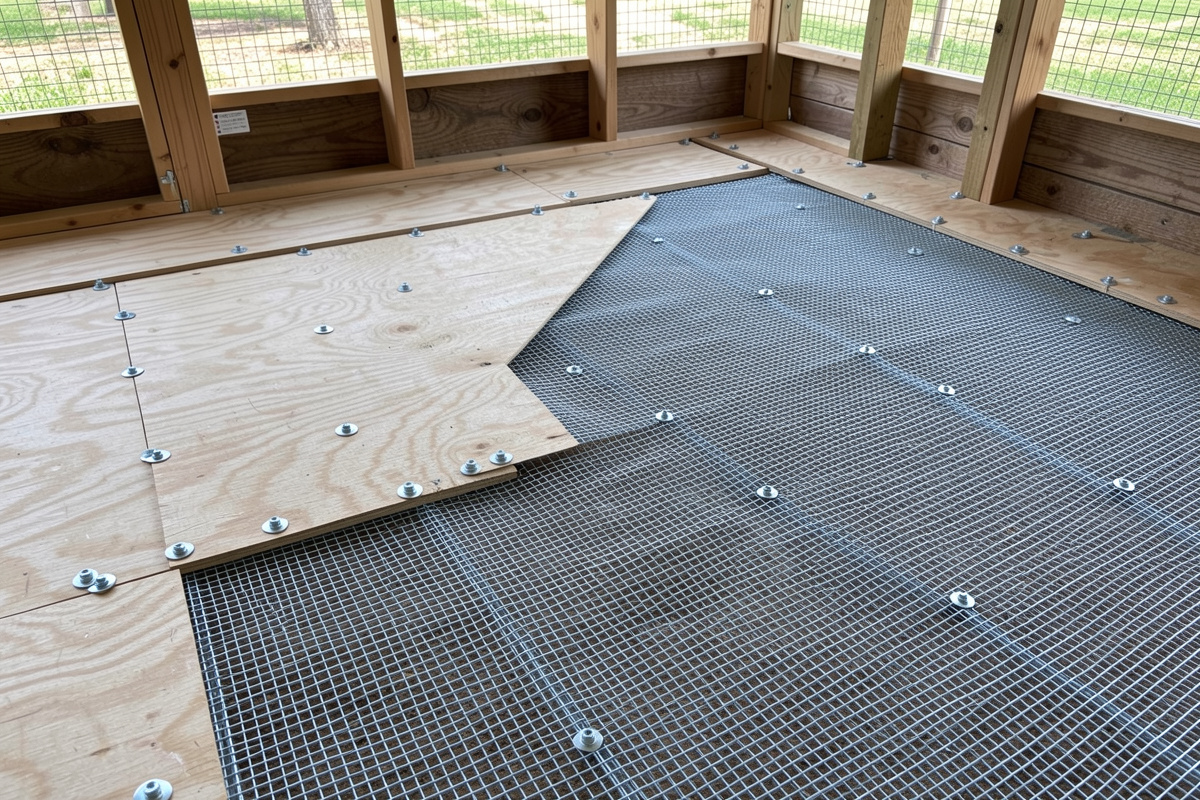
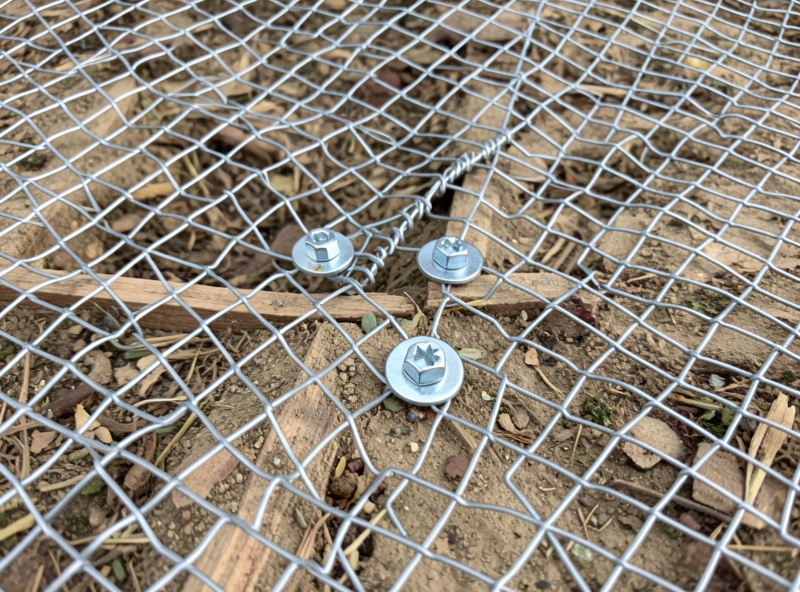
Line the floor with hardware cloth before the finish floor goes down, or bury an apron around the perimeter of a dirt or sand floor. Overlap every seam by at least a hand’s width, and screw the edges down with fender washers so nothing can be pried or gnawed loose. The seams and edges are where rats win, so overbuild them.
For a wooden floor, I sandwich the hardware cloth into the assembly: lay the mesh over the joists, then the plywood on top, so a rat that chews through the wood meets steel and stops. For a dirt or sand floor, the wire goes down as a full underlay or a buried perimeter apron extending outward, exactly like the fox-stopping apron and footer geometry. The details that actually matter are the joins: I overlap adjacent sheets by a hand’s width — never the two-inch scrimp that let a mustelid find my seam — and I fasten the edges tight with screws and fender washers so there’s no lip to bite or bend. A raised coop makes all of this easier and adds another layer, which is why floor-proofing and raising the coop on a proper foundation go together. The wire is only as good as its weakest seam, so spend your patience there.
Why Sanitation Matters as Much as Wire
Wire keeps rats out of the floor, but food and shelter are what bring them to the coop in the first place — so you cut off both. Remove spilled and stored grain, use a rodent-proof feeder, keep the litter dry, and clear the harborage around the coop. A coop with no free meal and no place to nest is a coop rats leave alone.
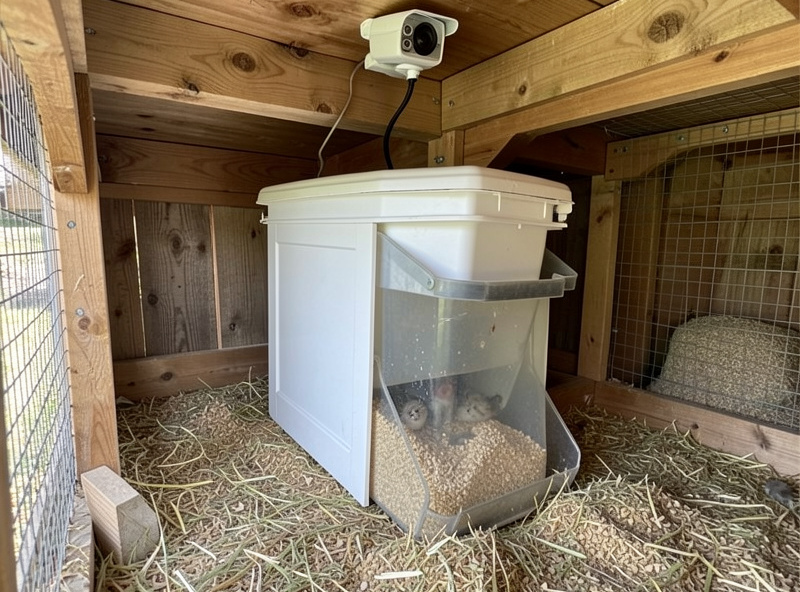
You can armor the floor perfectly and still be overrun if you’re running a free buffet. Rats are drawn by easy calories, and an open feeder or grain spilled overnight is exactly that. I switched to a treadle feeder that closes when the bird steps off — part of the setup in my automated feeders and waterers guide — so there’s no food available after the flock roosts. I don’t leave feed out overnight, I keep the deep litter dry so it isn’t a warm nest, and I clear the woodpiles, long grass, and clutter around the coop that give rats cover to stage from. Public-health rodent guidance from bodies like the CDC comes down to the same two levers: exclusion and sanitation. Do only the wire and you fight a constant siege; do both and the pressure drops to almost nothing because the coop stops being worth the effort.
What I’d Do to Rat-Proof a Floor Today
Starting today I’d sandwich ½-inch, 19-gauge hardware cloth into the floor with hand’s-width overlaps and washered edges, raise the coop off the ground, run a treadle feeder, and clear the harborage around it. That combination — barrier plus foundation plus sanitation — is what actually holds, and no single piece of it does the job alone.
The mistake I made early was treating rat-proofing as one thing: I put down wire and thought I was done, then left a stingy seam and stored feed in a chewable bin nearby, and the rats found both. Now I treat it as a system with no weak link — the mesh stops the chewers and diggers, the raised foundation removes the harborage underneath, and the feeder and clean-up remove the reason they came. Watch your own coop with a camera if you can; the footage tells you where they’re actually testing the floor, and it’s rarely where you’d guess. Rats are relentless and patient, so the coop has to be more patient than they are. Build the floor as a barrier they can’t beat and a site that offers them nothing, and you win by making the fight not worth their while. For the whole-coop picture beyond the floor, my predator-proof coop guide ties it all together.
Related Guides
- Chicken Coop Flooring Options: What Actually Works
- Underground Predator Barriers: Apron & Footer Designs
- Hardware Cloth vs Chicken Wire: Why It Matters
- Raising the Coop Off the Ground: Footings, Skids & Rot Prevention
- Dirt-Floor Coop Done Right: Drainage & Dig-Proofing
What mesh keeps rats out of a chicken coop floor?
Half-inch, 19-gauge galvanized hardware cloth is the standard for stopping rats. If you also need to exclude mice, use quarter-inch hardware cloth, because a young mouse can pass through half-inch mesh. Chicken wire does not work at all, as rats squeeze through the hex gaps and pull the thin wire apart.
Can rats chew through a plywood coop floor?
Yes. A rat’s incisors will work through unprotected plywood if there is food on the other side, starting at damp edges, seams, or knots where the wood is weakest. The fix is to sandwich hardware cloth into the floor so a rat that chews through the wood meets steel and stops.
How do I stop rats tunneling up through a dirt coop floor?
Line the floor with hardware cloth or bury a hardware-cloth apron around the perimeter extending outward from the walls, overlapping every seam by at least a hand’s width and fastening the edges down. A rat trying to tunnel under the wall hits the buried wire and cannot get past it.
Does keeping the coop clean really stop rats?
It is half the job. Wire keeps rats out of the floor, but food and shelter are what draw them to the coop. Use a treadle or rodent-proof feeder, never leave feed out overnight, keep litter dry, and clear woodpiles and long grass around the coop. Exclusion plus sanitation together is what actually holds.
Related Guides
Raising a Coop Off the Ground: Footings & Skids
Every coop with a wooden floor should sit off the ground — a few inches at minimum, ideally enough to…
Vinyl & Linoleum Coop Floor: The Easy-Clean Upgrade
Sheet vinyl or linoleum over a plywood subfloor is the single best-value upgrade you can make to a coop floor:…
Dirt-Floor Coop Done Right: Drainage & Dig-Proofing
A dirt-floor coop only works if the water leaves and the diggers can’t get in — get those two things…