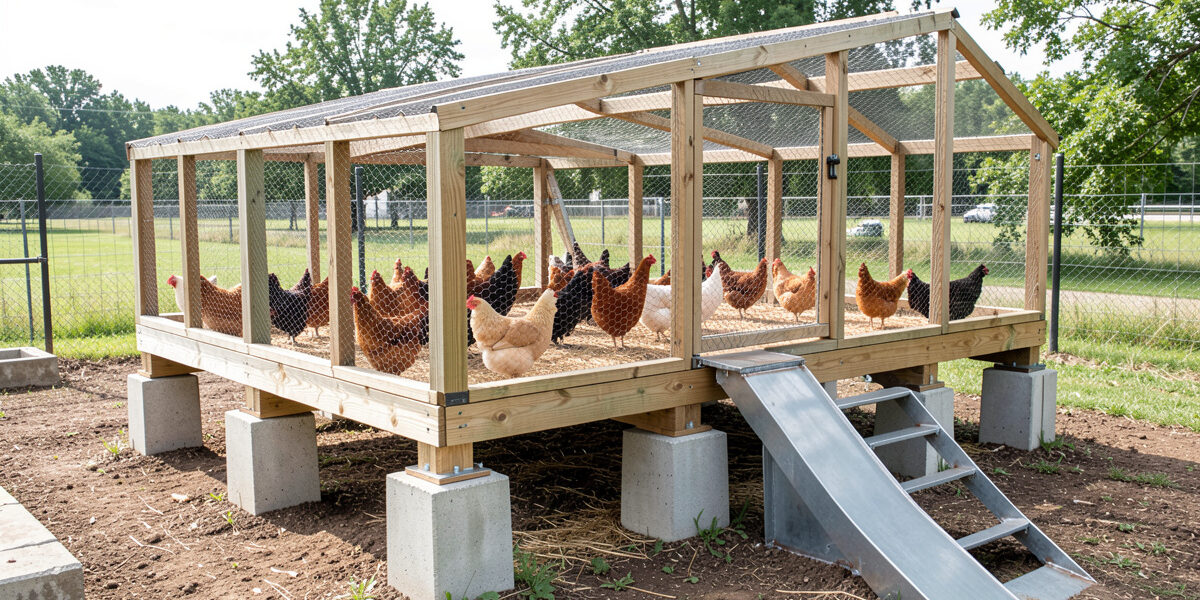
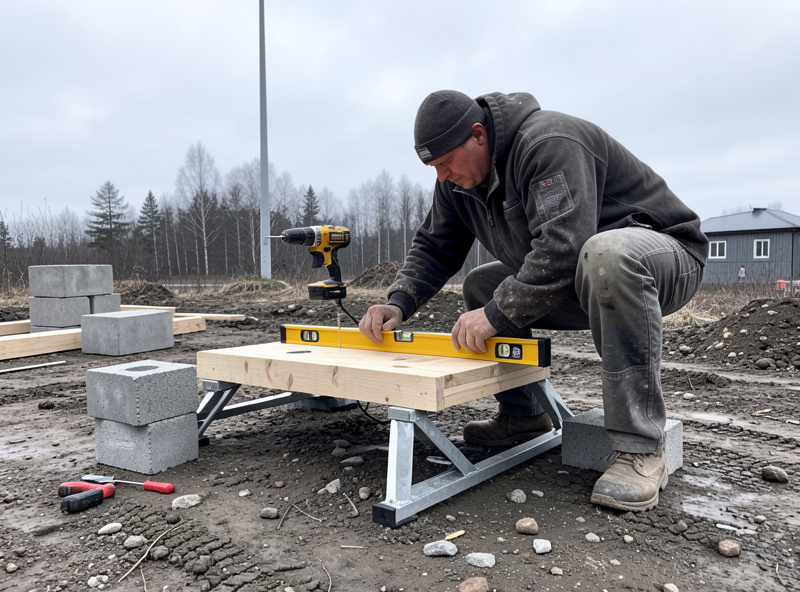
Every coop with a wooden floor should sit off the ground — a few inches at minimum, ideally enough to see daylight under it — because a floor resting on soil rots from below and hands predators a dark cavity to work in. Raising it on skids, pier blocks, or proper footings keeps the wood dry, lets air move underneath, and closes the rodent harborage that a ground-level coop creates. It’s the cheapest rot-prevention and pest-control move you can make, and it happens before you ever choose a floor material.
The mistake I see most often is a beautifully built coop set straight onto damp grass, its plywood floor quietly drinking ground moisture through the underside where no top-side sealer can help. Lift that same coop a foot into the air and the problem evaporates: the wood stays dry, the underside dries out after rain, and there’s nowhere for a rat to nest unseen. On my own builds the welded steel run frame ties into a raised, level base for exactly this reason — the whole structure sits up off the wet ground on a foundation that won’t wick or rot. Here’s how to choose between skids, blocks, and footings, how high to go, and the wood-to-ground details that decide whether the base lasts five years or fifty.
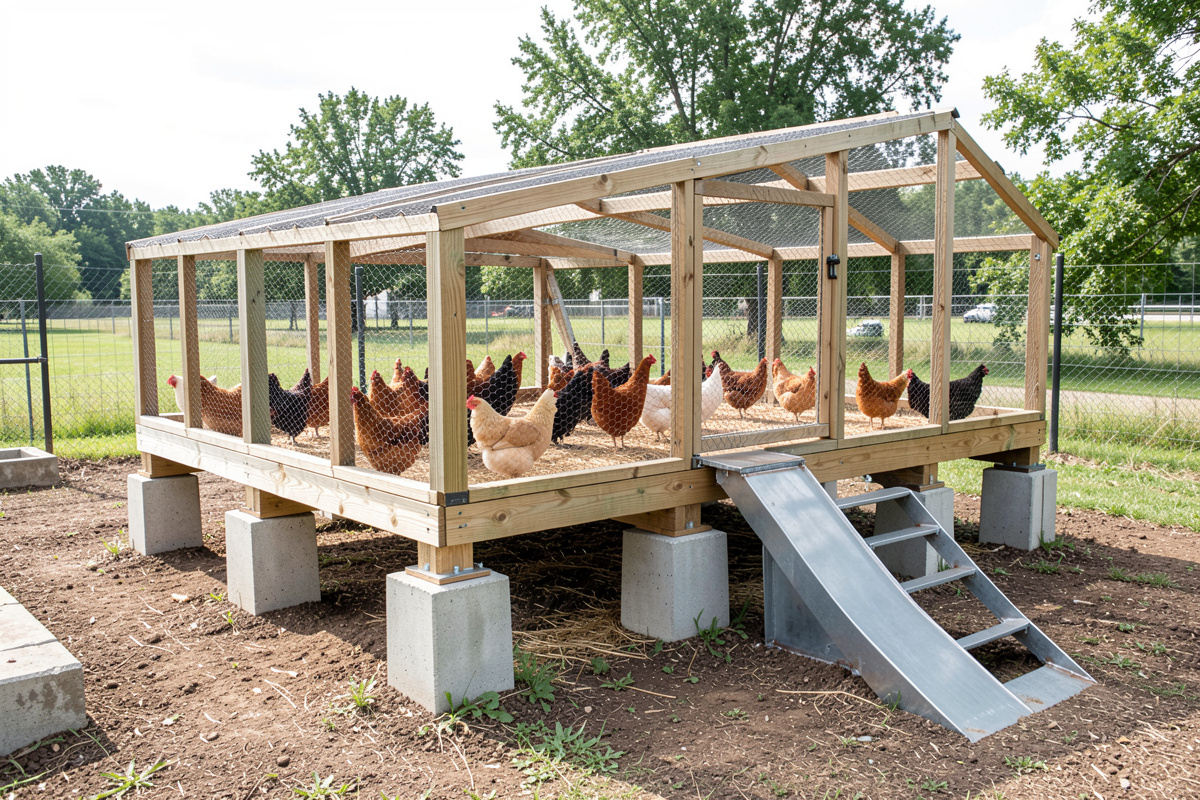
This is a spoke off my chicken coop flooring options guide. The foundation is the layer beneath every floor material — get it right and a sealed plywood floor or a vinyl floor lasts far longer, because the underside stays as dry as the top.
Why Should a Coop Be Raised Off the Ground at All?
A raised coop stays dry underneath, so the floor can’t rot from ground moisture; it lets air circulate to dry the structure after rain; and it removes the dark, undisturbed cavity where rats nest and burrow. Those three benefits — dryness, airflow, and no harborage — are why nearly every long-lasting coop sits on a foundation rather than on the soil.
Wood in contact with damp ground is wood that’s going to rot, full stop. The USDA Forest Products Laboratory has documented for decades that sustained moisture is what drives wood decay, and a floor sitting on soil is permanently wicking it. Raise the coop and the underside dries out between rains, breaking the cycle. The second win is pest control: a coop flat on the ground creates a sheltered, dark gap underneath that rats love — either seal it completely tight or lift the coop high enough that the space is open, bright, and exposed, which rodents avoid. A predator that can’t shelter under your coop is a predator working at a disadvantage. The airflow underneath also helps in a cold, damp climate by keeping the whole floor assembly from staying saturated. For very little extra effort at build time, raising the coop solves rot and rodents at once.
Skids, Pier Blocks, or Footings: Which Foundation Do You Need?
Skids suit movable coops and let you drag the whole thing to fresh ground; pier blocks are the simple, cheap choice for a fixed small coop; poured concrete footings below the frost line are for permanent, heavy, or large coops that must never shift or heave. Match the foundation to whether the coop moves and how hard your ground freezes.
| Foundation | Best for | Movable? | Effort/cost | Notes |
|---|---|---|---|---|
| Pressure-treated skids | Portable / smaller coops | Yes — drag to new ground | Low | Sits on gravel; rotate to fresh grass |
| Concrete pier / deck blocks | Fixed small–medium coops | No | Low–medium | Quick, level, keeps wood off soil |
| Poured footings below frost line | Permanent / large / heavy coops | No | Highest | Won’t heave or settle; most durable |
For a movable coop I build on pressure-treated skids — heavy runners under the frame that let me winch or drag the coop to fresh ground when the run gets tired, resting on a bed of gravel so the skids themselves stay drained. For a fixed small-to-medium coop, concrete deck blocks are hard to beat: cheap, fast, and they lift the frame cleanly off the soil on a level set of points. For a permanent, heavy build — especially a walk-in coop like mine — I go to poured footings taken below the frost line so nothing heaves when the ground freezes and thaws. That last point matters enormously in a cold climate: a footing that stops above the frost line will lift and drop with every freeze cycle and rack the structure over a few winters.
How High Should You Raise the Coop?
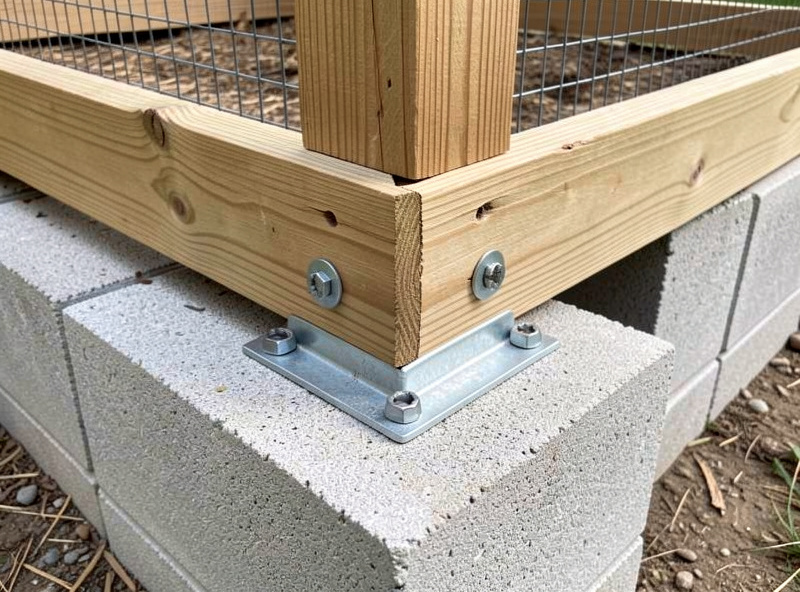
Either seal the underside gap completely tight to a few inches, or lift the coop at least 12 inches so the space beneath is open, bright, and cleanable — the worst height is the in-between, where there’s a sheltered cavity you can’t reach. High enough to sweep under, or low enough to exclude entry: those are the two good answers.
The logic is all about the space underneath. A coop raised a foot or more gives you an open, ventilated gap you can see into, rake out, and let the birds forage in — no rodent will nest in a bright, exposed, regularly-disturbed space. A coop sealed tight right down to the ground denies entry entirely. What you never want is the middle ground: a four-to-eight-inch gap that’s dark and sheltered but too low to reach, which is a rat hotel you built by accident. I go tall on fixed coops so I can walk a rake under them, and on movable skid coops I keep the runners tight to a gravel pad. If you do close the gap, close it with hardware cloth skirting, not solid board that just makes a better hidden burrow — the same hardware cloth logic that protects every other opening applies here too.
How Do You Stop the Foundation Wood From Rotting?
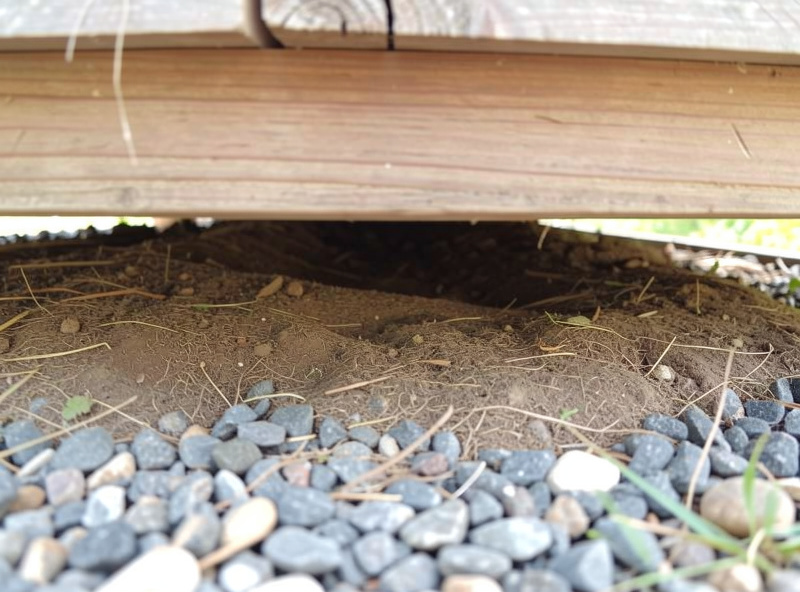
Keep wood from touching soil or standing water: use ground-contact-rated pressure-treated lumber for anything near the earth, set posts and skids on concrete or metal bases rather than in the dirt, and seal cut ends. The rot always starts where wood meets wet ground, so every detail is about breaking that contact.
Ground-contact is a specific rating, not a marketing word. Pressure-treated lumber comes in exposure categories, and the standards bodies like the American Wood Protection Association distinguish “above ground” from “ground contact” treatment for good reason — only the ground-contact grade belongs anywhere near soil. Even then, I keep the wood off the dirt with a physical break: skids rest on gravel, posts sit in metal standoff bases on concrete, and no untreated framing touches the earth. Cut ends are the weak point in any treated piece because the cut exposes untreated core, so I flood every cut with a preservative before it goes down. On my own coop the steel of the welded run frame does part of this job — steel doesn’t rot at the ground line the way wood does — and where wood meets the ground it’s ground-contact treated and standing on concrete, never in it. Do these small things and the foundation outlives the coop on top of it; skip them and the base rots out from the bottom while the walls are still perfect.
Does a Raised Floor Get Too Cold in Winter?
An open gap under a raised coop lets cold air move against the floor, so in a hard-freeze climate you insulate the floor assembly itself rather than closing off the life-giving airflow. Insulate between the joists and add deep litter on top, and a raised floor stays warm without trapping the moisture that a sealed-to-the-ground coop holds.
This is the one genuine trade-off with raising a coop in a cold climate, and it’s easily solved. Yes, an exposed underside means winter air is in contact with the floor, which sounds like a recipe for cold feet. But the answer is never to seal the coop back down onto the wet ground — that just swaps a cold floor for a rotting, damp one. Instead I build the floor as an insulated assembly: rigid foam or batts between the floor joists, sheathed underneath so rodents can’t pull it out, with a sealed floor surface and deep litter on top. That sandwich keeps the birds’ side warm while the underside stays dry and ventilated. My walk-in coop in Sweden sits up off the ground on footings with an insulated, double-layered floor, and it’s warmer through a −20 °C night than any ground-level coop I’ve kept, precisely because the floor is dry — and dry insulates, while damp conducts cold straight through. Raise it, insulate the assembly, and you get warmth and dryness together instead of trading one for the other.
Raised Foundation and Predator-Proofing Work Together
Raising the coop and sealing against diggers are the same project seen from two angles: the height removes the harborage, and the buried or skirted hardware cloth removes the tunnel. Do both and you’ve closed the floor to predators from above the ground and below it in one pass.
A raised coop that still lets a fox dig under the run wall, or a rat come up through an unprotected gap, isn’t finished. The foundation decision and the dig barrier belong together: I lift the coop for dryness and airflow, and I tie a hardware-cloth apron or footer into the base so nothing tunnels in — the geometry I lay out in my underground predator barrier guide. On a fixed footing build, that apron gets buried and grassed over; on a skid coop, it skirts the base and pins to the gravel. Either way the raised base and the buried wire are one system. The whole point of getting the foundation right — the same point that runs through every floor decision in the flooring comparison — is that the parts you can’t easily fix later are the ones under everything else. Start at the ground, get the coop up off the wet earth and closed to diggers, and the floor you build on top of it will last for decades instead of springs.
Related Guides
- Chicken Coop Flooring Options: What Actually Works
- Underground Predator Barriers: Apron & Footer Designs
- Hardware Cloth vs Chicken Wire: Why It Matters
- Sealing a Plywood Coop Floor So It Cleans In Seconds
- Concrete vs Plywood vs Dirt Coop Floor
Related Guides
Rat-Proof Coop Floor: Stop Diggers Coming Up Through It
Rats don’t come over the coop wall — they come up through the floor, gnawing through plywood or tunneling under…
Vinyl & Linoleum Coop Floor: The Easy-Clean Upgrade
Sheet vinyl or linoleum over a plywood subfloor is the single best-value upgrade you can make to a coop floor:…
Dirt-Floor Coop Done Right: Drainage & Dig-Proofing
A dirt-floor coop only works if the water leaves and the diggers can’t get in — get those two things…