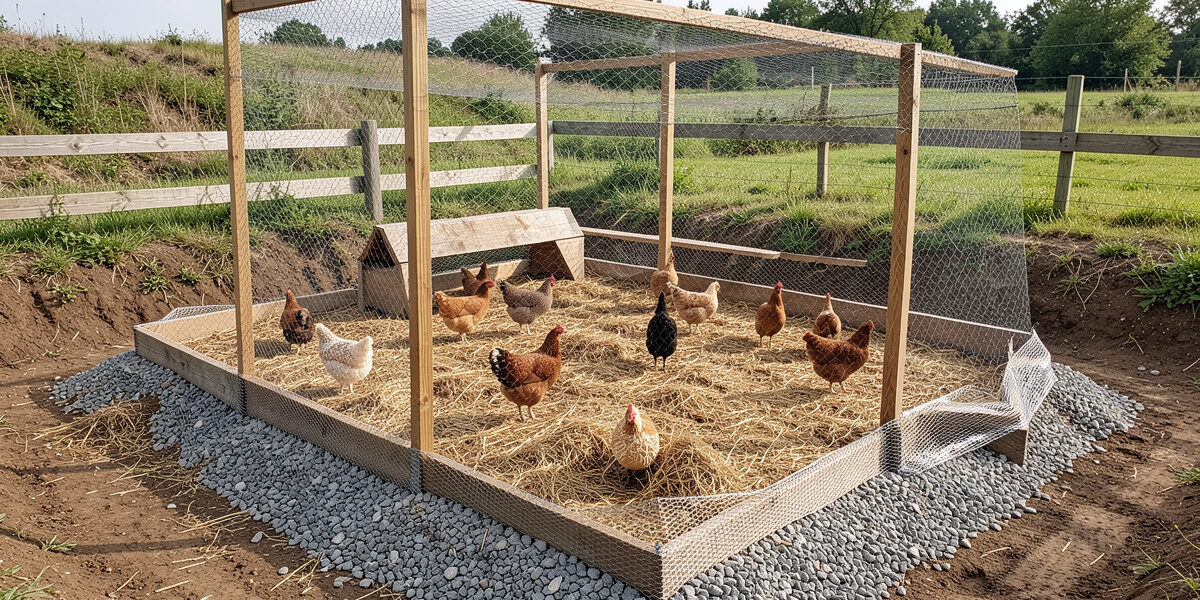
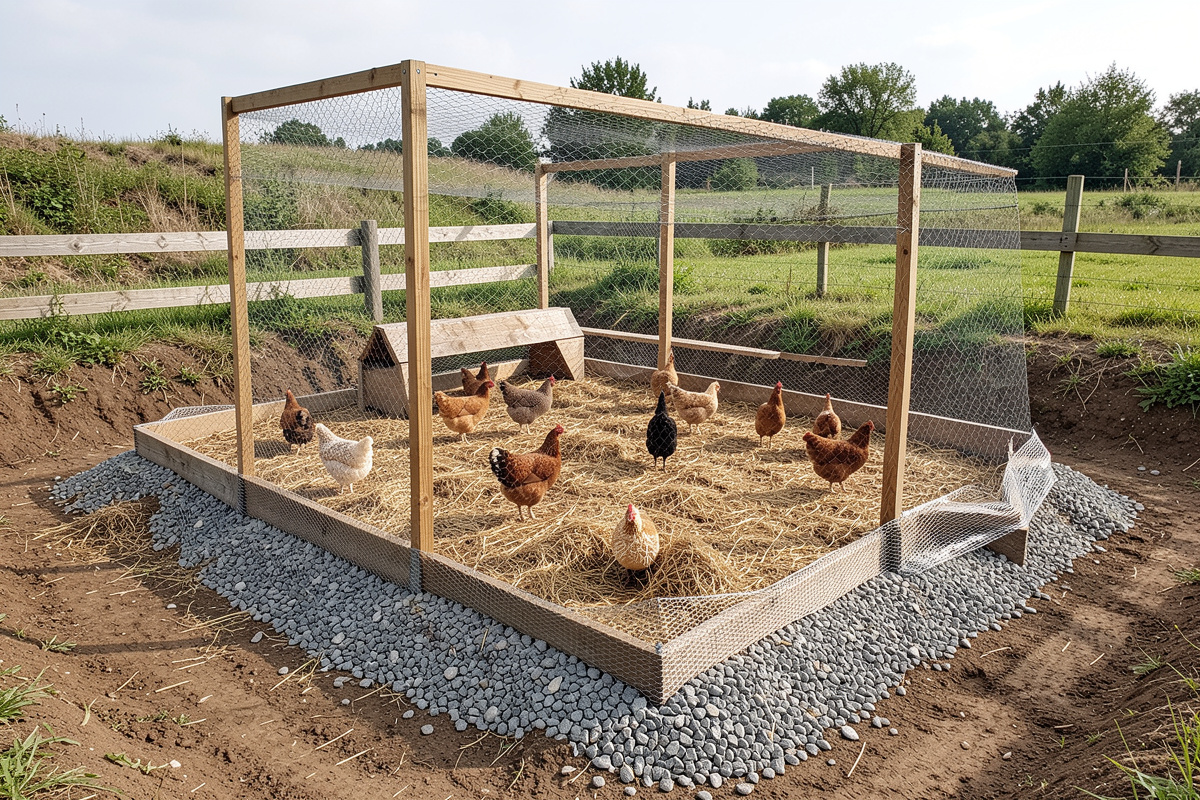
A dirt-floor coop only works if the water leaves and the diggers can’t get in — get those two things right and dirt is the cheapest, warmest, most natural floor you can build. Get them wrong and you’ve built a cold, stinking mud pit that breeds problems. The whole craft of a dirt floor is drainage and dig-proofing: raise the pad above the surrounding grade so runoff sheds away, bury a hardware-cloth barrier so a fox can’t tunnel under, and then let deep litter do what it does best on bare earth.
I don’t run a dirt floor in my main winter coop because my ground holds water like a sponge, and a wet dirt floor in a Swedish freeze is the worst of both worlds — cold and damp at once. But on the right site, dirt is genuinely excellent, and I’ve built it correctly on well-draining ground where it outperformed every fancier option for a fraction of the cost. Here’s how to do it right instead of the way that gives dirt floors their bad reputation: the drainage, the buried wire, and the deep-litter management that turns a dirt floor into a compost engine feeding your garden.
This is a deep-dive off my chicken coop flooring options guide. If you’re still weighing dirt against a hard floor, the concrete vs plywood vs dirt comparison puts the three side by side; this post is for when you’ve decided dirt is your material and you want it built to last.
Why Does Drainage Make or Break a Dirt Coop Floor?
Drainage decides everything because a dirt floor has no barrier against groundwater — if water can rise into it or pool on it, the floor turns to mud, and mud is where odor, pathogens, and cold all come from. A dry dirt floor is warm, sweet-smelling, and healthy; a wet one is the opposite, and the only difference is where the water goes.
Unlike a sealed floor, bare earth is in direct contact with the water table and with every drop of rain that runs toward the coop. If your site sheds water away, the floor stays dry and the droppings compost cleanly. If your site collects water — a low spot, heavy clay, a high water table — the floor wicks it up from below and can’t drain it away, and you get the sour, muddy failure that makes people swear off dirt floors forever. Soil that percolates well, the kind of well-drained site that agencies like the USDA Natural Resources Conservation Service map by drainage class, is the ideal. But even mediocre ground can work if you raise and shape the pad correctly, which is the next section. The key mental shift is that a dirt floor isn’t a passive choice — it’s a small drainage project with a coop on top.
How Do You Build Drainage Into a Dirt Coop Floor?
Raise the coop pad several inches above the surrounding grade, ideally over a base of coarse gravel, and slope the ground around the coop so water runs away from it. The pad sheds rain and blocks groundwater from rising in; the gravel base gives any water that does reach it somewhere to go. This is the single most important build step.
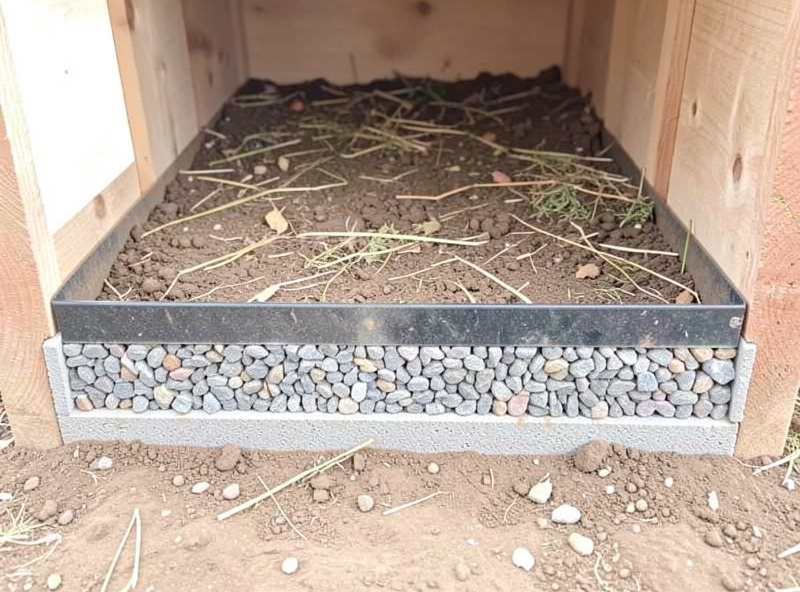
Here’s the sequence I use on a dirt-floor build. First I clear and level the footprint, then dig out a few inches and lay a base of coarse gravel or crushed stone — this breaks the capillary path so groundwater can’t wick straight up into the floor. On top of that goes the packed earth or a sand-soil mix that becomes the actual floor, built up so the finished floor sits clearly above the outside grade. Then I grade the surrounding ground to fall away from the coop in every direction, so surface runoff heads for the garden, not the pop door. On a truly wet site I’ll add a shallow gravel-filled trench or a French drain on the uphill side to intercept water before it reaches the coop. It sounds like a lot, but it’s an afternoon with a shovel and a load of gravel, and it’s the difference between a dirt floor that stays dry for a decade and one that’s mud by October. Skip it and no amount of bedding will save you.
How Do You Stop Predators Digging Under a Dirt Floor?
A dirt floor has no barrier against diggers, so you bury one: a hardware-cloth apron laid flat and extending 12 to 18 inches outward from the base of the walls, or a footer trenched down along the perimeter. A fox, dog, or badger digs down at the wall, hits the wire, and gives up. Chicken wire will not do this — it must be hardware cloth.
This is where a dirt floor demands more work than a slab, and where most predator breaches on dirt-floor coops happen. A determined digger noses right up against the base of the wall and excavates straight down — that’s the natural line of attack. The counter is a horizontal apron: heavy ½-inch, 19-gauge hardware cloth laid flat on the ground at the base of the wall, extending outward a foot and a half, pinned down and eventually grassed or graveled over. When the predator digs at the wall it meets the buried wire and can’t get past it, because it won’t back up and start digging a foot and a half out. The alternative is an L-footer trenched vertically down and then out. Either way, the material is hardware cloth — the same hardware cloth versus chicken wire distinction that governs every opening in a secure coop, because a fox pushes straight through chicken wire. I detail the exact apron and footer geometry, mesh sizes, and how to tie it into the wall in my underground predator barrier guide. On a dirt floor this buried wire isn’t optional — it’s the floor’s entire security.
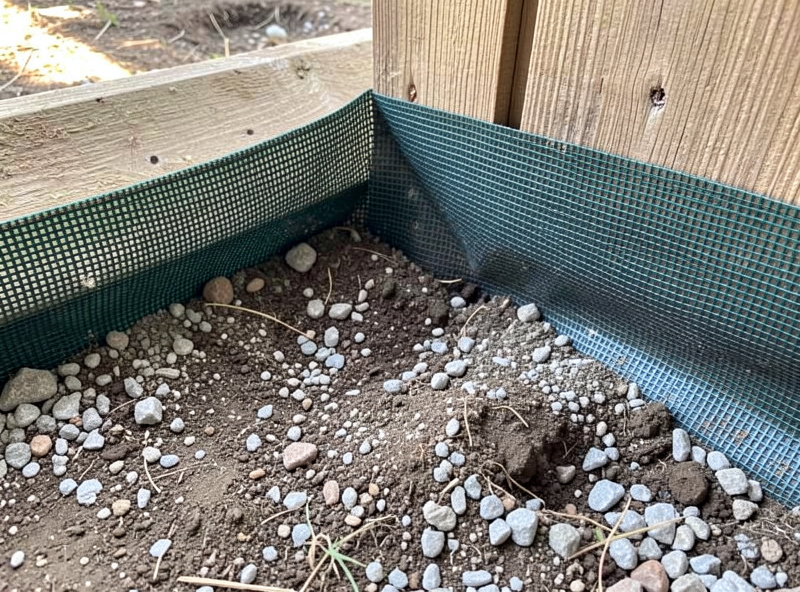
The same buried wire also handles diggers coming up — rats tunneling into the coop from below — which on a dirt floor is a constant pressure. If rodents are a big concern on your site, read the floor-specific defenses in my rat-proof coop floor guide alongside this one, because a dirt floor and a rat problem often arrive together.
Why Is Deep Litter Perfect Over a Dirt Floor?
Deep litter and a dirt floor are made for each other: the bare earth introduces beneficial soil microbes and worms that speed composting, moisture drains down into the ground instead of pooling, and the whole bed slowly turns droppings and carbon into finished compost right where the birds stand. On a well-drained dirt floor, deep litter is at its absolute best.
Over a sealed hard floor, deep litter works but sits on an inert surface. Over dirt, it comes alive. The soil contact seeds the litter with the microbes and invertebrates that drive decomposition, so the bed composts faster and stays sweeter, and excess moisture percolates down through the earth rather than sitting in the bedding. I start a dirt-floor deep-litter bed at 4 to 6 inches of pine shavings and dry carbon, and over a season it builds to 8 to 12 inches of gently composting material that stays warm and dry and drops the odor to almost nothing — the process I lay out in full in my deep litter method guide. Poultry housing guidance from land-grant programs like Penn State Extension keeps coming back to dry, deep bedding for flock health, and a dirt floor makes that easier to maintain, not harder — as long as the ground under it drains.
How Do You Close the Loop Into the Garden?
Once a year you fork the finished deep litter out of a dirt-floor coop and it’s ready compost — dark, crumbly, and rich — that goes straight onto garden beds. A dirt floor makes this cycle seamless because the composting has already happened in place, turning a cleaning chore into a soil-building harvest.
This is the part I genuinely love about a well-run dirt-floor coop, and it’s the through-line that connects the coop to the rest of my growing. Deep litter over dirt composts as it accumulates, so when I clear it out in spring, I’m not hauling raw manure — I’m harvesting finished compost. It goes into the beds and closes the loop from coop to soil to food, the same chicken-powered manure cycle I run over at cityrooted. There’s a real satisfaction to forking dark, earthy compost out of the coop in April, the smell nothing like a barn — more like forest floor. A dirt floor done right isn’t just cheap and warm; it’s a small composting machine with tenants, feeding the garden while it houses the flock.

When Should You Not Use a Dirt Floor?
Skip a dirt floor on heavy clay, a high water table, a low collecting spot, or anywhere hard freezes combine with poor drainage — the floor will stay wet and cold no matter what you do. If you can’t make the site drain, choose a raised, sealed floor instead. Honesty about your ground saves you a season of misery.
My own site is exactly the wrong one — water-holding ground and Nordic winters — so I run sealed hard floors and reserve bare earth for the run, not the coop. That’s not an argument against dirt floors; it’s an argument for matching the floor to the site. If your ground drains, dirt is a superb, nearly-free floor that gets better with a compost cycle bolted on. If it doesn’t, don’t fight it — raise the coop and seal a wood floor, the way I cover in the flooring hub. The whole decision comes back to one question I ask before every floor I build: where does the water go? Answer that honestly for your site, and you’ll know whether a dirt floor is a gift or a trap.
Related Guides
- Chicken Coop Flooring Options: What Actually Works
- Underground Predator Barriers: Apron & Footer Designs
- The Deep Litter Method: A Complete Guide
- Hardware Cloth vs Chicken Wire: Why It Matters
- Concrete vs Plywood vs Dirt Coop Floor
Are dirt floors good for chicken coops?
On well-drained ground, yes. A dirt floor is the cheapest and warmest option, lets birds dust-bathe naturally, and pairs perfectly with deep litter that composts in place. It only fails on heavy clay, a high water table, or a low collecting spot, where it turns to cold mud. Success depends entirely on drainage and on burying wire against diggers.
How do you keep a dirt coop floor from getting muddy?
Raise the coop pad several inches above the surrounding grade over a base of coarse gravel, and slope the ground around the coop so runoff sheds away. The gravel breaks the path for groundwater rising up, and the raised, graded pad keeps surface water out. On very wet sites, add a gravel-filled trench or French drain on the uphill side.
How do you stop predators digging under a dirt-floor coop?
Bury a hardware-cloth apron laid flat and extending 12 to 18 inches outward from the base of the walls, or trench a vertical L-footer along the perimeter. A digging predator hits the wire and gives up. Use half-inch, 19-gauge hardware cloth, never chicken wire, which a fox pushes straight through.
Can you use the deep litter method on a dirt floor?
Yes, and it works better over dirt than over a hard floor. The soil contact introduces microbes and worms that speed composting, moisture drains down into the ground, and the bed turns droppings into finished compost you fork into the garden once a year. Start at 4 to 6 inches and let it build to 8 to 12 over the season.
Related Guides
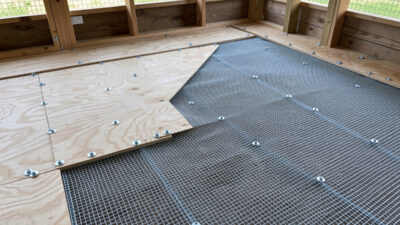
Rat-Proof Coop Floor: Stop Diggers Coming Up Through It
Rats don’t come over the coop wall — they come up through the floor, gnawing through plywood or tunneling under…
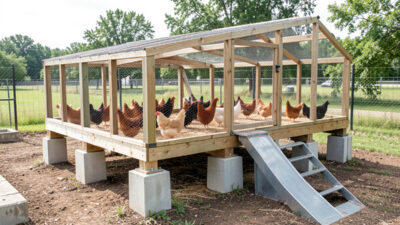
Raising a Coop Off the Ground: Footings & Skids
Every coop with a wooden floor should sit off the ground — a few inches at minimum, ideally enough to…
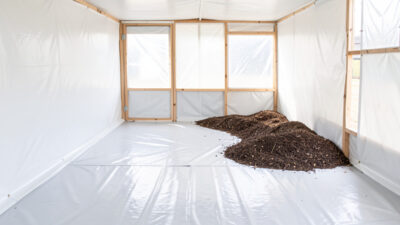
Vinyl & Linoleum Coop Floor: The Easy-Clean Upgrade
Sheet vinyl or linoleum over a plywood subfloor is the single best-value upgrade you can make to a coop floor:…