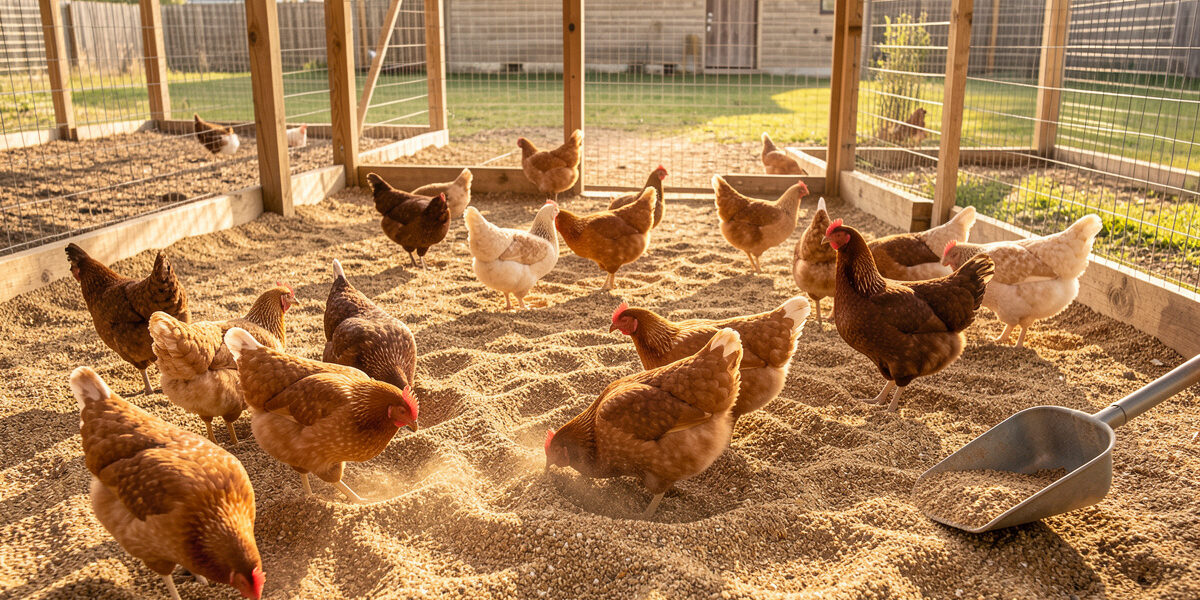
A sand coop floor is the easiest floor in the world to keep clean — until it freezes, and then it’s the worst. In a warm, dry climate you sift droppings out of coarse sand daily like a giant cat box, the moisture drains away, and the odor stays near zero. In a hard freeze that same sand locks into a cold, concrete-hard slab you can’t sift and that pulls heat straight out of your birds’ feet. Sand isn’t good or bad; it’s a climate-specific specialist that people keep recommending as if it were universal.
I run sand — in the summer run, never as my winter coop floor, because I keep chickens in Sweden where −20 °C nights are normal and I’ve watched a sand floor turn to frozen rock by 7 a.m. The sand fans aren’t wrong about how good it is where it fits. They’re just usually posting from somewhere that never sees a real freeze. Here’s exactly where sand wins, where it fails, and how to use it seasonally so you get the upside without the frostbite risk.
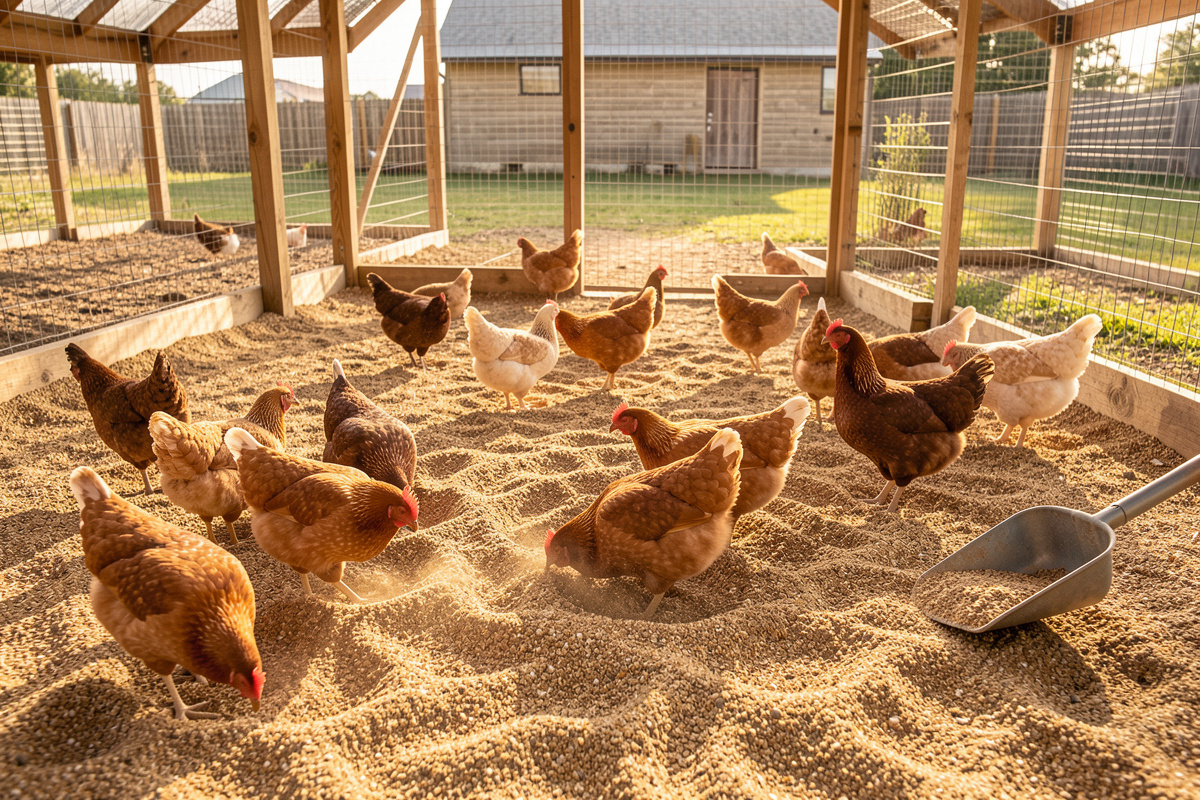
This is a spoke off the main chicken coop flooring options guide. If you’re deciding between sand and the other structural floors, the concrete vs plywood vs dirt comparison covers the harder-surface alternatives.
Why Is Sand So Easy to Keep Clean?
Sand cleans easily because it drains moisture away and dries droppings, so you can sift the solids out with a scoop instead of stripping and replacing bedding. Coarse sand doesn’t compost or absorb like organic litter — it stays loose and dry, which keeps ammonia and odor low as long as you sift regularly.
The mechanism is drainage and evaporation. Droppings landing on coarse sand dry on the surface rather than soaking in, and a quick pass with a fine-mesh scoop lifts them out, leaving clean sand behind — the same motion as scooping a litter box, just bigger. Because you’re removing solids daily instead of burying them in a composting bed, there’s very little to smell. That’s genuinely different from the deep litter method, which works by composting droppings in place; sand works by keeping them dry and hauling them out. Both are valid. Sand just trades the once-a-season strip-out for a daily two-minute sift.
What Kind of Sand Do You Actually Use?
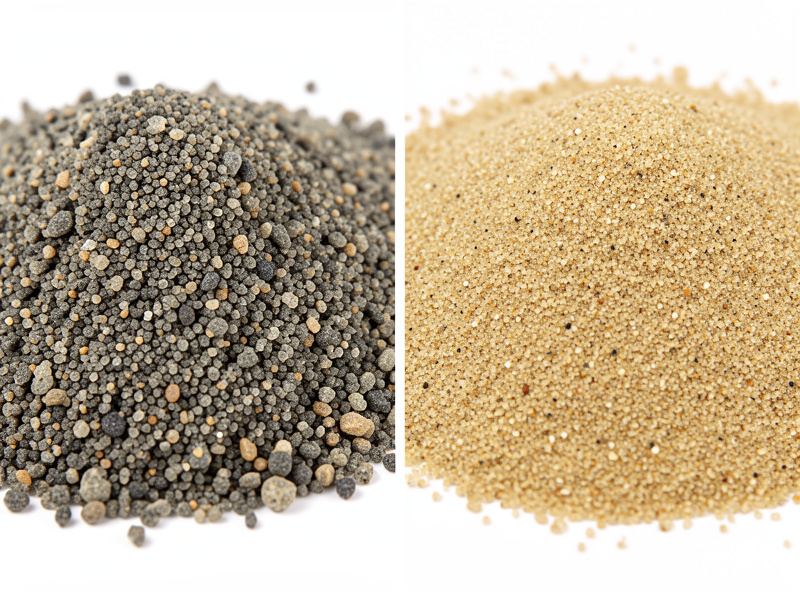
Use coarse, washed construction or river sand — not fine play sand, which compacts, holds water, and can carry fine crystalline-silica dust. Grain size is the whole difference: coarse sand stays loose and drains, while fine sand packs into a damp, dusty layer that defeats the entire point.
This is the mistake that makes people hate sand: they buy cheap play sand, it compacts into a wet, cement-like crust that won’t sift, and they conclude sand doesn’t work. It’s the wrong sand. You want a coarse, washed grade — construction sand, river sand, or a coarse “all-purpose” sand with mixed grit sizes that stays open and free-draining.
| Sand type | Drainage | Siftability | Verdict |
|---|---|---|---|
| Coarse construction / river sand | Excellent | Good — stays loose | Use this |
| Coarse “all-purpose” / bank sand | Good | Good | Fine alternative |
| Fine play sand | Poor — compacts | Poor — packs damp | Avoid |
Fine play sand also carries a dust concern: it can contain respirable crystalline silica, which is why it comes with the warnings that agencies like OSHA put on silica dust exposure. A coarse washed sand is both more functional and less dusty. Buy the right grade once and sand behaves; buy the cheap bagged play sand and you’ll be shoveling out a compacted mess.
Why Does Sand Fail in a Cold Climate?
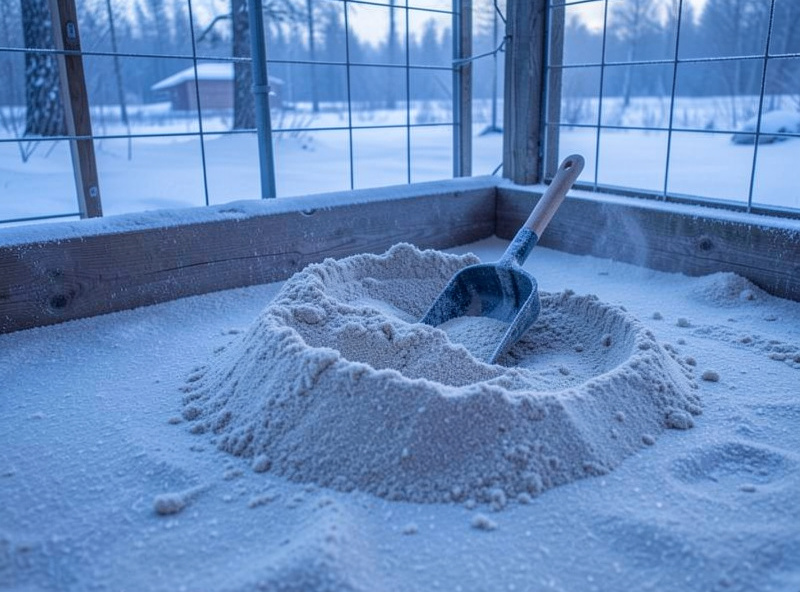
In a hard freeze, the moisture in a sand floor freezes it into a solid, cold block you cannot sift, and sand offers almost no insulation, so it wicks heat out of the birds’ feet. Everything that makes sand great in summer — its density and moisture contact — turns against you below freezing.
I’ve stood in my run at dawn with a scoop that wouldn’t penetrate the sand, the surface frosted and rung hard as pavement. Once it freezes you can’t remove droppings, so they accumulate on top, and the sand itself is now a cold thermal mass in direct contact with the birds’ feet — the opposite of the dry, insulating deep litter you want at −20 °C. Cold-climate poultry guidance from land-grant programs like Penn State Extension keeps steering keepers toward dry, insulating bedding in winter for exactly this reason. This is also why my heated-waterer automation matters more than the floor in winter — the Home Assistant freeze-watch keeps water liquid, but nothing keeps a sand floor siftable once the ground freezes. In a cold climate, sand belongs in the three warm seasons and comes out for winter.
How Do You Use Sand Seasonally in a Cold Climate?
The winning cold-climate move is to use sand where it excels — the covered run and the summer coop — and switch to deep litter in the coop for winter. Sand handles dust-bathing and easy warm-season cleaning; deep litter carries the insulation and composting warmth when it freezes. You get sand’s convenience without its winter liability.
Here’s how I actually run it. My covered run has a coarse-sand base year-round because the birds love to dust-bathe in it and it drains the run so it never turns to mud — that’s a job sand does better than anything. Inside the coop, I run sand only through the warm months, sifting daily, and when the nights start dropping I transition the coop floor to a deep-litter bed of pine shavings over the sealed hard floor beneath. The sand in the run keeps working all winter as a bathing and drainage medium even when it’s cold, because the birds aren’t sleeping on it and I’m not relying on sifting it. Match the material to the job and the season, and sand earns its place instead of freezing you out.
How Deep Should the Sand Be, and How Do You Maintain It?
Run coarse sand 4 to 6 inches deep over a firm, well-drained base, sift the droppings out daily or every couple of days, and top it up as fine grit works down and the layer thins over the season. Too shallow and it packs and stays damp; too deep wastes sand without adding benefit.
Depth matters more than people expect. Under about 4 inches, the sand compacts against the base, holds moisture at the bottom, and stops draining — the same wet-crust failure you get from the wrong grade. I aim for 4 to 6 inches over a base that itself drains: a firm pad, ideally with the whole thing raised so groundwater never rises into it. The daily job is the sift — a fine-mesh scoop or a purpose-made sand sifter lifts the dried droppings in a couple of minutes and leaves clean sand. The sound of it is oddly satisfying, the dry grains hissing back through the mesh while the solids stay behind. Over months the finest particles migrate to the bottom and the usable layer thins, so I top up a bag or two each season and turn the base sand occasionally to keep it open. Skip the sifting for a week and even good sand starts to smell and cake; stay on it and a sand floor is close to self-maintaining. Compare that rhythm against the strip-and-replace cycle of organic bedding in my bedding types comparison and you’ll see why warm-climate keepers love it.
Is Sand Right for Your Coop?
Choose sand if you’re in a warm, dry climate and want the lowest-effort daily cleaning; use it seasonally or only in the run if you get hard freezes; skip it as a winter coop floor anywhere it locks up solid. It’s a brilliant specialist, not an all-rounder.
If you never see a real freeze, a coarse-sand coop floor over a firm, well-drained base is genuinely one of the easiest systems to live with, and I’d happily run it. The moment your winters bite, be honest about what sand does at −20 °C and give the coop a proper insulating bed for the cold months while letting sand handle the run and the warm season. The broader point runs through every floor I’ve built: pick the material for the weakness your climate can absorb. Sand’s weakness is cold. Know your winters, and use it where it wins.
Related Reading
- Chicken Coop Flooring Options: What Actually Works
- The Deep Litter Method: A Complete Guide
- Chicken Bedding Types Compared: Pine, Straw, Hemp & Sand
- Home Assistant Freeze-Watch: Automating the Heated Waterer
- Concrete vs Plywood vs Dirt Coop Floor
Is sand a good floor for a chicken coop?
In a warm, dry climate, yes. Coarse sand drains moisture, dries droppings, and lets you sift solids out daily like a litter box, keeping odor very low. In a cold climate it freezes into a hard, cold slab you cannot sift and that offers no insulation, so it is best used seasonally or only in the run rather than as a winter coop floor.
What kind of sand should I use in a chicken coop?
Use coarse, washed construction or river sand that stays loose and drains freely. Avoid fine play sand, which compacts into a damp, dusty crust that will not sift and can contain respirable crystalline silica dust. Grain size is the difference between a floor that works and one you end up shoveling out.
Does a sand coop floor freeze in winter?
Yes. The moisture in a sand floor freezes it into a solid block you cannot sift, and because sand has almost no insulation value it wicks heat out of the birds’ feet. In cold climates, switch the coop to deep-litter bedding for winter and keep sand for the run and the warmer months.
Sand or deep litter for a chicken coop?
They work in opposite ways. Sand keeps droppings dry so you sift them out daily and suits warm, dry climates. Deep litter composts droppings in place and provides insulating warmth, which suits cold climates and winter. Many keepers use sand in the run and warm seasons and deep litter in the coop for winter.
Related Guides
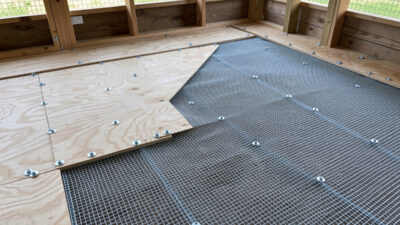
Rat-Proof Coop Floor: Stop Diggers Coming Up Through It
Rats don’t come over the coop wall — they come up through the floor, gnawing through plywood or tunneling under…
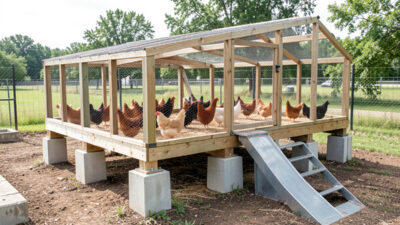
Raising a Coop Off the Ground: Footings & Skids
Every coop with a wooden floor should sit off the ground — a few inches at minimum, ideally enough to…
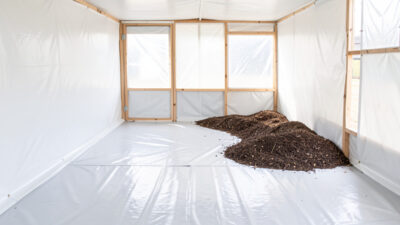
Vinyl & Linoleum Coop Floor: The Easy-Clean Upgrade
Sheet vinyl or linoleum over a plywood subfloor is the single best-value upgrade you can make to a coop floor:…