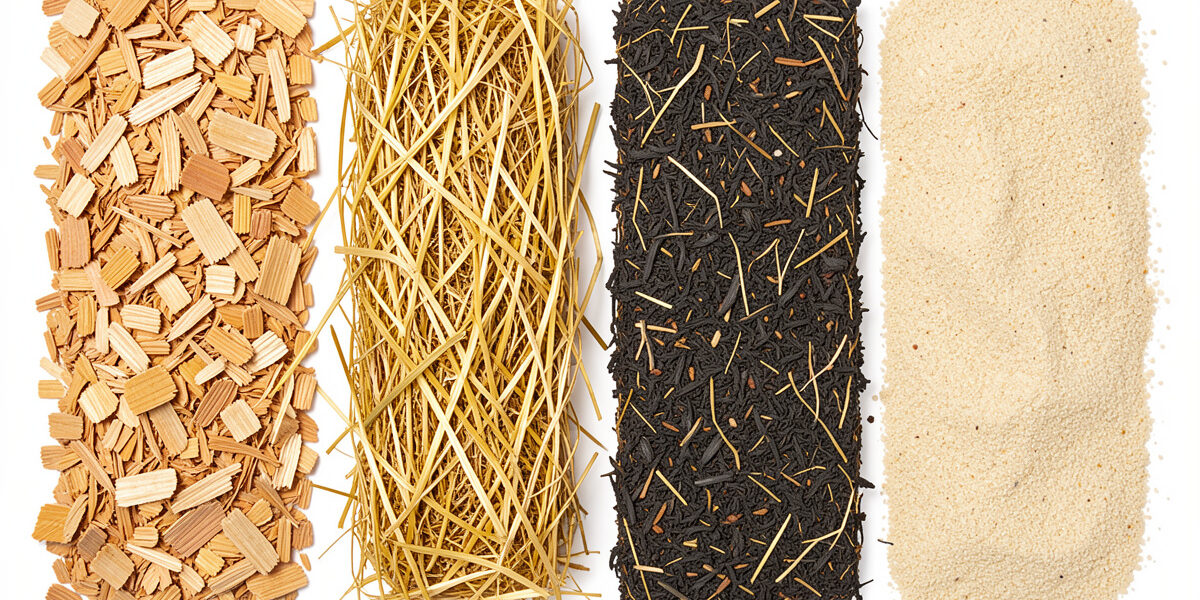
The bedding you choose decides how dry your coop stays, how much you’ll spend a year, how much dust your flock breathes, and whether the waste turns into garden compost or a disposal problem. After running pine, straw, hemp, and sand in the same coop through Swedish winters, my short answer is that large-flake pine shavings win for most keepers, hemp is the premium upgrade (it runs 3–4× the price of pine), sand is a different philosophy for hot or wet sites, and straw is overrated for everything except a winter top layer. This comparison shows why.
There’s a lot of bad bedding advice out there, most of it written by people who’ve never had to keep a floor dry at −20 °C. The metrics that actually matter are absorbency, dust, cost over a full year, and how the material composts afterward — not whether it “looks cozy.” Let’s put the four main options side by side on exactly those terms.
The Four Materials at a Glance
Here’s the head-to-head. The “best for” column is the honest summary — there is no universal winner, only the right material for your climate, floor system, and budget. Pine shavings are the default all-rounder; the others each win a specific situation.
| Material | Absorbency | Dust | Annual cost | Composts? | Best for |
|---|---|---|---|---|---|
| Large-flake pine shavings | High | Low–moderate | Low | Yes, excellent | The default all-rounder, deep litter |
| Hemp bedding | Very high | Very low | High (3–4× pine) | Yes, excellent | Dust-sensitive flocks, premium keepers |
| Straw | Low | Moderate (mold risk) | Low | Slowly | Winter insulating top layer only |
| Sand | None (drains/dries) | Low (use coarse) | High upfront, lasts years | No | Hot/wet climates, sift-clean keepers |
Pine Shavings: The Default for a Reason
Large-flake kiln-dried pine shavings are what I’d hand a new keeper without hesitation. They’re highly absorbent, cheap, widely available in compressed bales, and they break down beautifully into the compost pile afterward. In a deep-litter floor they’re close to ideal — enough carbon mass to host the composting microbes, enough loft to stay aerated when the birds scratch.
Two cautions. First, buy large-flake, not fine sawdust-grade shavings; the fine stuff is dusty and can irritate the respiratory system of birds with their heads down in it all day. Second, never use cedar shavings — the aromatic oils (phenols) that smell pleasant to us are a respiratory irritant for poultry, a point echoed across poultry extension resources. Stick to kiln-dried pine, get the large flake, and it does almost everything you need. This is the same material I build my deep litter floor on, and the older buyer’s-eye breakdown is in my complete bedding material guide.
Hemp: The Premium Pick
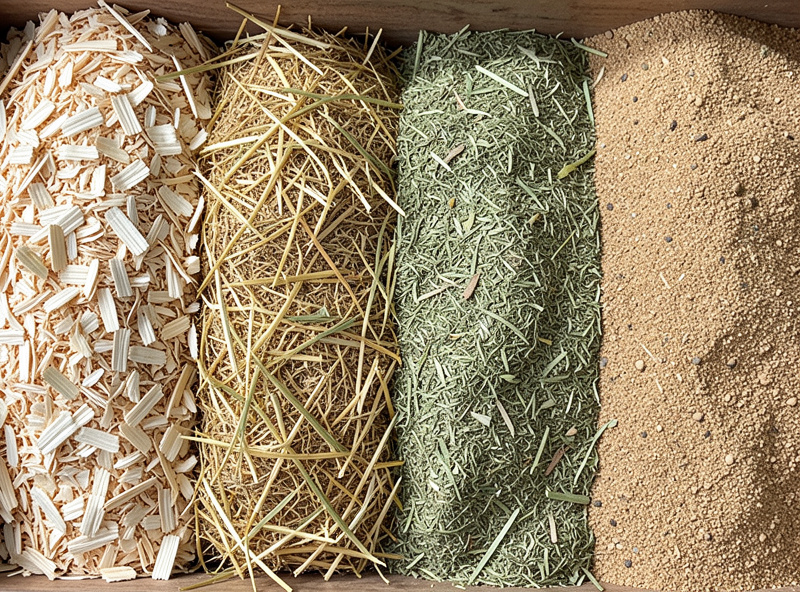
Hemp bedding — the chopped woody core (hurd) of the hemp plant — is the best-performing material I’ve used, and the only reason it isn’t my default is cost. It absorbs more water than pine, produces almost no dust, lasts longer before it needs topping, and composts as readily as shavings. For a keeper with a dust-sensitive flock, a respiratory-prone breed, or simply the budget for it, hemp is a genuine upgrade rather than marketing.
The trade-off is price: hemp typically runs three to four times the cost of pine shavings for the same coverage. Over a year in a deep-litter system where you top up rather than replace, that gap narrows because hemp’s longevity means you use less of it — but it’s still the expensive option. I keep a bale around for the nesting boxes and the worst of winter; for the main floor, pine’s cost advantage is hard to argue with.
Sand: A Different Philosophy Entirely
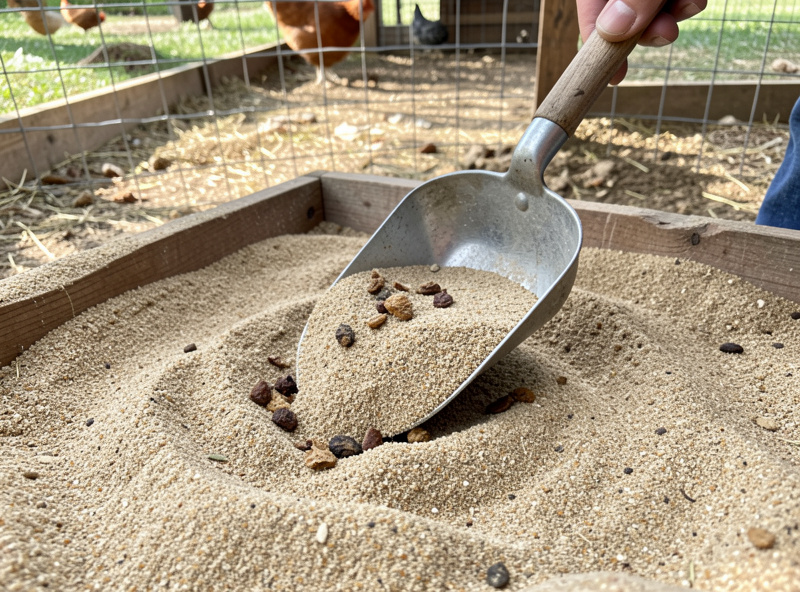
Sand isn’t bedding in the absorbent sense — it’s a drainage-and-sifting system. It doesn’t soak up moisture; it lets droppings dry on the surface so you sift them out daily like a giant cat-litter box. In hot or wet climates it shines: it stays cool, doesn’t rot, doesn’t grow mold, and a good coarse construction or river sand lasts for years. Keepers in the American South swear by it for exactly these reasons.
For my cold, damp climate it’s the wrong tool. Sand holds cold, can’t compost (you can’t put it on the garden the way you do spent shavings), and a deep sand bed in freezing weather is a slab of cold under the birds rather than the gentle warmth a deep-litter floor gives. Critical detail if you do use it: use coarse construction or river sand, never fine “play sand,” which is dusty and packs into a damp concrete-like layer. The choice between sand and a composting bedding is really a choice between the sift-clean and deep-litter philosophies — covered in the wider coop cleaning and maintenance system.
Straw: Overrated Except for One Job
Straw is the picture-book chicken bedding, and it’s the one I reach for least. The hollow stalks hold little water, so it saturates and mats fast, and once it’s damp it grows mold readily — a real risk because moldy bedding is a respiratory hazard. It also composts slowly compared to shavings because of its structure. As a primary floor material in a damp climate, it’s the weakest of the four.
Where it earns its place is as a winter insulating top layer over a deep-litter base: a thick fluff of straw gives the flock something warm and dry to nestle into on the coldest nights, and the birds break it down into the composting layer below over the season. Chopped straw works better than long straw here because it mats less and integrates into the litter faster. Used that way — a seasonal top dressing, not the whole floor — straw is genuinely useful.
What About Nesting Boxes?
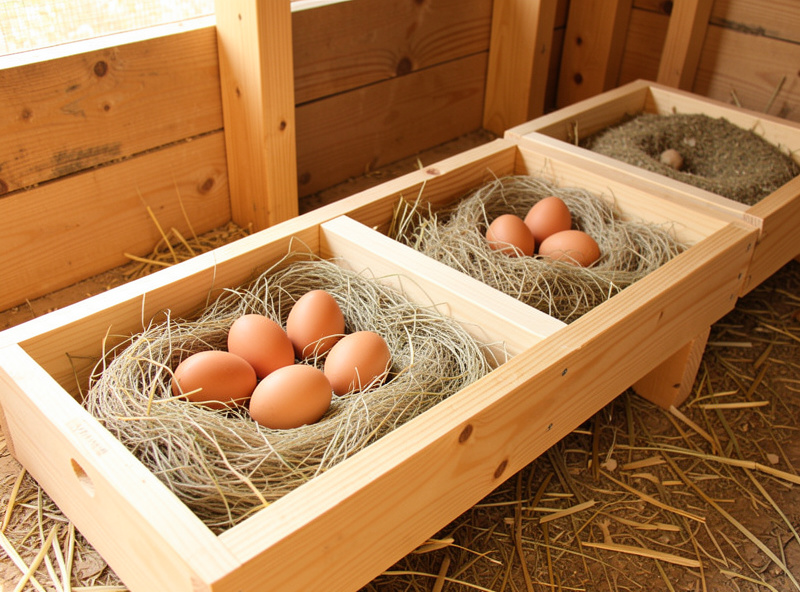
Nesting boxes are a separate decision from floor bedding because their job is different: cushioning eggs and staying clean, not absorbing a flock’s worth of droppings. I use a deeper, softer material there — hemp or fine straw or nest pads — and refresh it more often than the floor, because a clean nest is the cheapest egg-quality and broody-hygiene insurance you have. Hens won’t reliably use a soiled box, and dirty nesting material is how you get dirty (and cracked) eggs.
Whatever you pick for the floor, keep the nest material clean and dry on its own schedule. It’s a small weekly task that pays off in cleaner eggs and fewer hens choosing to lay on the floor instead. The nesting refresh is built into the weekly tier of my coop cleaning schedule.
How to Choose for Your Coop
Strip away the marketing and it comes down to a few questions. Cold, damp climate and a deep-litter floor? Large-flake pine shavings, with straw as a winter top layer. Dust-sensitive or respiratory-prone flock and budget to spare? Hemp. Hot or persistently wet climate and you prefer to sift rather than compost? Coarse sand. And in every case, the depth and management matter more than the material — a thin layer of the perfect bedding saturates as fast as a thin layer of the worst one.
Once the bedding is down, what keeps it working is the routine: scraping the poop board, keeping moisture out, and topping or replacing on a sensible cadence. The material is the foundation; the management is the building. Whatever you choose composts (or sifts) into the next stage of the cycle — for the composting route, that’s composting chicken manure for the garden.
Frequently Asked Questions
What is the best bedding for a chicken coop?
Large-flake kiln-dried pine shavings are the best all-round choice for most keepers: highly absorbent, low-cost, low-dust if you buy the large flake, and they compost well. Hemp performs even better and is nearly dust-free but costs three to four times as much. The right choice depends on your climate and floor system.
Is sand or pine shavings better for a chicken coop?
It depends on climate and method. Sand suits hot or wet climates and keepers who sift droppings daily, staying cool and lasting years but not composting. Pine shavings suit cold or damp climates and deep-litter systems, absorbing moisture and breaking down into garden compost. Sand holds cold, which is a drawback in freezing weather.
Is straw good bedding for chickens?
Straw is the weakest primary bedding for damp climates because the hollow stalks hold little water, mat quickly, and can grow mold, which is a respiratory hazard. It works best as a winter insulating top layer over a deep-litter base, where chopped straw gives the flock a warm, dry surface to nestle into.
Can I use cedar shavings in a chicken coop?
No. Cedar shavings release aromatic oils called phenols that are a respiratory irritant to poultry, even though they smell pleasant to people. Always use kiln-dried pine shavings instead, and choose the large flake rather than fine sawdust-grade, which is too dusty for birds with their heads down in it all day.
How deep should chicken coop bedding be?
For a standard layer of bedding, 8 to 15 cm keeps the floor absorbent between cleanings. For a deep-litter composting system, start at 15 to 20 cm and build up. Depth matters more than material because a thin layer of any bedding saturates within days and offers no buffer against the daily moisture load.
Which bedding is best for composting afterward?
Pine shavings and hemp both compost excellently, breaking down into balanced carbon-rich material that finishes into garden soil amendment. Straw composts more slowly because of its structure. Sand does not compost at all, which is the main reason composting-focused keepers in cold climates choose shavings over sand.
Related Reading
- Coop Cleaning, Bedding & Maintenance: The Complete System
- The Deep Litter Method: A Complete Guide
- The Chicken Coop Cleaning Schedule
- Chicken Coop Odor Control
- Best Chicken Coop Bedding: Material Guide
Related Guides
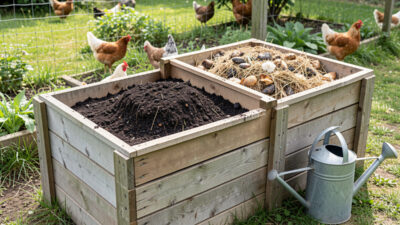
How to Compost Chicken Manure for the Garden
Fresh chicken manure is the richest free fertilizer you’ll ever produce — its nitrogen runs roughly 1.1–1.5%, hotter than cow…
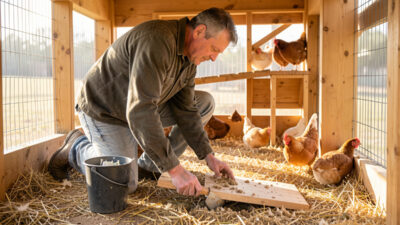
The Chicken Coop Cleaning Schedule That Actually Works
A chicken coop cleaning schedule should take about five minutes a day, fifteen minutes a week, under an hour a…
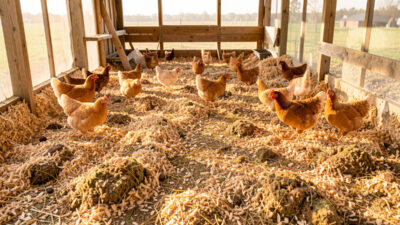
The Deep Litter Method: A Complete Guide for Chicken Coops
The deep litter method is a system where you let the bedding and droppings compost in place on the coop…