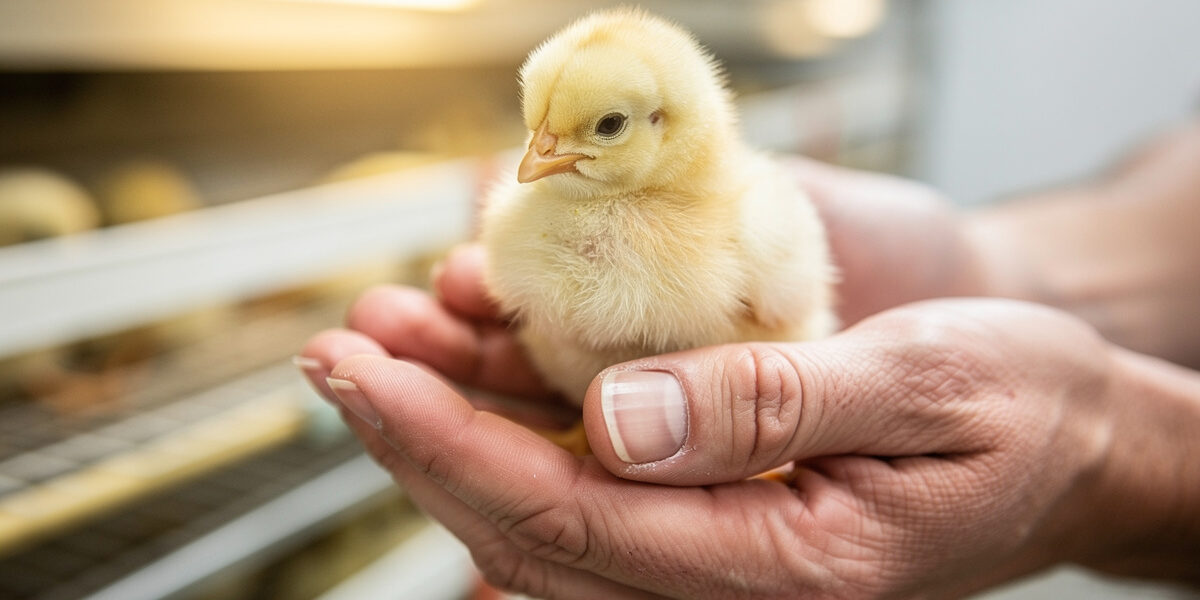
Marek’s disease is the one I most want backyard keepers to understand before they ever buy birds, because it can’t be cured once a bird has it — which makes prevention the entire game. It’s a common, highly contagious herpesvirus that typically strikes young birds, and the sign keepers learn to dread is progressive paralysis: a young bird losing the use of a leg or wing, often with one leg stretched forward and one back, alongside wasting despite eating. There’s no treatment, but there is a well-established prevention: chicks are routinely vaccinated against Marek’s at the hatchery on day one.
I keep a closed flock and ask about Marek’s vaccination whenever I source birds, because those two habits are how you keep this virus from ever taking hold. This article is general husbandry guidance, not veterinary advice — I’ll describe what Marek’s looks like and how prevention works, but any bird showing unexplained paralysis needs an avian vet, both for assessment and to rule other things in or out. For where this fits in the bigger picture, see my chicken diseases and treatment guide.
What Marek’s Disease Is
Marek’s is caused by a herpesvirus that spreads with frightening ease. Infected birds shed the virus in dander — the tiny flakes of skin and feather that drift through any coop — and that dander is extraordinarily persistent in the environment. The virus can linger in coop dust for a long time, which is why simply “cleaning up” after an outbreak doesn’t make a property safe, and why keepers who’ve had Marek’s treat new-bird decisions with real caution.
The disease tends to affect young birds, often in the first several months of life, as their immune systems are still developing. Because the virus is so widespread and so persistent, the realistic goal isn’t to keep every chicken on earth away from it — it’s to make sure your birds are protected before exposure, which is what vaccination does. Understanding that Marek’s is a persistent environmental virus, not something you can scrub away or treat out of a sick bird, is the foundation for taking prevention seriously.
Recognizing the Signs
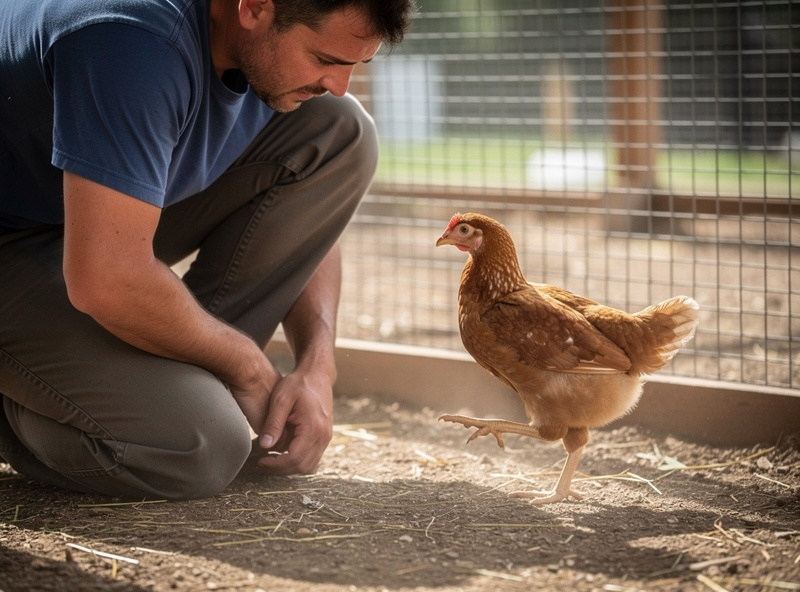
The textbook presentation of Marek’s is neurological: progressive paralysis of a leg, wing, or neck in a young bird, classically with one leg held forward and the other back. Affected birds waste away even though they may still try to eat, and you may see other signs depending on the form the disease takes, including changes to the eye such as an irregular, greyish iris. But the hallmark most keepers encounter is a young bird that progressively loses coordination and the use of its limbs.
The hard truth is that these signs are devastating to see and there’s no cure once they appear. What that means for you as a keeper is twofold: first, take any unexplained paralysis or progressive weakness in a young bird seriously and get a vet involved, because Marek’s needs to be distinguished from other causes like injury or a vitamin issue, and a vet can advise on the kindest course. Second, and more importantly, it reinforces why all the weight goes onto prevention — by the time you’re recognizing signs, the window for protecting that bird has already closed.
Vaccination: The One Prevention That Changes Everything
The single most effective thing you can do about Marek’s is start with vaccinated chicks. The Marek’s vaccine is given at the hatchery on day one of life, before chicks are exposed to the virus, and it’s remarkably effective at preventing the disease from developing. It doesn’t stop a bird from ever encountering the virus, but it stops that encounter from becoming the disease — which, for a condition with no cure, is exactly what you want.
The practical takeaway is simple: when you source chicks, ask whether they’ve been vaccinated against Marek’s, and treat it as a real decision rather than an afterthought. Hatcheries routinely offer it, and for most backyard keepers it’s the obvious choice given the stakes. If you hatch your own birds, vaccination is more complicated and is worth discussing with your vet or supplier ahead of time. The key point is that this is a prevention decision made before the birds are ever at risk — which is the whole theme of managing a disease you can’t treat.
Biosecurity for a Persistent Virus
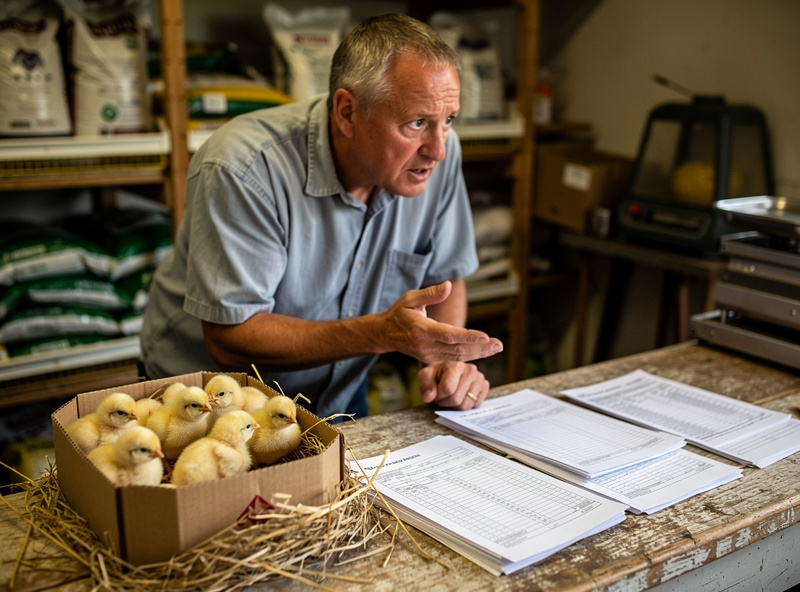
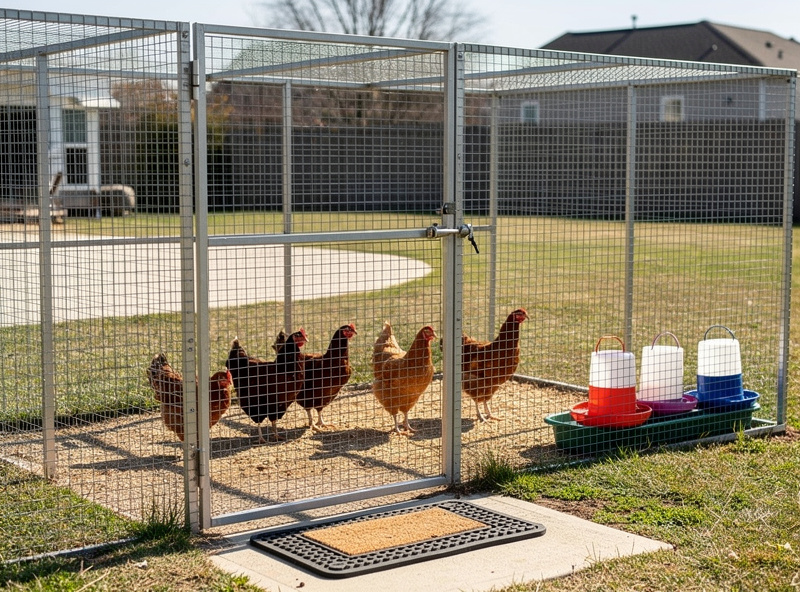
Vaccination is the headline, but biosecurity carries real weight for Marek’s because the virus is so persistent and spreads on dander. Keeping a closed flock — not casually mixing your birds with outside birds or bringing in birds of unknown history — limits the chance of introducing a heavily shedding carrier. Quarantining any new arrival, and being especially careful about exposing young, still-developing birds to potential sources, are the everyday habits that back up the vaccine.
Hatchling biosecurity deserves special attention because young birds are the most vulnerable. Raising chicks in a clean environment, away from the dust and dander of older birds of unknown status until they’re more robust, reduces early exposure during the riskiest window. None of this replaces vaccination — the two work together — but for a virus that lives in coop dust and rides on the air, reducing how much of it your young birds meet, and when, is a sensible second layer. The keeper who vaccinates and keeps a clean, closed flock has done essentially everything within their power.
If You Suspect Marek’s
If a young bird develops the signs, the right response is veterinary, not a home remedy, because there’s no treatment to administer and because the signs can overlap with other conditions that a vet needs to distinguish. A vet can assess the bird, advise on whether it’s likely Marek’s versus something potentially manageable like an injury or nutritional issue, and guide you on the kindest course for a bird that’s suffering. Isolate the affected bird in the meantime, both for its comfort and to limit shedding near the rest.
This is also a moment to think about the rest of the flock rather than panic about the property. Because the virus is so widespread, a single case doesn’t necessarily condemn your whole setup — especially if your other birds are vaccinated. Your vet can advise on protecting the remaining birds and on decisions about future stock. What you don’t do is reach for medications in the hope of treating a virus that has no cure; the responsible path is professional assessment, supportive comfort, and a renewed commitment to vaccination and biosecurity going forward.
A Note on the Gear I Mention
Marek’s prevention is mostly about sourcing and clean rearing rather than products, but a couple of husbandry items help with the clean, separate hatchling environment that backs up vaccination. As an Amazon Associate I earn from qualifying purchases, at no extra cost to you — these are husbandry items, never medications or treatments. The useful ones are a dedicated brooder for raising young birds cleanly and separately and hardware-cloth mesh to keep a closed-flock setup secure. The vaccine itself is a hatchery and veterinary matter, not something to source casually.
Frequently Asked Questions
Can Marek’s disease be cured?
No. Marek’s is caused by a herpesvirus and there is no cure once a bird develops the disease. That is exactly why prevention through hatchery vaccination and biosecurity is the entire focus, since you cannot treat your way out of it after signs appear.
What are the signs of Marek’s disease in chickens?
The classic sign is progressive paralysis in a young bird, often with one leg held forward and one back, plus wasting despite eating. Some forms cause eye changes such as a greyish, irregular iris. Any unexplained paralysis in a young bird warrants a vet.
Does the Marek’s vaccine prevent the disease?
The vaccine, given at the hatchery on day one before exposure, is highly effective at preventing the disease from developing. It doesn’t stop a bird from encountering the virus but stops that encounter from becoming illness, which is what matters for an incurable disease.
Should I buy vaccinated chicks?
For most backyard keepers, yes. Given that Marek’s has no cure and the virus is widespread and persistent, starting with chicks vaccinated at the hatchery is the obvious protection. Always ask whether the chicks you’re sourcing have been vaccinated.
Does one case of Marek’s mean my whole flock is doomed?
Not necessarily. The virus is so widespread that a single case doesn’t condemn a property, especially if your other birds are vaccinated. Isolate the affected bird and ask your vet how to protect the rest and guide future stock decisions.
Related Reading
- Chicken Diseases and Treatment: A Keeper Health Guide — the full flock-health overview.
- Chicken Biosecurity Guide — the closed-flock and quarantine habits that back up vaccination.
- Coccidiosis in Chickens — the other big disease threat to young birds.
- Chicken First-Aid Kit — isolating and supporting an unwell bird.
- Best Chicken Breeds for Backyards — choosing healthy stock from a good source.
Related Guides
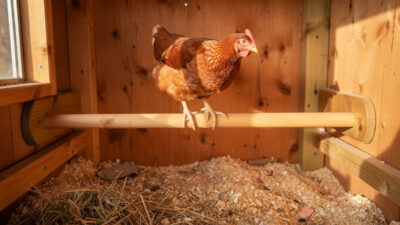
Bumblefoot in Chickens: Signs, Prevention, and Coop Fixes
Bumblefoot is the backyard injury that’s really a coop-design problem wearing a medical disguise. It’s a swollen, sometimes scabbed footpad…
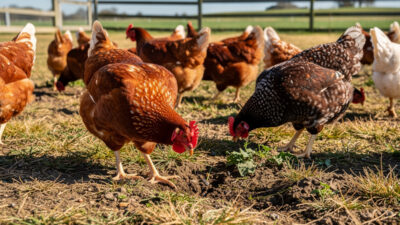
Worming Chickens: Internal Parasites, Signs, and Why to Test First
Worming is the area of chicken keeping where the instinct to “just treat them to be safe” does the most…
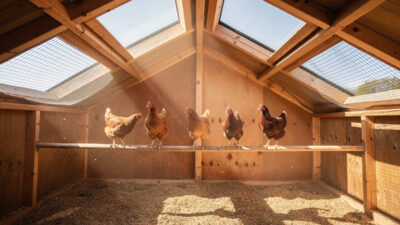
Chicken Respiratory Illness: Signs, Prevention, and Ventilation
Respiratory illness is one of the most common reasons a backyard keeper picks up the phone to a vet, and…