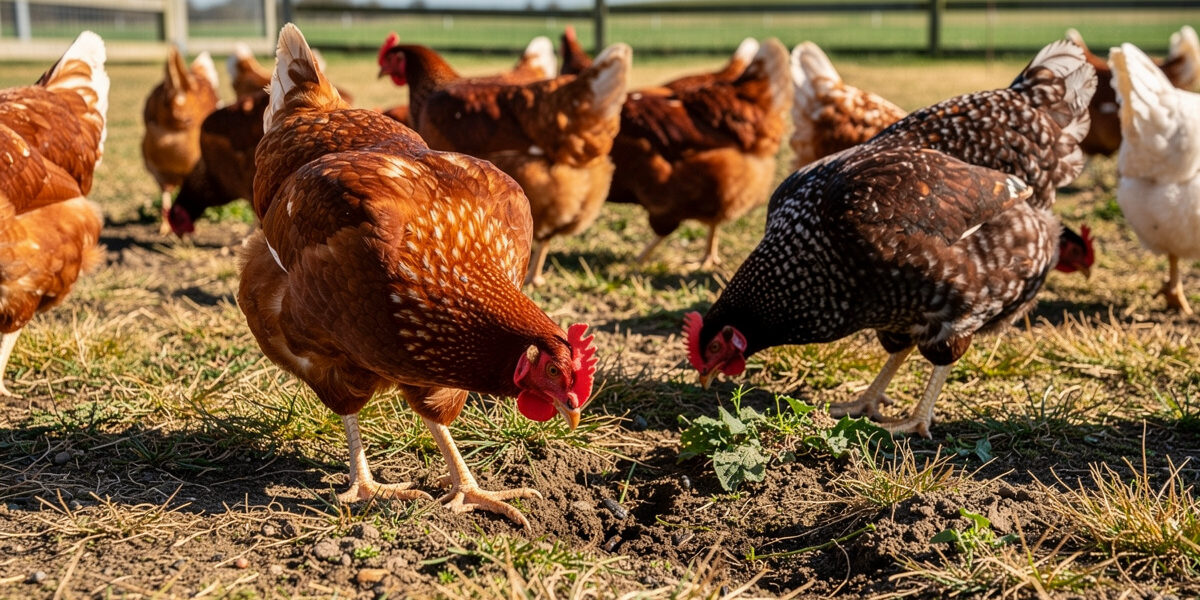
Worming is the area of chicken keeping where the instinct to “just treat them to be safe” does the most quiet harm, so here’s the headline: test, don’t guess. Healthy chickens carry a low parasite load without any problem, and routine blind worming on a hunch drives drug resistance and can stress a bird that never needed it. The right approach is to monitor — have a vet run a fecal egg count to find out whether a meaningful worm burden actually exists — and reduce parasite pressure through dry, well-managed ground. The signs of a real burden: weight loss despite a good appetite, a pale comb, and dull, unthrifty birds.
I keep my flock on dry, rotated ground for exactly this reason, because the run conditions do more to control worms than any product. This article is general husbandry guidance, not veterinary advice — I’ll cover what internal parasites look like and how to keep their pressure low, but the decision to worm, the product, and the dose all belong to a vet who can confirm there’s a problem worth treating. For the wider picture, this sits under my chicken diseases and treatment guide.
Test, Don’t Guess: The Core Principle
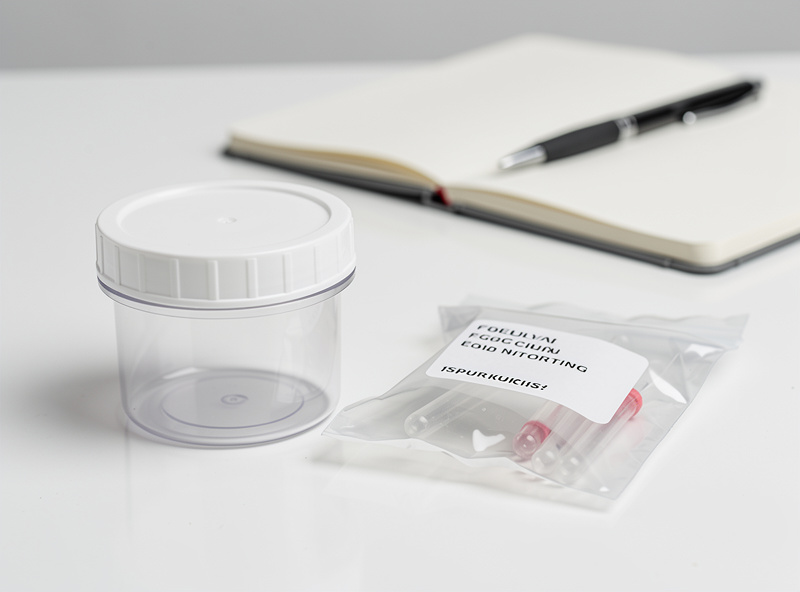
The single most important thing to understand about chicken worms is that a low level is normal and not a problem. Birds and parasites have coexisted forever; what matters is the burden — the number — not mere presence. A handful of worm eggs in a fecal sample from an otherwise thriving bird is not a reason to medicate. A heavy burden in a bird losing condition is. The only way to tell the difference reliably is a fecal egg count, which a vet runs from a simple droppings sample.
This is why blanket “worm every X weeks” advice is outdated and, frankly, counterproductive. Repeatedly dosing a flock that doesn’t have a meaningful burden is the textbook way to breed resistant parasites, exactly as overusing antibiotics breeds resistant bacteria — and then the wormers stop working when you genuinely need them. Testing first means you only ever treat when treating helps, with the right product for whatever the test actually finds. It’s better for the birds, better for your wallet, and better for keeping the available treatments effective.
The Signs of a Real Worm Burden
A genuine worm problem shows up as a bird going downhill despite doing everything right. The classic picture is weight loss in a bird that’s still eating well — the parasites are taking the nutrition — alongside a pale comb, dull and ruffled feathers, lower energy, and sometimes reduced laying. In heavy cases you might see worms in droppings, though their absence doesn’t mean a bird is clear. None of these signs is specific, which is the whole problem: they overlap with plenty of other issues.
Because the signs are non-specific, they’re a reason to investigate, not to reach for a wormer. A pale, thin, dull bird could have worms, or could have mites, or a dozen other things, and the fecal test plus a vet’s eye is what sorts that out. The keeper skill is noticing the decline early through your daily health checks, then getting the right information rather than treating the most convenient guess. A bird that’s visibly wasting needs veterinary attention regardless of cause.
Ground Management: Where Worms Are Really Controlled
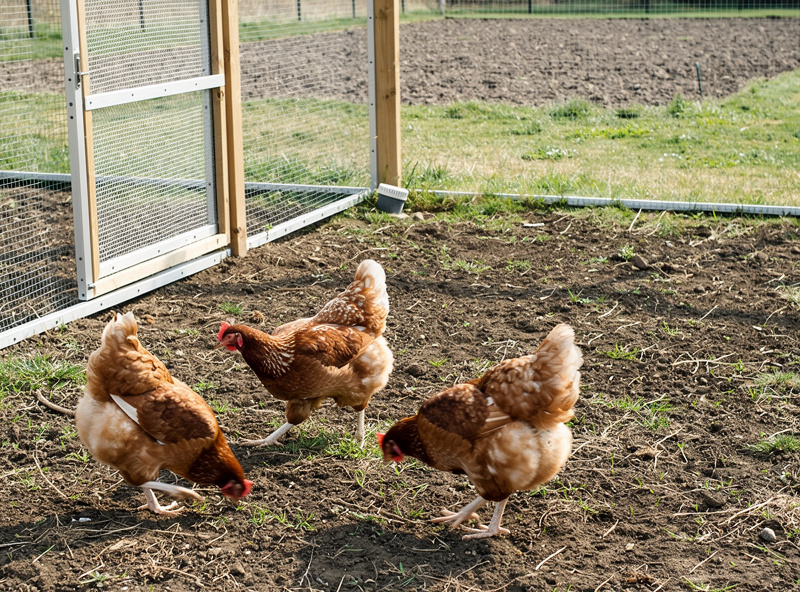
The most powerful worm control isn’t in a bottle — it’s in how you manage the ground. Most chicken worms spread through droppings, and their eggs survive and accumulate in warm, damp, static soil. A run that’s permanently muddy and overstocked becomes a worm factory, recycling parasites through the flock continuously. A dry, well-drained, rotated run breaks that cycle and keeps natural burdens low without any medication at all.
| Run condition | Effect on worm pressure |
|---|---|
| Permanently muddy, overstocked ground | High — eggs accumulate and recycle continuously |
| Dry, well-drained ground | Lower — fewer eggs survive in dry conditions |
| Rotated or rested ground | Lower — breaks the build-up cycle |
| Clean, raised feed and water | Lower — birds aren’t ingesting fouled material |
Practically, that means keeping runs draining well rather than turning to mud, not cramming too many birds onto too little ground, rotating onto fresh ground where you can — a portable run or electric netting makes rotation easy — and keeping feed and water raised and clean so birds aren’t constantly re-ingesting droppings. These are the same habits that prevent a half-dozen other problems, which is why I treat dry, well-managed ground as foundational flock health, not just worm control.
The Worms a Keeper Hears About
You don’t need to be a parasitologist, but it helps to know the broad categories, because they behave differently and a vet will use the names. Roundworms are the most common — they live in the gut and are the type most often seen in droppings in a heavy case. Caecal worms are mostly notable because they can carry the organism behind blackhead disease, which is more of a concern where chickens share ground with turkeys. Then there are gapeworms, which lodge in the windpipe and cause the distinctive gasping or “gaping” head-stretching, and tapeworms, which often involve an intermediate host like an insect the bird eats.
The reason this matters to a keeper is that the type changes the right response, and several of them tie back to ground and pest management. Tapeworms travel through insects, caecal worm risk rises on shared turkey ground, and most of them concentrate in damp static soil — so the same dry, rotated, well-managed run that lowers the overall burden also cuts several of these specific routes. You don’t diagnose which worm it is; you describe what you see to a vet and let the fecal test name it. But understanding that “worms” isn’t one single thing is part of why blanket dosing makes so little sense.
If a Test Says Treat: It’s a Vet Decision
When a fecal egg count does show a burden worth treating, the treatment itself is firmly a veterinary decision, and this is the YMYL line I won’t cross. The right product depends on the type of worm the test identifies, and the correct dose depends on the bird’s weight — get either wrong and you either fail to treat the problem or harm the bird. There are also withdrawal considerations for eggs with some products, which is exactly the kind of detail a vet manages and a forum post gets wrong.
So the workflow is clean: you notice a bird losing condition, a vet confirms a meaningful burden with a fecal test, and the vet prescribes the appropriate treatment and dose if treatment is warranted. Your job throughout is the husbandry — dry ground, sensible stocking, clean feed and water — and accurate observation. That division keeps the treatments effective for the long run and keeps you from medicating birds that were fine all along. Monitor, manage the ground, and treat only on evidence: that’s responsible worm control.
A Note on the Gear I Mention
A few husbandry items make the dry, clean-ground management that controls worms easier to keep up. As an Amazon Associate I earn from qualifying purchases, at no extra cost to you — these are prevention and ground-management items, never medications or treatments. The genuinely useful ones are a treadle feeder that excludes wild birds and rodents which can spread parasites, electric poultry netting for rotating birds onto fresh ground, and coarse sand to keep a run draining instead of turning to mud. Any actual worming treatment should come from your vet, based on a test.
Frequently Asked Questions
Should I worm my chickens on a regular schedule?
No. Routine blind worming drives drug resistance and can stress birds that didn’t need it. Instead, have a vet run a fecal egg count to confirm whether a meaningful worm burden exists, then treat only when the test warrants it. Monitor, don’t guess.
What are the signs that chickens have worms?
A real burden shows as weight loss despite a good appetite, a pale comb, and dull, low-energy birds, sometimes with reduced laying. These signs are non-specific, so they’re a reason to get a fecal test from a vet rather than to reach straight for a wormer.
How do I prevent worms in my flock?
Manage the ground. Keep runs dry and well-drained rather than muddy, avoid overstocking, rotate onto fresh ground where you can, and keep feed and water raised and clean. Most worms spread through droppings in damp static soil, so dry rotated ground keeps pressure low.
Is a low level of worms in chickens normal?
Yes. Healthy chickens carry a low parasite load without any issue, and presence alone isn’t a problem. What matters is the burden, the number, which is why a fecal egg count, not the mere detection of eggs, decides whether treatment is needed.
Can I choose and give a wormer myself?
The treatment decision belongs to a vet. The right product depends on the worm type a test identifies, and the dose depends on the bird’s weight, with egg-withdrawal considerations for some products. Guessing risks harming the bird or breeding resistance.
Related Reading
- Chicken Diseases and Treatment: A Keeper Health Guide — the full flock-health overview.
- Chicken Mites and Lice — the external-parasite counterpart to internal worms.
- Chicken Biosecurity Guide — clean ground and a closed flock limit parasite pressure.
- Portable Chicken Run — rotating birds onto fresh ground breaks the worm cycle.
- Automated Feeders & Waterers — raised clean feed and water cut re-ingestion.
Related Guides
Bumblefoot in Chickens: Signs, Prevention, and Coop Fixes
Bumblefoot is the backyard injury that’s really a coop-design problem wearing a medical disguise. It’s a swollen, sometimes scabbed footpad…
Marek’s Disease in Chickens: Signs, Vaccination, and Prevention
Marek’s disease is the one I most want backyard keepers to understand before they ever buy birds, because it can’t…

Chicken Respiratory Illness: Signs, Prevention, and Ventilation
Respiratory illness is one of the most common reasons a backyard keeper picks up the phone to a vet, and…