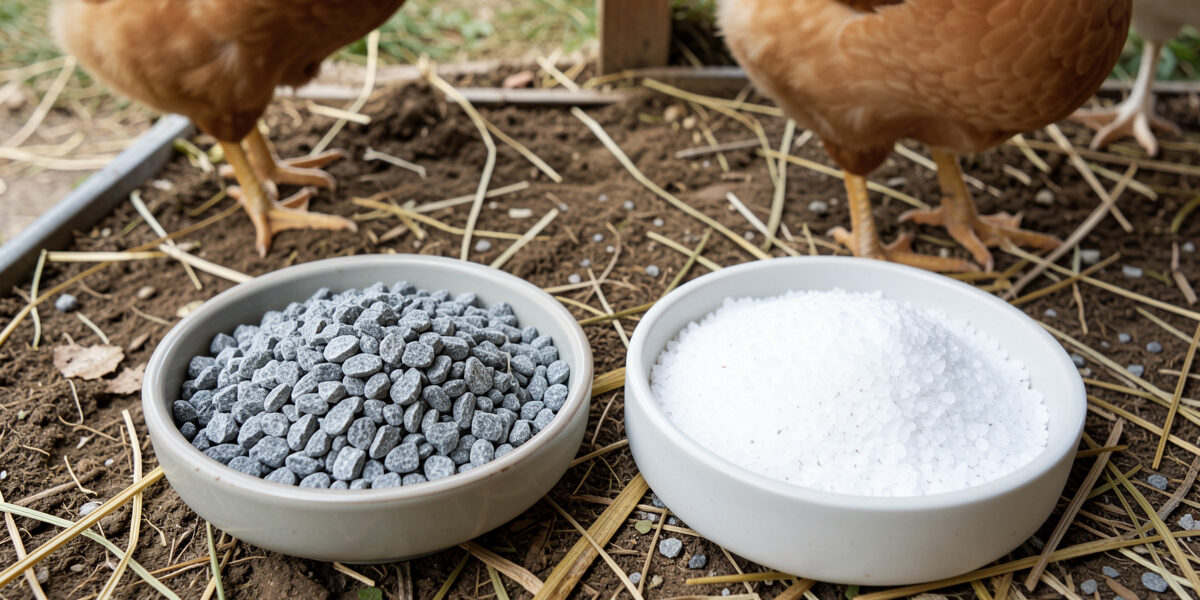
Grit and oyster shell are the two supplements every chicken keeper hears about and almost everyone confuses. Grit is hard insoluble stone that grinds food in the gizzard; oyster shell is soluble calcium that builds eggshell. They do completely different jobs, a bird needs both, and they are offered from separate dishes — never mixed into the feed and never used as substitutes for each other. Get that straight and you avoid the two classic failures: soft shells and a backed-up digestive system.
This is one of those topics where a single sentence of clarity saves a new keeper a season of trouble. Below is exactly how I run grit and oyster shell for my flock — what each does, which birds need which, and the free-choice setup that lets the hens regulate themselves.
What Grit Does (and Why Chickens Need It)
A chicken has no teeth, so it cannot chew. Instead it swallows food whole and grinds it in the gizzard, a muscular organ that needs hard grit to work like a mill. Without grit, a bird eating anything more fibrous than fine crumble cannot break it down properly, and you get poor digestion and even impacted crops. Grit is insoluble — it stays in the gizzard doing its grinding job and is slowly worn down, not dissolved.
Birds with full access to bare ground often pick up enough natural grit on their own — small stones, coarse sand. But any flock kept on bedding, in a run, or eating mostly commercial feed and treats needs grit offered free-choice, because there is nothing in a clean coop for them to find. Chicks eating anything beyond their starter crumble need chick-sized grit too, which I note in my chick feed stages guide. The key word with grit is insoluble: it is a tool, not a nutrient.
What Oyster Shell Does
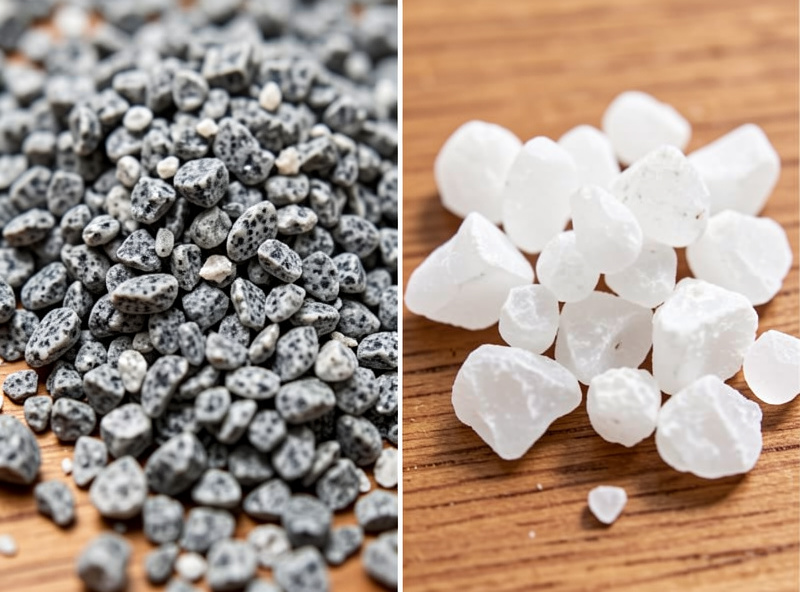
Oyster shell is the opposite of grit in every way that matters: it is soluble calcium that the hen dissolves and uses to build eggshell. A laying hen deposits roughly two grams of calcium into every shell, and if her diet runs short she pulls it straight out of her own bones — which is how you get a hen laying soft or thin-shelled eggs while slowly decalcifying her skeleton. Free-choice oyster shell is the insurance against that.
Crucially, only laying hens take much oyster shell. Offered in a separate dish, a hen building a shell will eat what she needs and the pullets, roosters, and non-laying birds will largely ignore it — which is exactly why it must stay separate rather than be forced on everyone through the feed. Good shell quality is one of the clearest signs of a well-fed laying flock, a theme I cover in my egg production guide. Calcium demand also rises with age and with heat: older hens absorb calcium less efficiently, and birds laying hard through a warm spell eat less feed overall, so the free-choice shell dish becomes the safety valve that keeps shells firm when feed intake dips. It is cheap insurance against the slow, invisible problem of a hen quietly decalcifying herself one thin egg at a time. If shells stay poor despite free-choice shell and correct feed, that points beyond nutrition toward a health issue worth checking with my chicken health guide and, for a genuinely unwell bird, an avian vet.
Grit Comes in Sizes — Match It to the Bird
One detail that catches keepers out is that grit is sold in sizes, and the size has to match the bird. Chick grit is fine, almost like coarse sand; grower and layer grit is progressively larger granite. Give a day-old chick adult-sized grit and it is too big to swallow comfortably; give a full hen chick grit and it grinds far less effectively. I keep two grades on hand when I have chicks alongside the laying flock, and switch the brooder over to standard grit as the birds grow.
Granite is the grit I trust because it is hard enough to last in the gizzard and does not break down into useless dust quickly. Avoid anything soft or limestone-based sold as “grit,” since soluble stone behaves more like oyster shell and will not do the grinding job. The whole point of grit is that it is durable and insoluble — if it dissolves, it is calcium, not grit, and you are back to confusing the two supplements all over again.
Grit vs Oyster Shell Side by Side
If you remember nothing else, remember this table. The two supplements sit in separate dishes for separate reasons.
| Feature | Grit | Oyster Shell |
|---|---|---|
| What it is | Hard insoluble stone (granite) | Crushed seashell (calcium) |
| Job | Grinds food in the gizzard | Builds eggshell |
| Soluble? | No — stays in gizzard | Yes — dissolved and absorbed |
| Which birds | All birds eating non-crumble feed | Laying hens only |
| How to offer | Free-choice, separate dish | Free-choice, separate dish |
How to Offer Both Without Mixing Them Up
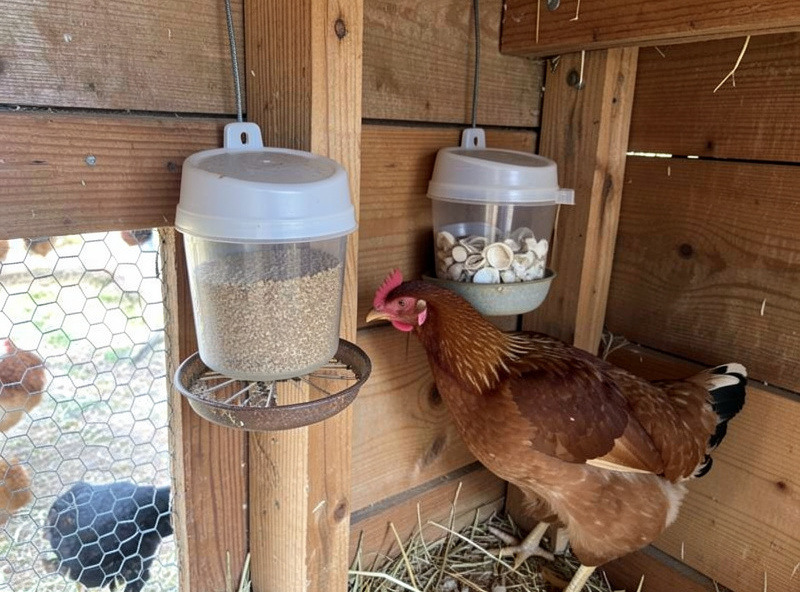
The setup that works is dead simple: two small dedicated containers, one for grit and one for oyster shell, kept full and kept separate from the feeder. I use a pair of little wall-mounted cups in the coop so neither gets fouled or scratched into the bedding. The birds visit them as needed; you just keep them topped up. Mixing either into the main feed defeats the purpose — it forces the supplement on birds that do not need it and lets the ones that do under-consume. It also wastes supplement, because a bird billing through mixed feed scatters the heavier grit and shell onto the floor where it is lost to the bedding. Keeping the two in their own cups, mounted where droppings and scratched litter cannot reach them, means almost none of it is wasted and you can see at a glance when a cup needs refilling.
You can buy both cheaply and they store for years if kept dry. I keep a bag of crushed oyster shell for chickens and a bag of insoluble poultry granite grit in the sealed feed bins alongside the main feed. As an Amazon Associate I earn from qualifying purchases. The whole supplement side of feeding fits into the bigger picture in my complete chicken feeding guide.
Common Mix-Ups to Avoid
The biggest error is treating one as the other — offering only oyster shell and assuming it also helps digestion (it does not; it dissolves), or offering only grit and wondering why shells are thin (grit has no calcium). Eggshells, crushed and baked, can supplement oyster shell but should not fully replace a reliable bought source, and feeding shells back to hens is best done crushed so birds do not learn to eat their own eggs.
The other quiet mistake is assuming a free-ranging flock needs neither. Free-rangers usually find their own grit, true — but pasture does not reliably supply enough calcium for heavy layers, so I still offer oyster shell free-choice even to birds that roam. The cost is trivial and the downside of a calcium-short laying hen is not. When in doubt, put both dishes out and let the birds decide; they self-regulate better than we tend to credit them for.
Seasonal access is the last thing I watch. In a Nordic winter my birds spend far less time on open ground, so the natural grit they would scavenge in summer simply is not available — which makes the indoor grit dish non-negotiable from the first hard frost. The same goes for any flock that gets locked into a covered run during a wet or cold spell. The moment birds stop foraging on bare earth, you become their only grit source, and a quietly empty grit cup in January is the kind of small oversight that turns into a digestive problem before you notice it.
Frequently Asked Questions
Do chickens need both grit and oyster shell?
Yes, and they are not interchangeable. Grit is insoluble stone that grinds food in the gizzard, while oyster shell is soluble calcium for building eggshells. Offer both free-choice from separate dishes so each bird takes what it needs.
What is the difference between grit and oyster shell?
Grit is hard insoluble granite that stays in the gizzard to grind food, since chickens have no teeth. Oyster shell is crushed seashell that dissolves to supply calcium for eggshells. One aids digestion, the other builds shells.
Can oyster shell be used as grit?
No. Oyster shell dissolves to release calcium, so it does not stay in the gizzard to grind food the way insoluble grit does. A flock eating anything beyond fine crumble still needs separate insoluble grit for digestion.
Do free-range chickens need grit?
Free-ranging birds on bare ground often pick up enough natural grit on their own. But birds kept on bedding or in a run, or eating mostly commercial feed, need grit offered free-choice since clean coops provide nothing to grind with.
Should I give chickens oyster shell year round?
Yes, offer oyster shell free-choice whenever hens are laying. Laying hens self-select the calcium they need, and a constant supply prevents thin shells and protects the hen from pulling calcium out of her own bones.
Can I feed eggshells instead of oyster shell?
Crushed, baked eggshells can supplement calcium but should not fully replace a reliable bought oyster shell source. Crush them well so hens do not start associating shells with food and learn to eat their own eggs.
Related Guides
- What to Feed Chickens: Complete Guide
- Layer Feed vs Grower Feed
- How to Increase Egg Production
- Chick Feed Stages Explained
Related Guides
Scratch Grains for Chickens: Treat, Not a Meal
Scratch grains are the most overfed thing in backyard chicken keeping. Scratch is a treat — a cracked-corn-and-grain mix that…
Fermented Chicken Feed: A Practical Keeper Guide
Fermenting chicken feed is the cheapest upgrade in the coop that actually earns its place. Soaking complete feed in water…
What Treats Can Chickens Eat? Safe and Unsafe Foods
Chickens are enthusiastic about almost anything you hand them, which is exactly why treats are where good intentions wreck a…