
My eggs sit unwashed in a bowl on the kitchen counter, not the fridge, and that’s not neglect — it’s the same practice most of Europe uses at the supermarket level. The United States requires all shell eggs to be washed and held at or below 45°F shortly after laying; most of Europe sells eggs unrefrigerated at ambient shelf temperature and tells households to do the same at home. Both systems work. They just protect the egg differently, and understanding why is the difference between an egg that holds its quality for weeks on a counter and one that goes bad in days because you tried to split the difference between the two approaches.
This guide covers what actually happens to an egg between the nest box and the kitchen — the bloom, the wash-or-don’t-wash decision, collection habits, storage temperature, and sizing a flock to what your household actually eats — from the keeper’s side, not a nutrition-outcome angle. None of this is medical advice about what eggs do for a body; it’s what handling does to the egg.
The Bloom: Why My Eggs Don’t Get Washed Right Away
A freshly laid egg comes out with a thin, invisible coating called the bloom, or cuticle — a layer that seals the roughly 7,000-8,000 microscopic pores in the shell. Those pores exist so the developing embryo (in a fertile egg) or just the egg itself can exchange gases, but they’re also the route bacteria and moisture use to get in or out. An intact bloom keeps that route mostly closed. Wash the egg and you strip the bloom along with any surface dirt, which is exactly why the wash-then-refrigerate system exists in the US: once the seal is gone, refrigeration is doing the job the bloom used to do.
University of Kentucky extension poultry specialist Jacquie Jacob’s guidance on small-flock egg handling lays out the two paths clearly: North Carolina State research backing the US washing standard found unwashed but visibly clean eggs carrying roughly 104.5 colony-forming units of bacteria on the shell, while eggs washed to the US standard (running water warmer than the egg, brush if needed, full dry before packing) dropped to roughly 100.5 — a substantial reduction (Jacob, via eXtension). But that same guidance notes the tradeoff runs the other way too: once washed, the egg has to stay cold, which is why the US requires shell eggs held at or below 45°F shortly after lay, while the UK and most of the EU sell eggs unrefrigerated at supermarket temperatures in the high 60s to low 70s Fahrenheit and expect households to keep them below roughly 68°F at home rather than in the fridge. Neither is wrong — they’re two different, internally consistent systems, and the mistake is mixing them: washing an egg and then leaving it on the counter is the one combination that actually loses the protection both systems rely on.
My Actual Routine, Nest Box to Kitchen
What I run on my own flock, and what I’d tell a new keeper to copy:
- Collect at least once a day, twice if I can manage it. That’s the same baseline the extension guidance above recommends — the longer an egg sits in the nest box, especially on a warm day or under a broody hen, the more bloom quality and shell cleanliness it loses before you ever get to the kitchen.
- Sort visibly dirty eggs out immediately. A heavily soiled egg gets washed and used first or refrigerated right away — the bloom on a dirty egg is already compromised by the mess sitting on top of it, so I’m not gaining anything by leaving it unwashed on the counter.
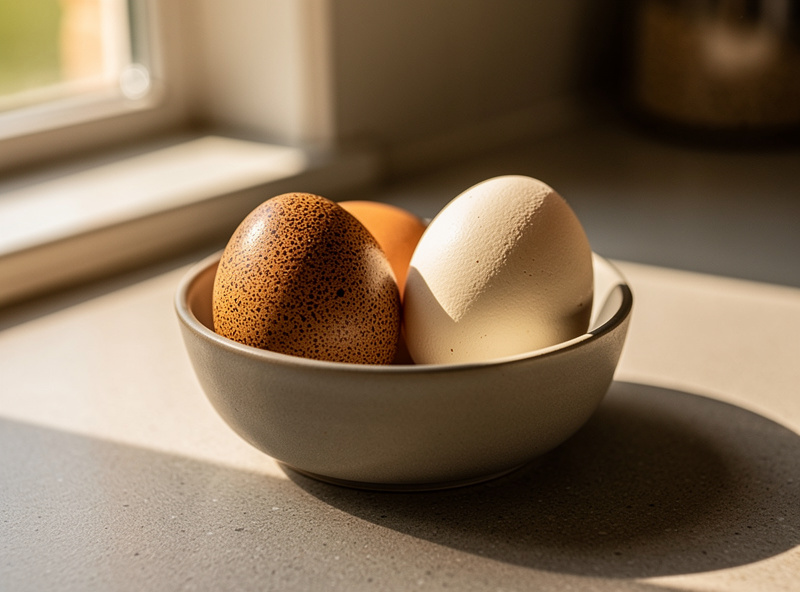
- Leave clean eggs unwashed at room temperature in a bowl out of direct sun, and wash individual eggs right before they go in the pan — a quick rinse under water warmer than the egg, never a cold-water dunk, which can actually pull contaminants inward through the pores as the egg’s contents contract.
- Refrigerate the overflow. Once the bowl fills past what we’ll use in the next week or two, the surplus goes into the fridge unwashed — cold slows the bloom’s natural decline further without needing to strip it, so it’s the best of both approaches for eggs that are going to sit longer.
The nest box side of this matters as much as the kitchen side. I run one bank of roll-away nest boxes — an angled floor that lets the egg roll clear of the hen into a small catch tray — specifically because a chronic egg-eater made that retrofit worth it; the rest of the boxes are standard hinged. Clean, dry bedding in every box and prompt collection do more for shell cleanliness than any wash step ever will, because a shell that never gets dirty in the first place doesn’t need the bloom stripped off it to look presentable.

How Long Eggs Actually Keep, Handled Either Way
In my kitchen, an unwashed, bloom-intact egg kept in a cool spot (not direct sun, ideally under 68°F) holds good cooking and baking quality for a few weeks — I’ve used the float test on ones I’d genuinely lost track of and still gotten a normal result past the three-week mark. A washed egg refrigerated at or near 40°F holds similarly well or longer, since the cold is doing the preservation work the bloom would otherwise be doing. What doesn’t hold up well either way is a dirty, unwashed egg left at room temperature — that’s the one combination that actually invites the problem the whole system is designed to prevent.
A Quick Visual Check Before an Egg Goes in the Bowl
Before an egg goes into the unwashed bowl at all, it gets a look: shell texture (a chalky, sandpaper-rough patch usually means a calcium hiccup, not a safety problem, but I track which hen it’s coming from), obvious cracks (straight to the “use today” pile, never the long-term bowl), and a hold-up-to-the-light check on anything I’m unsure about — candling isn’t just for hatching eggs. A held-up egg with a visibly enlarged air cell at the wide end is one I move to the “use soon” side rather than the back of the rotation, and it’s the fastest way to catch an egg that’s aged further than its collection date would suggest, especially in a mixed bowl where newer and slightly older eggs sit side by side.
Sizing Your Flock to Your Household’s Egg Habits
This is the “chicken math” trap in reverse: most new keepers oversize the flock, then end up giving eggs away or feeding a bank of birds that’s bigger than the household actually needs. Working backward from consumption is the better approach. A household going through a dozen eggs a week needs roughly 2-3 hens in peak summer production, when a healthy layer is putting out 5-6 eggs a week. That same household needs closer to 4-5 hens to cover winter, when daylight hours drop, molt takes birds out of lay entirely for weeks at a stretch, and per-hen output can fall to 1-2 eggs a week or stop altogether without supplemental light.
That gap between summer and winter production is exactly why I run more birds than the summer math alone would suggest — a flock sized to summer output leaves you buying eggs at the store every winter, which defeats a fair amount of the point. For the breeds that actually hold production through a Nordic winter rather than going into an extended molt-driven pause, the cold-hardy breed comparison covers the ten options that matter most for keeping the weekly count from collapsing to zero once the days get short.
Feed Protein and Shell Quality Through a Molt
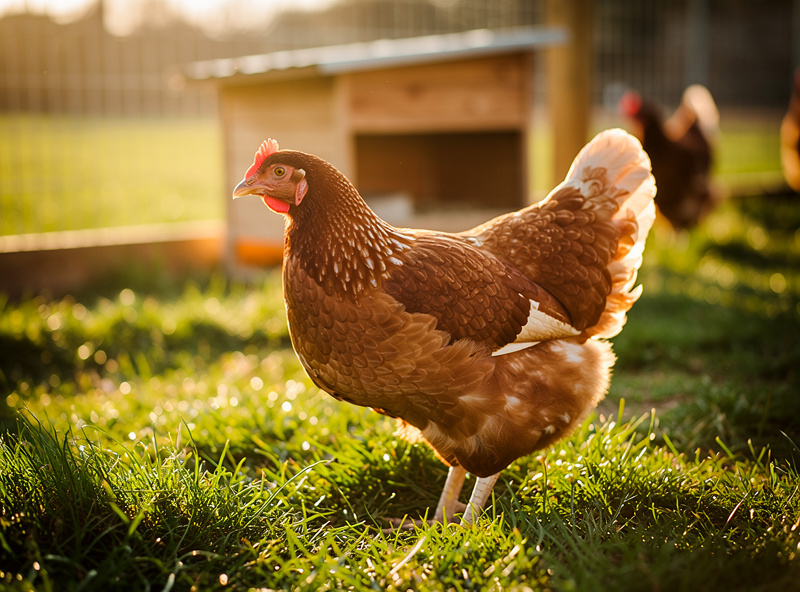
Egg handling starts before the egg exists, with what the hen is eating. A molting hen redirects protein into regrowing feathers rather than egg production, which is part of why she stops laying — and when she comes back into lay, a feed with adequate protein (commercial layer feed sits around 16-18% protein; a lot of keepers bump toward an 18-20% grower or flock-raiser blend during a molt) supports both the feather regrowth and a faster return to consistent shell quality once eggs start again. A hen short on protein or calcium during that recovery period is more likely to produce thin-shelled or misshapen eggs for the first stretch back in lay — feed and forage drive that side of quality just as much as the collection and storage habits above drive the other side. My complete chicken feeding and nutrition guide covers the protein and calcium side in more depth, and the color/composition side of feed-driven quality is covered separately in my guide to what actually drives backyard egg quality.
The Economics, Roughly
A dozen backyard eggs costs me somewhere around $0.70-$1.00 in feed and bedding, depending on the season and what’s coming off pasture versus out of the feed bag. A comparable pasture-raised dozen at the store runs $6-8 where I shop. That gap adds up over a year of steady household consumption, and it’s part of what justifies the coop hardware and the auto-door in the first place — not as a business, just as a household cost that pays for itself over a couple of years for anyone already eating that many eggs anyway.
Frequently Asked Questions
Should I wash my backyard eggs before storing them?
Not right away, if they’re visibly clean. Washing strips the bloom, the natural coating that seals the shell’s pores, which is why the US system pairs washing with mandatory refrigeration at or below 45°F. If you keep eggs unwashed with the bloom intact, they hold up well at cool room temperature and only need a rinse right before you use them.
Why do European grocery stores sell unrefrigerated eggs?
Because most of Europe doesn’t wash eggs before sale, so the bloom stays intact and keeps the shell’s pores sealed against bacteria without refrigeration. The US requires washing, which strips that seal, so US regulations require refrigeration at or below 45°F shortly after lay instead. Both systems work; they just protect the egg through different mechanisms.
How often should I collect eggs from the coop?
At least once a day, and twice a day is better, especially in warm weather or if you have a broody hen who might sit on eggs for hours. The longer an egg sits in the nest box, the more it loses in shell cleanliness and quality before you ever bring it inside.
How many hens do I need for a dozen eggs a week?
Roughly 2-3 hens in peak summer production, when a healthy layer puts out 5-6 eggs a week. Winter changes the math significantly — daylight loss and molt can drop per-hen output to 1-2 eggs a week or stop it entirely, so a flock sized only for summer output usually means buying eggs at the store every winter.
Does feed affect shell quality, not just yolk color?
Yes. Protein and calcium intake drive shell strength and thickness, separate from the carotenoid intake that drives yolk color. A hen coming back into lay after a molt, when she’s been redirecting protein into feather regrowth, is more likely to lay thin-shelled or misshapen eggs until her feed intake catches her back up.
What’s the actual cost difference between backyard and store eggs?
On my flock, a dozen runs roughly $0.70-$1.00 in feed and bedding depending on season, versus $6-8 for a comparable pasture-raised dozen at the store. That gap is a household cost-savings calculation, not an income claim — it’s what a flock saves a family already eating that many eggs, not a business.
Related Articles
Related Guides
Coop Runoff as Hydroponic Nutrient: Closing the Waste-to-Food Loop
Chicken coop runoff contains dissolved nitrogen, phosphorus, and potassium at concentrations that make it a viable nutrient input for hydroponic…

Backyard Egg Quality: Feed, Forage, and Handling
Crack a carton of my own eggs next to a supermarket dozen and the difference is obvious before you even…
Automatic Chicken Feeder: Types, Setup & Guide
Complete guide to automatic chicken feeders. Compare gravity, treadle, timer, and smart WiFi feeders with capacity planning, training tips, and…