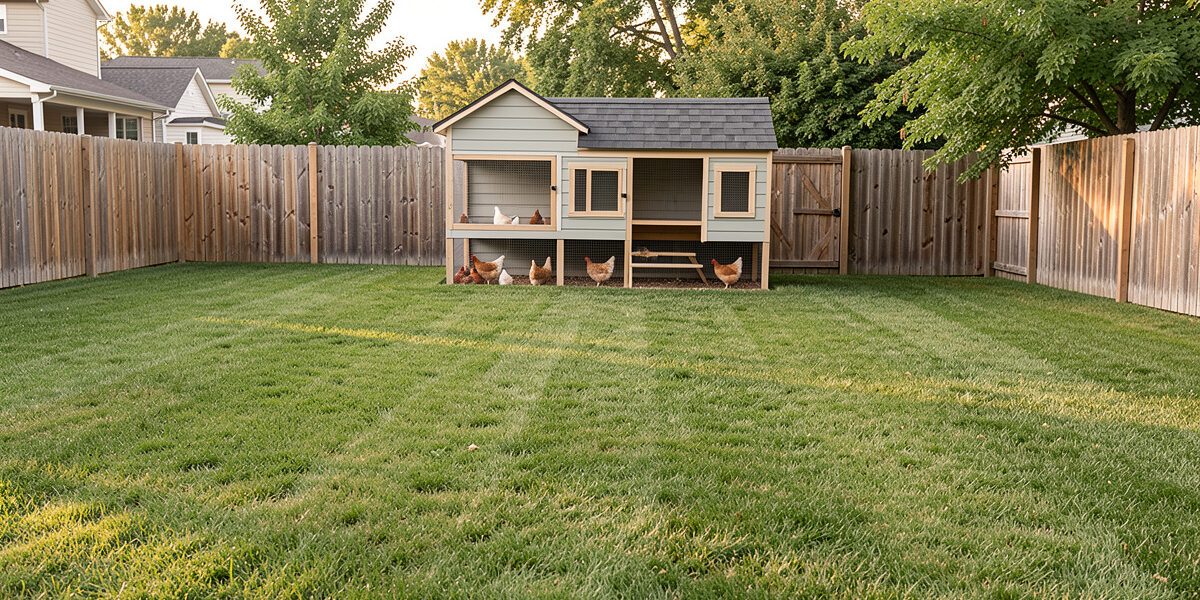
A city chicken coop ordinance is the part of your local code that governs the structure itself — where it can sit, how big it can be, what it must be made of, and how clean it must stay. The clauses that matter most are setbacks from property lines (commonly 10 to 25 feet), a secure-enclosure requirement, and a cleanliness mandate that ties directly to nuisance enforcement.
People obsess over the flock-number rule and then get tripped by the coop rules, which are usually buried lower in the same ordinance and are just as binding. I have read a lot of these codes — most are searchable free on a hosted library like Municode — and they follow a predictable template once you know what to look for. This guide breaks down the standard coop clauses, what each one is actually asking of you, and how to build so you satisfy them by default. It is the structure-focused companion to how urban chicken laws vary by neighborhood and the broader urban chicken keeping guide.
What a Coop Ordinance Actually Regulates
Coop ordinances regulate five things: placement (setbacks), size, construction and enclosure, cleanliness, and sometimes a permit or inspection. Each clause exists to address a specific neighbor-facing risk — distance for odor and sound, enclosure for predators and escapes, cleanliness for vermin and smell.
Read in that light, the rules stop feeling arbitrary. The setback keeps the coop far enough from the property line that odor and sound don’t cross it. The enclosure clause exists so your birds don’t roam and so predators don’t turn your yard into a kill site that draws complaints. The cleanliness mandate is the enforcement hook that lets the city act on a neglected coop. The table lays out the standard clauses and what each requires.
| Clause | Typical Requirement | Why It Exists |
|---|---|---|
| Setback | Coop 10–25 ft from property lines and dwellings | Keeps odor and noise off the neighbor’s lot |
| Size / placement | Rear-yard only; size capped or tied to lot | Limits visual footprint and scale |
| Enclosure | Coop and run fully enclosed and secure | Stops roaming birds and predator access |
| Cleanliness | Kept sanitary, vermin- and odor-free | The nuisance-enforcement hook |
| Permit / inspection | Registration, fee, or one-time inspection | Lets the city track and verify compliance |
Setbacks: The Clause That Decides Coop Placement
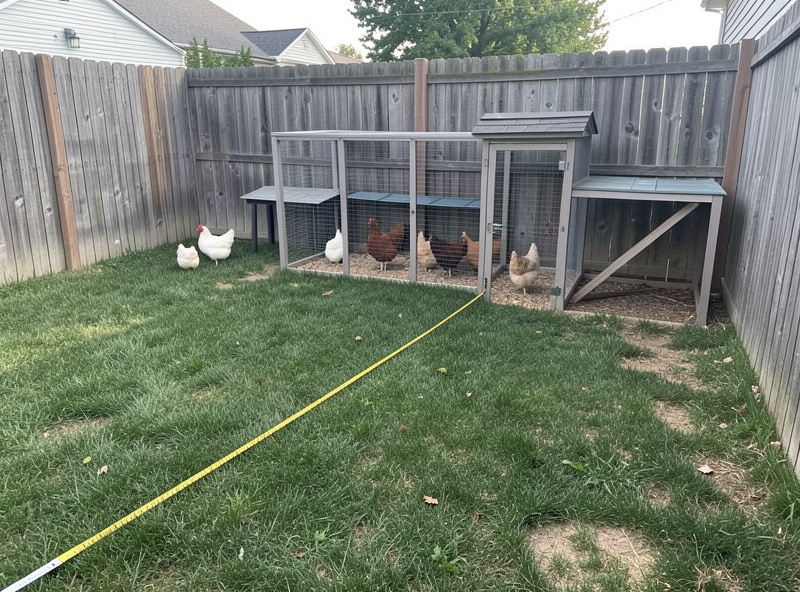
The setback is the single most consequential coop clause because it dictates where — and often whether — you can site a coop at all. A 25-foot setback from all property lines can eliminate every legal spot in a small yard, so measure before you buy or build anything.
Setbacks are measured from the coop to the property line, and sometimes additionally from any neighboring dwelling. On a large lot this is a non-issue; on a typical urban lot, a generous setback can leave a surprisingly small legal zone, often a strip down the center of the rear yard. Pull a tape measure and mark the buildable area before you fall in love with a coop model or a yard corner. If the setback leaves you no workable spot, that is worth knowing before you have spent a dollar — and in some cities you can request a variance. Once you know your buildable footprint, size the coop to it and to your flock using the coop size guide.
The Enclosure and Construction Rules
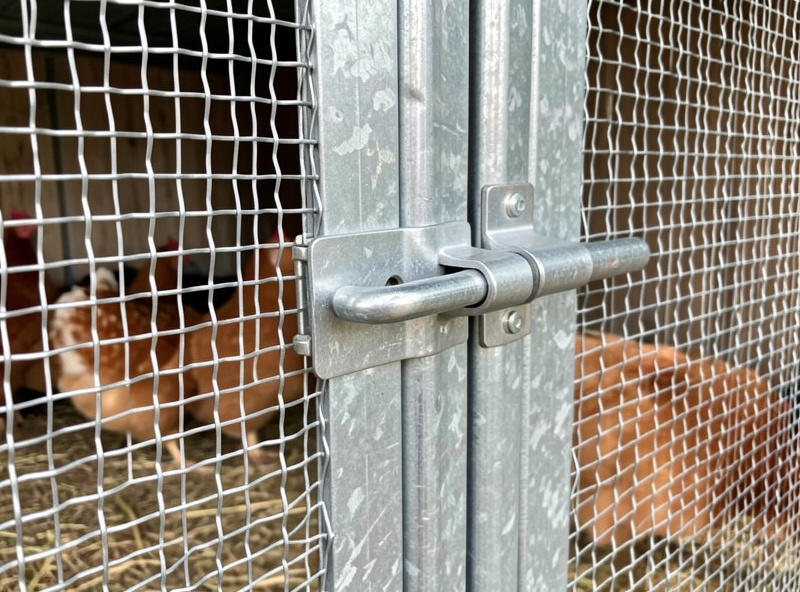
Most ordinances require the coop and run to be fully enclosed, secure, and predator-resistant, which conveniently overlaps with what good keeping demands anyway — half-inch hardware cloth on every opening, a solid floor or dig barrier, and secure latches. Building to a real predator-proof standard satisfies the legal enclosure clause automatically.
The legal language is usually about preventing birds from roaming and being “adequately enclosed,” but the practical bar is the same one predators set. If you build to keep raccoons and dogs out — 19-gauge half-inch hardware cloth screwed and washered over every gap, a buried or aproned dig barrier, and latches a raccoon can’t work — you will clear any enclosure clause without trying. The welded run I built was designed around a raccoon, not the ordinance, and it cleared my enclosure language for free as a result. The full build standard is in the predator-proof coop guide. This is the happy case where the law and good husbandry want the exact same thing, so build for the predator and the code follows.
Cleanliness Clauses and the Nuisance Hook
The cleanliness clause is the one with real enforcement power, because it links directly to the nuisance provisions that let a city act on a single complaint. Keeping the coop dry, deep-littered, and vermin-free is not just good practice — it is what keeps you legally untouchable.
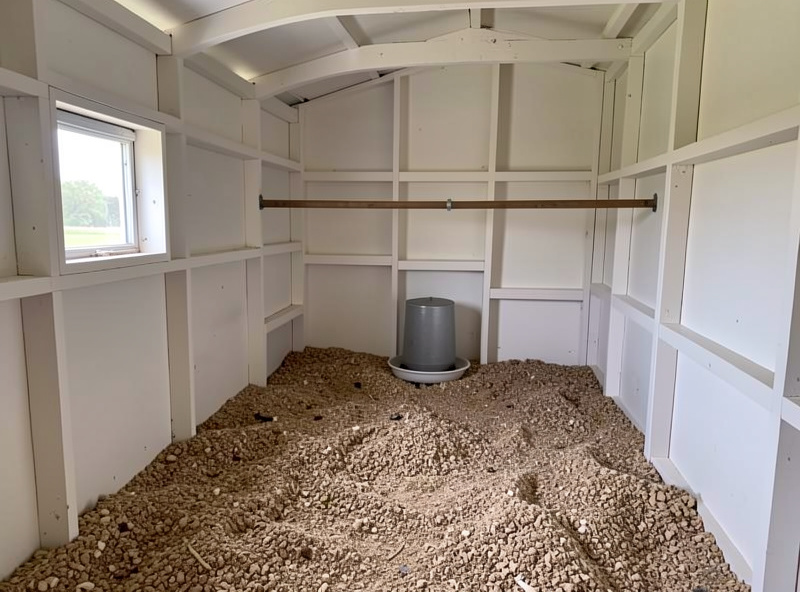
Cleanliness language sounds soft (“maintained in a sanitary condition, free of odor and vermin”) but it is the lever code enforcement reaches for when a neighbor complains, because it is judged subjectively and is easy to cite. The defense is simply to run a clean coop: the deep-litter method for a dry, low-odor floor, secured feed to deny rodents, and a tidy run. A coop that genuinely meets the cleanliness bar gives an officer nothing to write up. This clause is exactly where the legal and social games merge, which is why I treat it alongside handling neighbor complaints.
Permits, Inspections, and Registration
Some cities require a coop permit, an annual registration, or a one-time inspection before you keep birds — usually a modest fee and a quick check that the coop meets setback and enclosure rules. Where required, getting the permit is straightforward and worth doing properly, because an unpermitted coop hands a complaining neighbor an easy win.
Not every city requires a permit, but where one exists, skipping it is a needless risk: it converts any future complaint into a clear violation regardless of how well-run your flock is. The process is typically a form, a small fee, and sometimes an inspection confirming the coop sits within the setback and is securely enclosed. Do it before the birds arrive. And keep the bigger picture in view — the permit covers the coop, but the flock number and rooster rules are separate clauses, covered in how many chickens are allowed in urban areas and the broader neighborhood law guide. A discreet, well-screened coop helps on every front, as in disguising a chicken coop.
Related Guides
- The Complete Urban Chicken Keeping Guide
- How Urban Chicken Laws Vary by Neighborhood
- How Many Chickens Are Allowed in Urban Areas
- Predator-Proof Chicken Coop Guide
- Chicken Coop Size Guide
Frequently Asked Questions
What is a chicken coop ordinance?
It is the part of a local code that governs the coop structure itself — where it can be placed, how big it can be, how it must be built and enclosed, and how clean it must be kept. It is separate from the flock-number and rooster rules, though usually in the same ordinance.
How far does a chicken coop have to be from the property line?
Setbacks commonly run from 10 to 25 feet from property lines, and sometimes from neighboring dwellings as well. The exact distance is set locally. On a small lot, a large setback can sharply limit where a coop can legally sit, so measure first.
Do I need a permit to build a chicken coop?
It depends on the city. Some require a permit, registration, or one-time inspection; many do not. Where a permit is required, getting it is usually a simple form and small fee, and skipping it turns any future complaint into a clear violation.
What does an enclosure requirement mean for my coop?
It means the coop and run must be securely enclosed so birds cannot roam and predators cannot enter. Building to a real predator-proof standard — half-inch hardware cloth on every opening, a dig barrier, and secure latches — satisfies the clause automatically.
Can the city make me remove my coop?
The city can order changes or removal if the coop violates setback, enclosure, or cleanliness clauses and the issue is not corrected. A compliant, clean, properly placed coop gives enforcement no grounds, even when a neighbor complains.
Why do coops have cleanliness rules?
Because a neglected coop causes odor and vermin that affect neighbors, the cleanliness clause is the enforcement hook tied to nuisance provisions. Running a dry, deep-littered, rodent-free coop keeps you on the right side of it and gives an officer nothing to cite.
Related Guides

Handling Neighbor Complaints About Chickens
The best way to handle a neighbor complaint about your chickens is to prevent it: keep the coop odor-free, the…

Keeping Chickens in a Small Backyard
You can keep a happy flock of three to six hens in a backyard as small as a few hundred…

Urban Chicken Laws and How They Vary by Neighborhood
Urban chicken laws are set locally, not nationally, which is why they can change from one side of a city…