
Most urban areas allow four to six hens per household, though the limit is set locally and can run anywhere from three birds to no cap at all. Many cities tie the number to lot size rather than a flat figure, and almost all of them count only hens — roosters are usually banned outright regardless of your total.
“How many can I have?” is the second question every new keeper asks, right after “is it legal?” There is no single answer, but there is a very predictable pattern, and once you understand how cities write these limits you can usually guess yours before you even read the code. This guide covers the typical numbers, the four ways municipalities structure a limit, what counts toward it, and how to legally keep more. It sits under the main urban chicken keeping guide and pairs with how urban chicken laws vary by neighborhood.
The Typical Number: Four to Six Hens
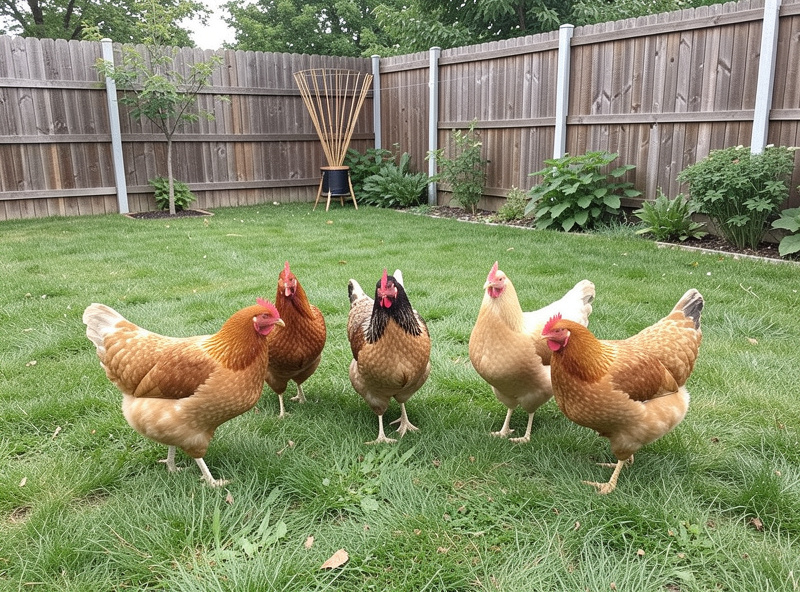
The most common urban flock limit is six hens, with four a close second and three on the strict end — a range that, conveniently, matches what a small lot can house well. A flock of four to six gives a household plenty of eggs without the space, odor, or noise problems that push a city to write tighter rules.
Why this range? It is the sweet spot cities have settled on after a decade of legalizing hens: enough birds to make keeping them worthwhile, few enough that a normal residential lot can absorb the manure and the sound. Six laying hens produce roughly two dozen eggs a week in season — more than most families eat. The number also reflects the spatial truth I keep coming back to: at 4 square feet of coop and 8 to 10 of run per bird, six hens is about what a quarter-acre lot carries comfortably, which I break down in keeping chickens in a small backyard.
Four Ways Cities Set the Limit
Urban flock limits come in four structures: a flat cap, a lot-size formula, a permit tier that allows more birds for a fee, or no numeric cap at all with only a rooster ban. Knowing which structure your city uses tells you immediately whether you can scale up.
A flat cap is the simplest — “no more than six hens, period.” A lot-size formula scales the number to your land, for example one hen per so many square feet, which rewards larger lots. A permit tier lets you keep the base number freely and apply (and pay) for more. And a surprising number of cities set no hen cap at all, regulating only roosters, slaughter, and nuisance. The table shows how each structure behaves.
| Limit Structure | Typical Numbers | Can You Keep More? | Notes |
|---|---|---|---|
| Flat cap | 3, 4, or 6 hens | No, without a code change | Most common; simplest to enforce |
| Lot-size formula | 1 hen per fixed area | Yes, with more land | Rewards larger lots; check the math for yours |
| Permit tier | Base 4–6, more by permit | Yes, with a permit and fee | Often requires an inspection |
| No numeric cap | Hens unlimited | Yes, within nuisance limits | Rooster ban and setbacks still apply |
What Counts Toward the Limit
Almost every ordinance counts only adult hens toward the cap, but the details matter: some cities count chicks once they reach a certain age, and a few count all poultry including ducks together. Roosters are typically prohibited entirely rather than counted, so they never fit inside a limit.
This trips people up at chick season. If your city counts birds “over four months” or “of laying age,” your eight straight-run chicks may be legal as babies and illegal the week half of them start to crow. Read whether your limit counts chicks — the actual text is usually on a free hosted library like Municode — and remember that any cockerels in a straight-run batch have to be rehomed before they mature where roosters are banned — see are roosters allowed in residential areas. If you keep mixed poultry, check whether ducks or guineas share the same cap. The coop ordinance details, including how birds are defined, live in the city chicken coop ordinance breakdown.
How to Legally Keep More Birds
If you want a bigger flock than your cap allows, the legal routes are a larger lot under a lot-size formula, a permit under a tiered ordinance, or petitioning to amend a flat cap — and in every case, your space and your neighbors set the practical ceiling well before the law does. More birds is more manure, more sound, and more to disguise.
Before you chase a higher number, run the space math honestly. The fastest way to invite a nuisance complaint is to crowd more birds into a lot that cannot carry them — the manure load and the noise both scale with the flock, and a crowded run is the one that smells. If your city uses a permit tier, that path is usually straightforward. If it is a flat cap, the realistic move is the same community route that legalized hens in the first place: bring a clean amendment to the council. Whatever number you land on, size the coop and run to it from the start using the coop size guide, not the other way around.
The Number Is About Neighbors, Not Biology
Cities cap flocks for one practical reason: a flock sized to the lot is invisible to the neighbors, and an oversized one is the source of every complaint that lands on a code officer’s desk. The limit is a proxy for odor, noise, and tidiness, which means staying under it is genuinely in your interest, not just the law’s.
I think of the cap less as a restriction and more as a free piece of advice the city is giving you. I built my own coop for six hens and watched chicken math push it toward ten inside two seasons, so I treat the number as the line I wish I had respected sooner. The keepers who run into trouble are almost never the ones with four well-kept hens; they are the ones who let chicken math creep the flock to a dozen birds on a lot built for five, at which point the run turns to mud, the manure outpaces the bedding, and a neighbor finally calls. A flock at or just under your limit produces plenty of eggs, keeps the coop dry enough to control smell, and stays quiet enough that nobody notices. If the egg supply is the goal, you get more mileage from better layers than from more birds — pick productive breeds from the top laying breeds and keep the flock small. And whatever your number, the social maintenance in handling neighbor complaints about chickens is what keeps the nuisance clause dormant.
Related Guides
- The Complete Urban Chicken Keeping Guide
- Keeping Chickens in a Small Backyard
- How Urban Chicken Laws Vary by Neighborhood
- City Chicken Coop Ordinances Explained
- Chicken Coop Size Guide
Frequently Asked Questions
How many chickens can you have in a city?
Most cities allow four to six hens per household, with three on the strict end and some cities setting no numeric cap at all. The exact figure is set by your local ordinance, and many cities scale it to lot size rather than using a flat number.
Do roosters count toward the chicken limit?
Usually not, because most urban ordinances ban roosters outright rather than counting them. A rooster is typically prohibited regardless of how many hens you are allowed, due to the noise of crowing.
Do baby chicks count toward my flock limit?
It depends on the ordinance. Some count only birds over a set age or of laying age, so chicks may be legal as babies. Read your code carefully, especially if you bought straight-run chicks that could include cockerels you must rehome.
Can I get a permit to keep more chickens?
In cities with a tiered ordinance, yes — you keep a base number freely and apply, often with a fee and inspection, for more. Cities with a flat cap require a code amendment instead. Your lot size and neighbors set the practical limit either way.
How many eggs will four to six hens produce?
Six laying hens of productive breeds give roughly two dozen eggs a week during peak season, more than most families use. Production drops in winter as daylight shortens and during the annual molt, so the weekly total varies through the year.
Related Guides

Handling Neighbor Complaints About Chickens
The best way to handle a neighbor complaint about your chickens is to prevent it: keep the coop odor-free, the…

Keeping Chickens in a Small Backyard
You can keep a happy flock of three to six hens in a backyard as small as a few hundred…

Urban Chicken Laws and How They Vary by Neighborhood
Urban chicken laws are set locally, not nationally, which is why they can change from one side of a city…