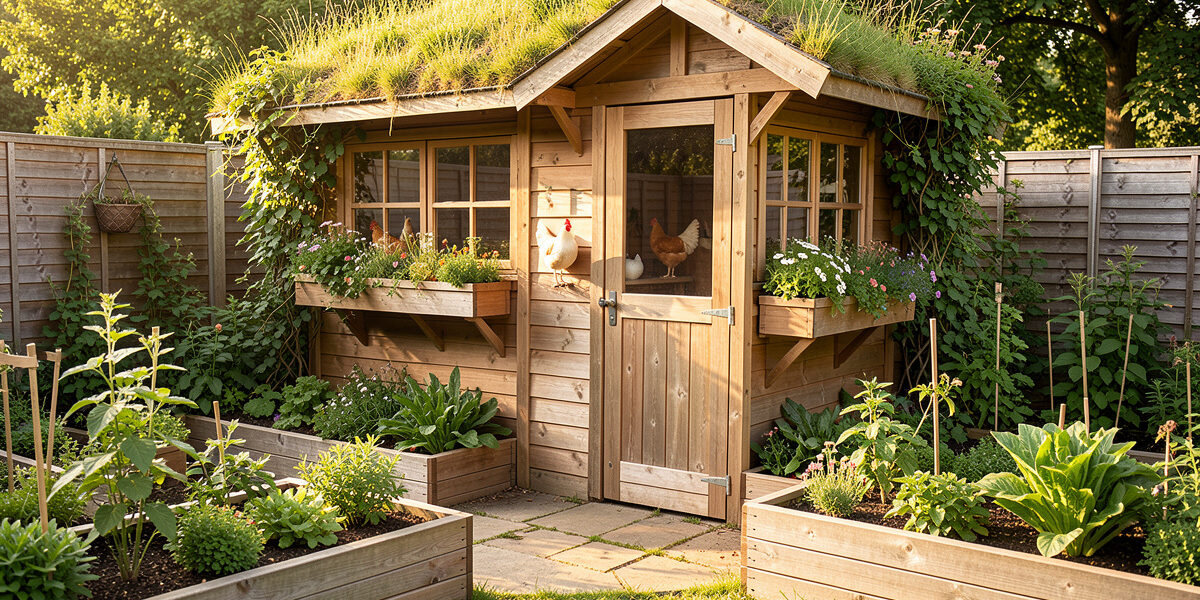
The best way to disguise a chicken coop is to stop it from reading as a coop at all: paint it to match your house or fence, screen it with a trellis and climbing plants or a raised garden bed, and build or buy one shaped like a potting shed or garden feature. A coop that looks like landscaping draws no second glance and no complaints — and the highest-impact version of that costs about $20 in exterior paint, not a redesign.
On a town lot, the coop’s appearance is not vanity — it is complaint prevention. The “eyesore” objection is one of the four things neighbors actually report, and unlike smell or noise it is on display every single day. The fix is design, and it is genuinely satisfying: a well-camouflaged coop makes the yard look better, not worse. This guide covers the tactics that work, from a $20 paint job to a coop that doubles as a garden bed. It is the aesthetic companion to handling neighbor complaints about chickens and the small-space layout in keeping chickens in a small backyard.
Color Is the Cheapest, Biggest Win
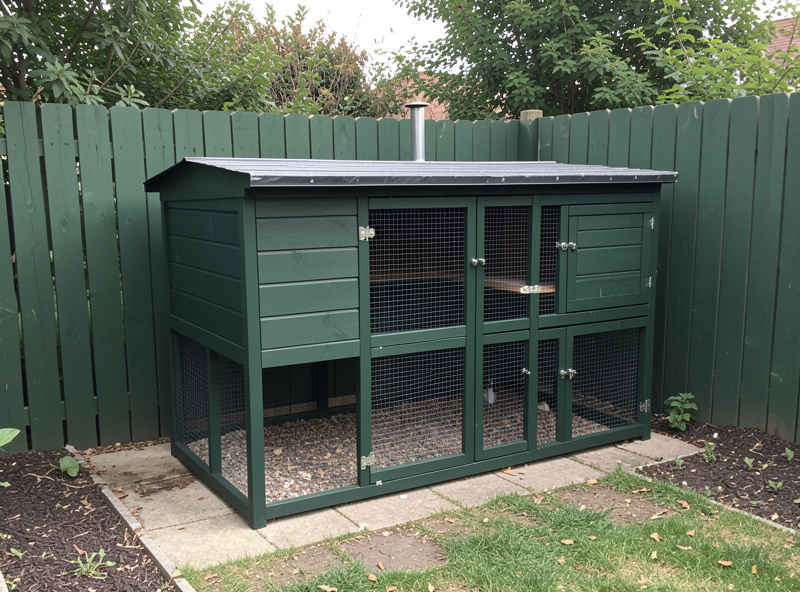
Painting a coop to match your house trim, fence, or garden structures is the single highest-impact disguise for the lowest cost — a coop in the same color as its surroundings visually recedes, while a raw-wood or mismatched box announces itself from every window. Dark, muted tones disappear better than bright or white ones.
The eye locks onto contrast, so the trick is to remove it. Match the coop to the fence it sits against or the trim on your house, and it stops being a separate object and becomes part of the scene. Deep greens, charcoals, and muted browns melt into a garden far better than the cheerful pastels coop catalogs love; a barn-red coop is adorable and maximally visible. A weekend and a can of exterior paint does more for the sightline than any expensive feature. While you have the brush out, paint or stain any visible run framing the same tone so the whole structure reads as one quiet mass.
Screen It With Living Cover
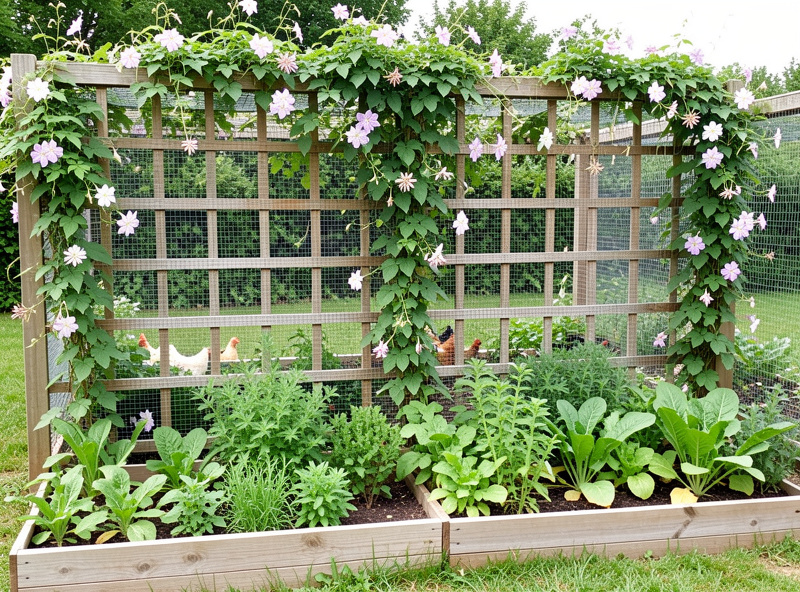
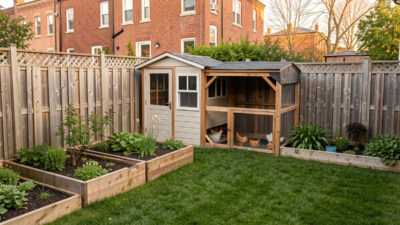
A trellis with climbing plants, a row of tall shrubs, or a raised garden bed placed between the coop and the neighbor’s sightline hides the structure behind greenery within a single growing season. Living screens are the most effective disguise because they look intentional and improve the whole yard.
Plant your way out of the problem. A lattice panel or freestanding privacy trellis with climbing beans, clematis, or hops throws up a green wall fast; a hedge of tall ornamental grasses or shrubs does the same more permanently. Raised garden beds along the coop’s visible side break up its outline and frame it as part of the vegetable garden — which, with chickens next door, it effectively is. Site the screen on the lines that matter: between the coop and the neighbor’s most-used windows and seating, not all the way around. The bonus is functional: a planted screen also cuts wind and gives the run afternoon shade. As an Amazon Associate I earn from qualifying purchases.
Build It as a Garden Feature
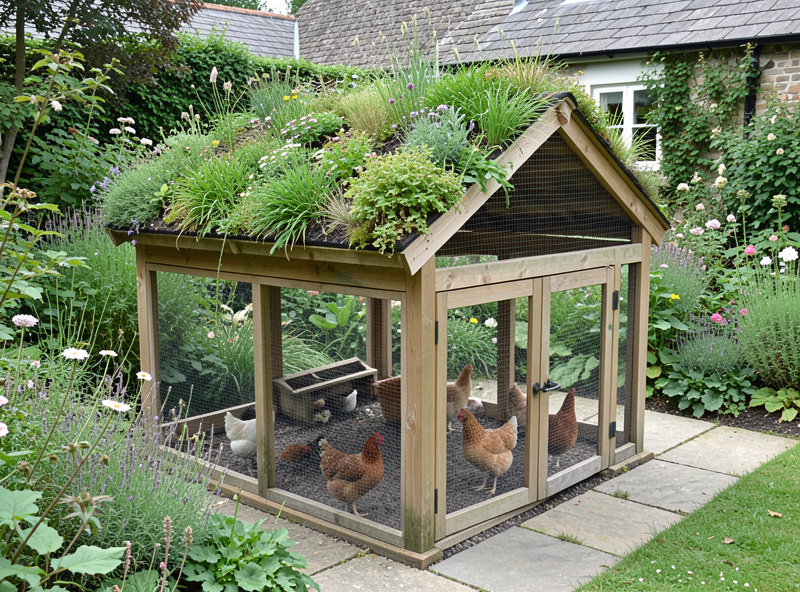
The most complete disguise is a coop designed to look like something else entirely — a potting shed, a garden bench, a planter, or a cottage-garden structure. A coop with a green roof or built-in planters reads unmistakably as landscaping, and many keepers find it the most rewarding build of all.
This is where the disguise becomes design. A coop styled as a potting shed, with a window box and a pitched roof, passes for a tool store. A green roof — a shallow planted tray over the coop — turns the top surface into a living feature and insulates the coop as a side benefit. Some builds integrate the coop into a raised-bed system so it sits inside the vegetable garden as one structure. If you want this level of integration without designing it yourself, it is the kind of thing a custom coop builder handles well. The table below sorts the main disguise approaches by cost and effort so you can pick where to start.
| Tactic | Cost | Effort | Effect |
|---|---|---|---|
| Color matching (paint/stain) | Low | A weekend | High — biggest win per dollar |
| Trellis + climbing plants | Low–medium | One season to fill in | High, and improves the yard |
| Raised beds along the coop | Medium | Moderate build | Medium–high, frames it as garden |
| Coop-as-garden-feature build | High | Significant design/build | Highest — reads as landscaping |
Don’t Let the Disguise Break the Coop
The one rule that overrides every camouflage trick is that the coop still has to work as a coop — a disguise that smothers ventilation, blocks your daily access, or traps moisture trades a cosmetic problem for a welfare and odor disaster. Hide the coop, never hobble it.
I see this go wrong when enthusiasm for blending the coop wins over function. Wrapping a coop in solid screening on all four sides cuts the airflow that keeps it dry, and a damp coop is exactly what causes the ammonia smell — and the frostbite, in my climate — that the small-space and ventilation guides warn about. Climbing plants are lovely until they grow over the vents and pop door and choke them; keep growth trimmed back from every opening. Screening that boxes you out of the coop means you skip cleanings, and a neglected coop smells worse than an ugly one ever looked. And never let a green roof or dense planting give a raccoon a launch point onto the run, or let foliage hide a breach in the hardware cloth where you can’t see it. Good disguise works with the coop’s ventilation, access, and predator-proofing — it does not fight them. If a tactic compromises any of those three, drop it.
Disguise Is a System, Not a Single Trick
No one tactic hides a coop on its own — the coops that genuinely vanish stack three or four cheap moves together: muted color, a living screen on the lines that matter, raised beds breaking the outline, and disciplined placement. Layered, modest tactics beat one expensive feature every time.
Think of it the way you would any concealment: it is the combination that works, not the hero move. A charcoal coop alone is just a dark box; a charcoal coop tucked in a back corner, fronted by a trellis of beans and a row of raised beds, with the feed bins stored out of sight, simply stops registering as a coop. Start with the cheapest, highest-impact layer — paint — and add the next layer only where a real sightline still exists, usually toward one or two neighbors rather than all of them. This keeps the cost and effort proportional to the actual problem: you are not hiding the coop from the sky, only from the specific windows and seating areas where someone might object. A few well-chosen layers, matched to your yard’s real angles, is how a backyard flock becomes the thing the neighbors forget is there.
Placement and Tidiness Finish the Job
Where you put the coop and how tidy you keep it matter as much as how it looks — a coop tucked behind a garage or in a planted corner, with the run raked and clutter stored out of sight, disappears in a way no paint job can rescue if the area around it is a mess. Disguise is as much housekeeping as design.
Site the coop in the least-visible part of the yard from the neighbors’ angle — behind a garage, along a shared fence already screened, in a corner the sightlines don’t reach. Then keep the surroundings disciplined: store feed bins, tools, and spare bedding in a closed container, rake the run, and keep the deep litter topped up so the whole zone looks cared-for. A tidy, well-placed, color-matched, planted coop is invisible in the way that counts — nobody thinks about it. That, more than any single trick, is the goal: a coop that gives the neighborhood nothing to notice, backed by the clean-coop habits in the deep-litter method and the structure rules in the city chicken coop ordinance breakdown.
Disguise and the HOA Question
If you keep hens under an HOA, the disguise is doing double duty: it satisfies the aesthetic rules many covenants impose on outbuildings and it keeps you off the radar of the one neighbor most likely to file. A coop that reads as a tidy garden structure clears most HOA structure rules that a raw hutch would trip.
Many covenants regulate the look, color, and placement of any outbuilding, and a coop is no exception — an unscreened, mismatched hutch can violate the aesthetic clause even where hens themselves are permitted. The same moves that hide a coop from a complaining neighbor also bring it into line with those rules: a muted, house-matched color, a placement that respects setbacks, and screening that frames it as landscaping. Before you build, check whether your covenant requires architectural approval for structures, and design the disguise to clear it from the start. This is the structure side of the broader picture in the neighborhood law guide — the law sets what you may build, and the disguise is how you build it so nobody minds.
From here, keep building: the complete urban keeping guide ties the whole system together, small-backyard layout covers fitting it all into a tight lot, and handling neighbor complaints closes the loop on keeping the peace a hidden coop is meant to protect.
Related Guides

Handling Neighbor Complaints About Chickens
The best way to handle a neighbor complaint about your chickens is to prevent it: keep the coop odor-free, the…
Keeping Chickens in a Small Backyard
You can keep a happy flock of three to six hens in a backyard as small as a few hundred…
Urban Chicken Laws and How They Vary by Neighborhood
Urban chicken laws are set locally, not nationally, which is why they can change from one side of a city…