Mites and lice are the external parasites nearly every backyard flock meets eventually, and the good news is that they’re largely a hygiene-and-habitat problem you can stay ahead of. The classic signs are birds that grow restless or reluctant to roost at night, feather loss and a scruffy vent, a pale comb in heavy cases, and tiny clusters of eggs cemented to the base of feathers. Catch them early and prevention does most of the work; let them build and they drain a flock fast.
I keep a cold-hardy flock in a coop built with smooth, sealable surfaces precisely because it gives red mites nowhere to hide, and a permanent dry dust-bath area because that’s how chickens de-louse themselves. This article is general husbandry guidance, not veterinary advice — when you need to actually treat an infestation, the right product and how to apply it is a conversation with your vet or supplier, never a homebrew dose. For the wider flock-health picture, this sits under my chicken diseases and treatment guide.
Mites Versus Lice: Know What You’re Dealing With
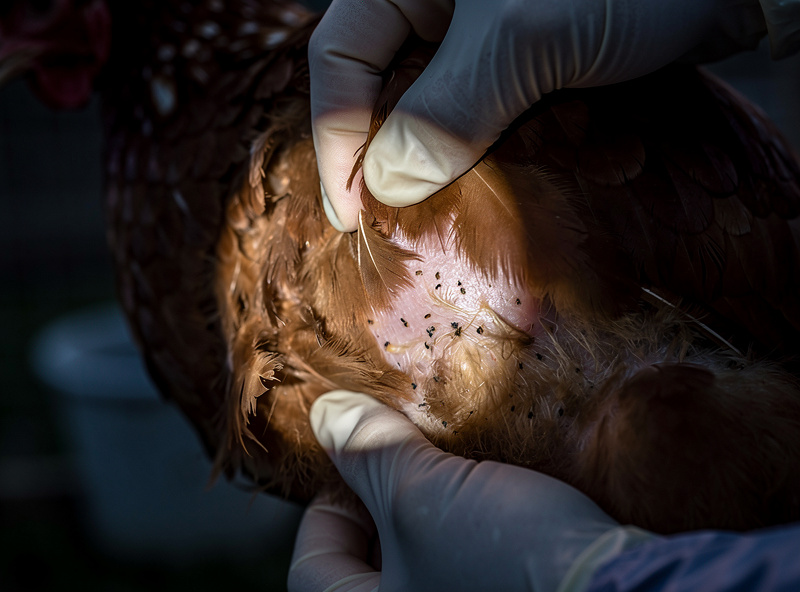
Mites and lice are different parasites with different habits, and telling them apart shapes how you respond. Lice are pale, fast-moving insects that live their whole life on the bird, feeding on feather debris and skin; you’ll often spot them and their pale egg clusters at the vent. Mites are arachnids, and the most troublesome backyard type — the red mite — lives in the coop structure by day and only climbs onto birds to feed at night, which is why you can have a serious problem and see almost nothing in daylight.
| Feature | Lice | Red mites |
|---|---|---|
| Where they live | On the bird, full-time | In coop cracks; feed on birds at night |
| When you see them | Daytime, on the bird at the vent | Hard to see by day; check the coop at night |
| Telltale sign | Pale egg clusters at feather bases | Grey/red specks in roost cracks; restless birds |
| Main prevention lever | Dust bathing, regular bird checks | Smooth sealed coop surfaces, coop hygiene |
This distinction matters because where the parasite lives tells you where to look and where prevention bites hardest. Lice problems are mostly about the bird and its dust-bathing; red mite problems are mostly about the coop structure. Get the identification right and everything downstream gets easier.
The Signs Worth Watching For
Early external-parasite signs are behavioral before they’re visual. Birds that suddenly seem unsettled on the roost, that pick and preen excessively, or that you find reluctant to go into the coop at night are often telling you something is feeding on them after dark. Add to that watch list any feather loss or bare patches around the vent and tail, a dull or pale comb in a bird that should be bright, and reduced laying in birds that are otherwise eating.
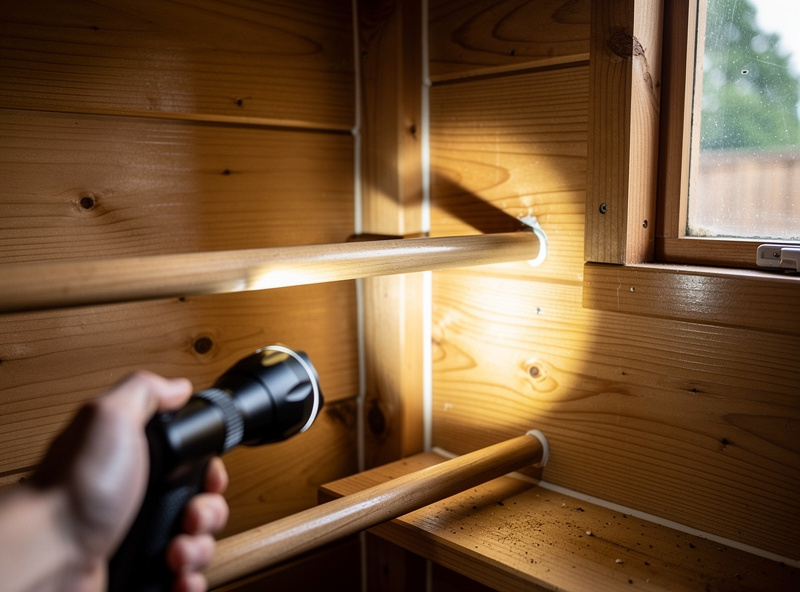
The confirming check takes a headlamp and two minutes. Pick up a bird in the evening, part the feathers around the vent and under the wings, and look at the skin and the base of the feathers. Lice and their egg clusters are visible there; for red mites, also run a finger or a white tissue along the underside of roost bars and into cracks at night and look for grey or rusty-red specks that smear. Doing this check on a couple of birds regularly is how you catch an infestation while it’s small and cheap to deal with — and small is the only easy version.
The Dust Bath: A Chicken’s Own Parasite Control
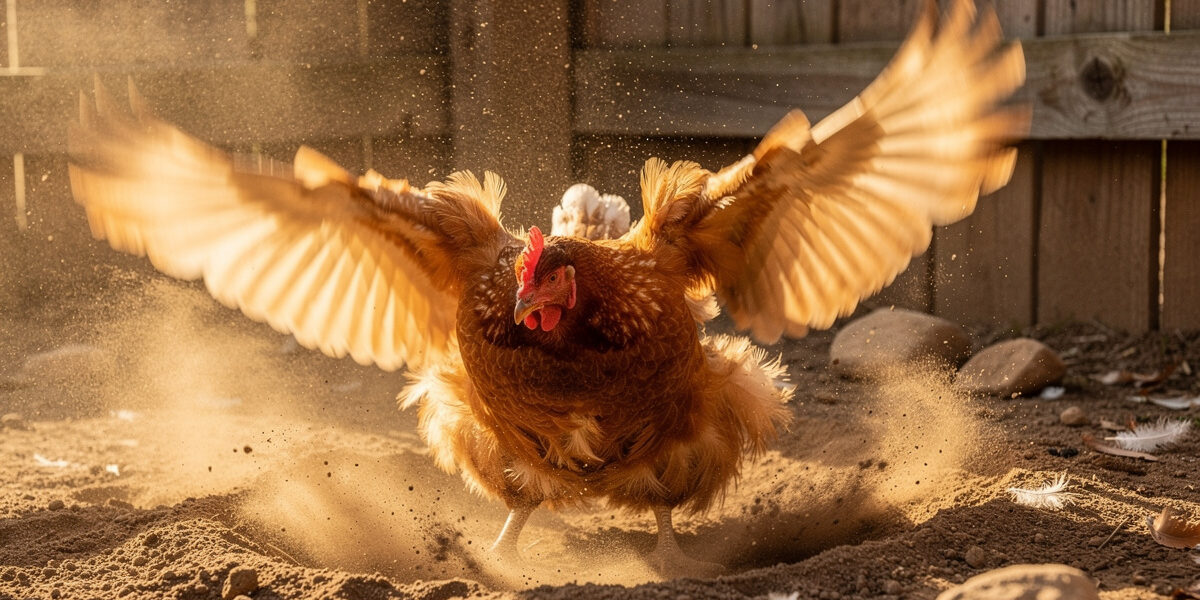
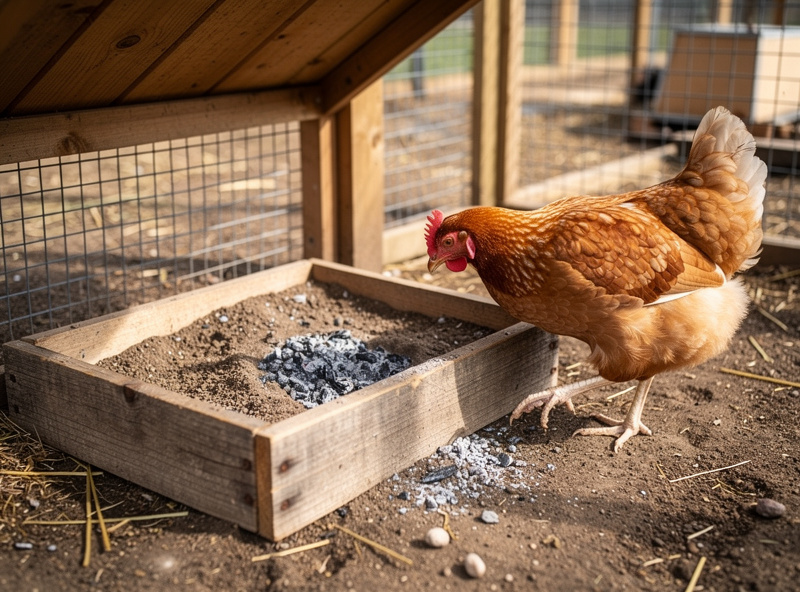
Chickens evolved a built-in parasite defense: dust bathing. Working dry, fine material down to the skin smothers and dislodges lice and mites, which is why a permanently available dry dust-bath area is one of the most effective parasite controls a keeper can provide. Birds with reliable access to a good dust bath simply carry fewer external parasites, and they’ll use it daily without any prompting from you.
Set one up in a sheltered, dry corner of the run — a low box or tub filled with dry, loose soil works, and many keepers add a little wood ash or food-grade diatomaceous earth to the mix. Keep it dry, because a wet dust bath is useless, which is its own argument for a covered run area in a rainy climate like mine. This is prevention you build once and the birds maintain themselves; it won’t clear a heavy established infestation on its own, but it makes one far less likely in the first place.
Coop Hygiene: Where Red Mites Lose
For red mites especially, the battlefield is the coop, not the bird. These parasites hide and breed in cracks, crevices, and the undersides of roost bars, emerging at night to feed. That means the most powerful long-term control is a coop they can’t colonize: smooth, sealable surfaces, few deep cracks, removable roost bars you can clean, and a regular deep-clean habit. A coop designed to be cleaned is a coop where red mites struggle to gain a foothold.
Practical hygiene is straightforward. Clean roosts and the areas around them regularly, pay attention to the joints and crevices where mites concentrate, and keep bedding dry and turned. When you do a thorough coop clean, focus on the hiding places rather than just the visible surfaces. Combine that with the dust bath and the routine bird checks above and you’ve built a three-part prevention system — bird, behavior, and structure — that keeps the easy infestations from ever becoming hard ones.
When Prevention Isn’t Enough
Sometimes you inherit a problem or miss one until it’s established, and an infestation needs active control beyond dust bathing and cleaning. This is the point where I hand off to the experts: the specific control product suitable for your birds, your situation, and your region — and exactly how to apply it — is a conversation to have with your vet or poultry supplier. Products vary, some aren’t appropriate near laying hens or in certain forms, and getting application wrong can harm birds, so this genuinely isn’t a guess-and-spray situation.
What stays firmly in keeper territory even during an active infestation is the environment. Stripping and deep-cleaning the coop to break the mite breeding cycle, keeping the dust bath available, and re-checking birds to track whether you’re winning are all things you do alongside whatever control your vet or supplier advises. A heavy infestation that’s making birds anemic — pale comb, weakness — is a prompt vet call, because at that point the parasites are a genuine health threat, not just a nuisance.
A Note on the Gear I Mention
A few husbandry items make parasite prevention easier to sustain. As an Amazon Associate I earn from qualifying purchases, at no extra cost to you — these are prevention-and-hygiene products, not treatments or doses. The genuinely useful ones are food-grade diatomaceous earth for the dust bath and coop, a poultry-safe coop cleaner for deep cleans, and a good headlamp for those evening vent and roost checks. Any actual parasite treatment should come from your vet or supplier.
Frequently Asked Questions
How do I know if my chickens have mites or lice?
Watch for restless birds reluctant to roost at night, feather loss around the vent, and a pale comb. Confirm with an evening headlamp check: part the vent feathers to spot lice and pale egg clusters, and inspect roost cracks for red-mite specks that smear.
What is the difference between mites and lice on chickens?
Lice live on the bird full-time and feed on skin and feather debris, visible at the vent in daylight. Red mites live in coop cracks and only feed on birds at night, so you check the coop structure for them, not just the bird.
Does a dust bath really prevent mites and lice?
Yes. Dust bathing works dry, fine material to the skin, smothering and dislodging parasites, so a permanently available dry dust bath is one of the best preventives. It won’t clear a heavy infestation alone but makes one far less likely.
Why are red mites so hard to find?
Red mites hide in coop cracks and roost-bar joints during the day and only climb onto birds to feed at night. You can have a serious problem with almost nothing visible on the birds in daylight, so inspect the coop structure after dark.
How do I treat a chicken mite infestation?
The specific control product and how to apply it should come from your vet or poultry supplier, since products vary and some aren’t suitable near laying hens. Alongside that, deep-clean the coop to break the breeding cycle. A pale, weak bird needs a prompt vet visit.
Related Reading
- Chicken Diseases and Treatment: A Keeper Health Guide — the full flock-health overview.
- Chicken Biosecurity Guide — quarantine keeps parasites from arriving on new birds.
- Chicken First-Aid Kit — supportive care for a bird run down by parasites.
- Best Chicken Coop Bedding Guide — dry, cleanable bedding denies parasites a foothold.
- Nesting Boxes for Hens — clean, smooth boxes are easier to keep mite-free.
Related Guides
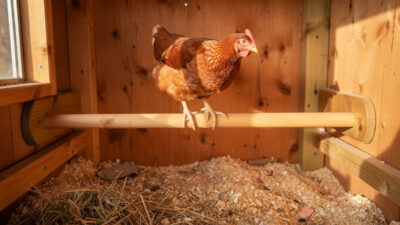
Bumblefoot in Chickens: Signs, Prevention, and Coop Fixes
Bumblefoot is the backyard injury that’s really a coop-design problem wearing a medical disguise. It’s a swollen, sometimes scabbed footpad…
Marek’s Disease in Chickens: Signs, Vaccination, and Prevention
Marek’s disease is the one I most want backyard keepers to understand before they ever buy birds, because it can’t…
Worming Chickens: Internal Parasites, Signs, and Why to Test First
Worming is the area of chicken keeping where the instinct to “just treat them to be safe” does the most…