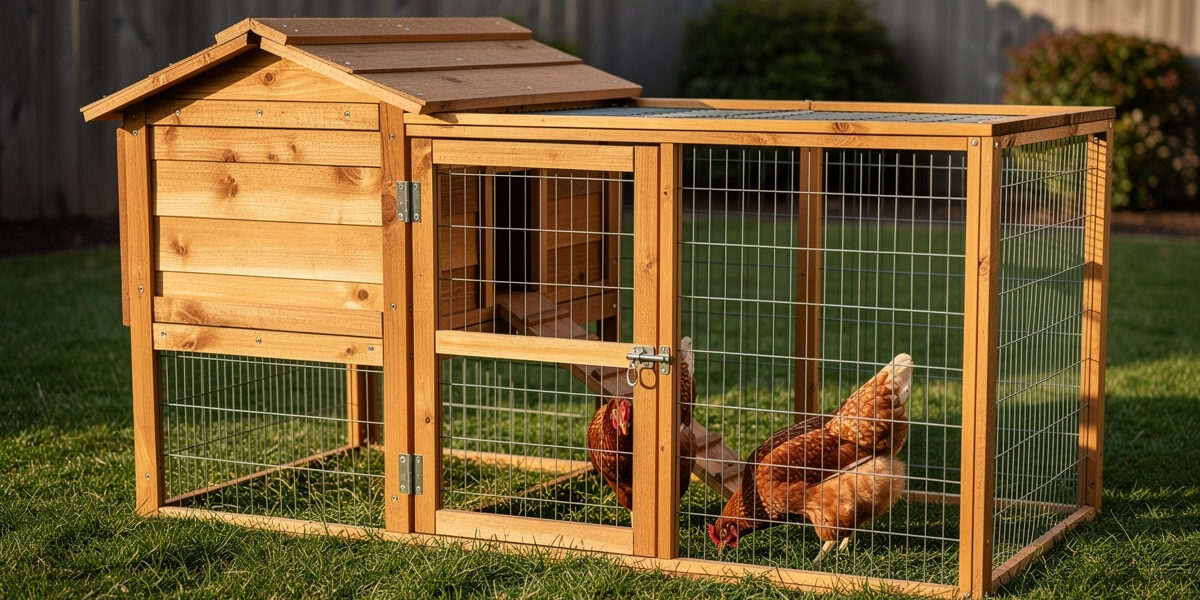
Pawhut chicken coops are budget-tier wood coops sold through Amazon, Wayfair, and big-box retailers, priced from $150 for entry models up to $450 for larger walk-in designs. Realistic lifespan is 18 to 30 months in temperate climates. The brand fits a specific use case: first-time chicken keepers committing to 3-6 birds for 2 years or less, who want a real coop with an included run rather than a tarp-and-pallet DIY setup.
Pawhut is a label owned by MH Star, a UK-based outdoor furniture company that designs and contracts manufacturing across multiple chicken coop SKUs. Build quality is consistent within the brand but inconsistent versus the broader market — entry models use chicken wire (not hardware cloth) and thin fir framing, while $300+ models step up to hardware cloth and somewhat heavier construction. This guide reviews the five most-popular Pawhut chicken coop models in 2026, who each one fits, and where the brand falls short of mid-range options. For broader brand context, see our complete chicken coop brands comparison.
As an Amazon Associate I earn from qualifying purchases.
The 5 Pawhut Chicken Coops Worth Knowing
Pawhut sells about 12 chicken coop SKUs in the US market, but five of those drive almost all the unit sales. The rest are minor variants or seasonal listings.
Pawhut Wooden Chicken Coop with Run ($179-219). The entry-level workhorse. Fir construction, chicken wire on the run, asphalt-roof, integrated 2-bird nesting box. Capacity is honestly 2-3 hens, despite “4 hens” listings. Best for absolute starter setups in low-predator-pressure neighborhoods. The chicken wire is the biggest weakness — raccoons can tear through it within 60-90 days of regular pressure.
Pawhut Backyard Chicken Coop ($249-299). The mid-entry model. Slightly larger footprint, hardware cloth replaces chicken wire on most current production runs (verify before buying — older stock still ships with chicken wire). Capacity is 4-6 hens realistically. Includes external nesting box access. The standard pick for most first-time Pawhut buyers in 2026.
Pawhut Hen House Walk-In ($349-449). The larger walk-in model. 6-foot walk-in run height, 6-8 hen capacity. Hardware cloth standard. The build quality jumps noticeably at this price point — thicker framing, better roof attachment. Realistic lifespan extends to 3 years in temperate climates. Competes directly with Producer’s Pride Defender at Tractor Supply, often at a slightly lower price.
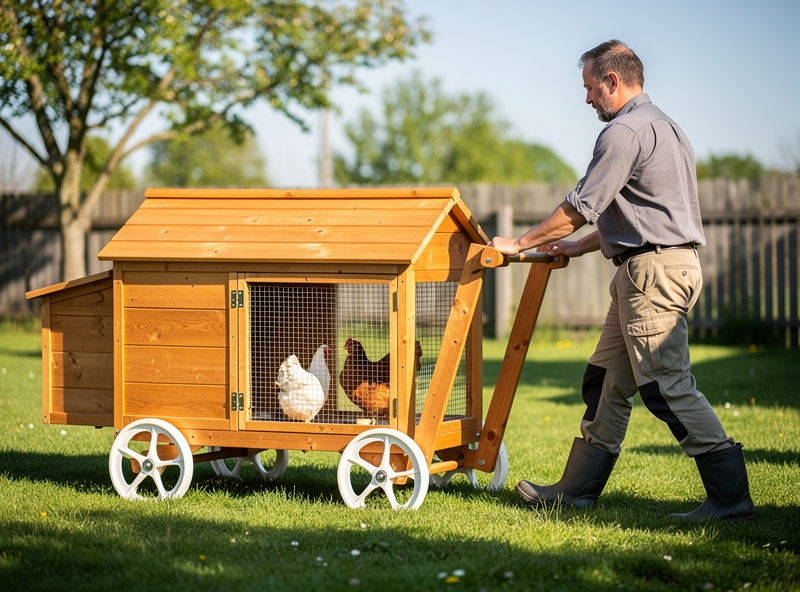
Pawhut Mobile Chicken Coop with Wheels ($269-329). A chicken tractor (mobile) design with two wheels and a pull handle. Capacity 3-5 hens. Wheels are PVC plastic and are the first part to fail — most owners replace them with a set of rubber replacement wheels within a year. Useful for buyers wanting daily yard rotation but limited weight tolerance.
Pawhut Large Hen House ($389-499). The biggest standard Pawhut model. Walk-in height, 8-10 hen listed capacity (realistically 6-8), hardware cloth, sliding pop door. The build is the brand’s best, though still budget-tier compared to Omlet Eglu or Over EZ premium coops. Best for buyers wanting walk-in convenience under $500.
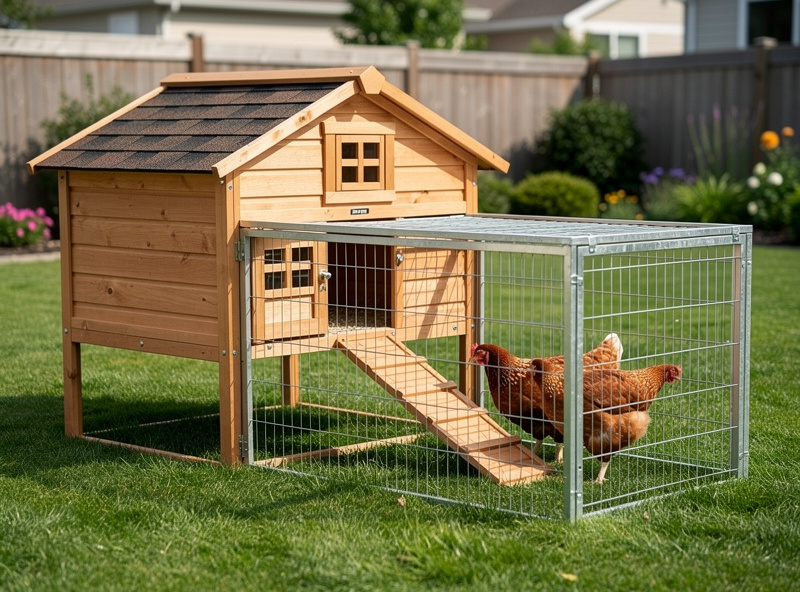
Pawhut Models at a Glance
| Model | Real Capacity | Run Material | Price | Realistic Lifespan | Best For |
|---|---|---|---|---|---|
| Wooden Chicken Coop with Run | 2-3 hens | Chicken wire | $179-219 | 12-18 months | Pure entry, low predator pressure |
| Backyard Chicken Coop | 4-6 hens | Hardware cloth (verify) | $249-299 | 2-3 years | Mainstream Pawhut starter |
| Hen House Walk-In | 6-8 hens | Hardware cloth | $349-449 | 3 years | Walk-in under $500 |
| Mobile Chicken Coop (Wheels) | 3-5 hens | Hardware cloth | $269-329 | 2 years (wheels fail first) | Yard rotation, small flocks |
| Large Hen House | 6-8 hens | Hardware cloth | $389-499 | 3-4 years | Best Pawhut build, larger flocks |
Where Pawhut Falls Short
The budget price comes with real trade-offs that show up in the second year of ownership. Three patterns are consistent across the brand.
Wood quality. Pawhut uses thin-section fir framing with limited weather treatment. In wet climates, the wood absorbs moisture, swells, and racks the framing out of square within 12-18 months. Door fits become loose, latches stop seating cleanly, and roof shingles start lifting. Painting the entire coop with an exterior-grade primer-and-paint system within the first month roughly doubles the lifespan but adds $40-60 in materials and an afternoon of work.
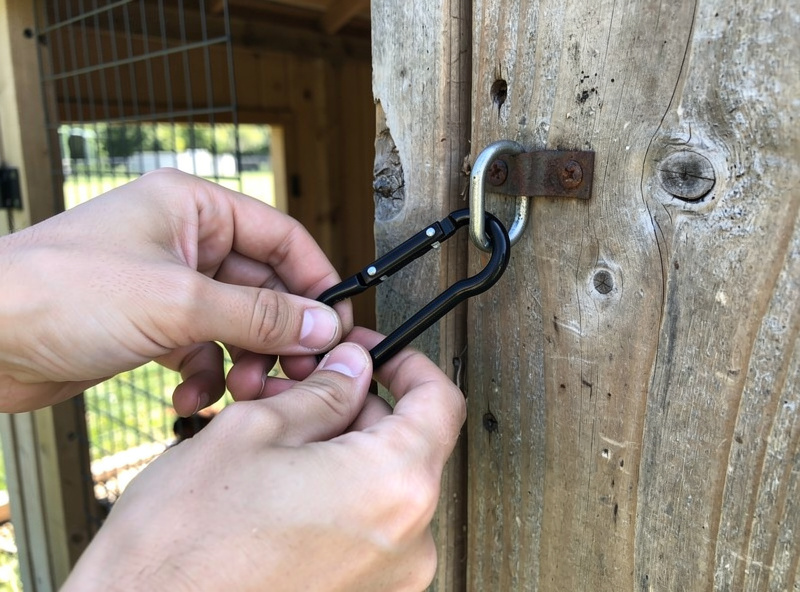
Latch and lock hardware. The pre-installed locks on Pawhut coops are stamped sheet metal, not the cast or formed hardware found on mid-range coops. A raccoon works a simple latch by trial and error the same way it works chicken wire — through dexterity and patience, not brute force (eXtension’s predator-management guidance covers this pattern, and it’s the exact reasoning behind every latch on my own welded run). The fix is replacing every latch with a $3 carabiner-and-hasp latch combo, which is cheap and effective but is meaningful labor on a 5-latch coop.
Pop door dimensions. Pawhut pop doors are typically 9-10 inches wide — tight even against the smaller end of standard automatic-door openings, which run 10 to 13 inches across most brands, and well short of the 24-30 inches of flat wall a full unit’s runners and motor housing actually need (ChickenGuard’s own measurements page is the one I check before recommending a retrofit). Across the doors I’ve mounted, the Run-Chicken T50 is the compact pick that has the best odds of fitting a Pawhut opening without framing surgery; verify the exact opening against the door’s spec sheet before buying either. Cutting the structural framing to widen the opening voids the warranty and is real structural risk on already-thin wood. For door choices that match small Pawhut openings, see our automatic chicken coop door buyer’s guide.
Smart-Coop Retrofit on Pawhut Models
Pawhut is the weakest brand on this site for smart-coop retrofits, but it is not impossible — just constrained. The thin framing fights heavier accessories, the small pop doors limit door choices, and the chicken wire on entry models offers poor mounting points for cameras or motion lights.
The realistic smart pathway on a Pawhut starts with the $300+ tier (Backyard Chicken Coop or Hen House Walk-In) where hardware cloth gives clean mounting points. Add a small-form-factor automatic door designed for tighter openings — the Run-Chicken T50 is the one I’d check first. Add a wireless camera (battery-powered, no wiring through the thin coop walls), and a single motion light on the run mesh. Skip integrated sensors that need wiring through walls — the framing cannot reliably hold the cable runs.
Power is the bigger constraint. Pawhut coops are typically not located near a power source, and running an outdoor extension cord to a $250 coop is awkward. Most smart Pawhut setups end up running on battery-powered devices exclusively. The complete framework for budget smart-coop builds is in our complete smart chicken coop build guide.
When Pawhut Is the Right Pick
Three buyer profiles fit Pawhut well in 2026.
First-time chicken keepers committing to 1-2 years. If you genuinely do not know whether you will continue keeping chickens long-term, the lower absolute spend on a Pawhut $250 coop versus a $700 mid-range coop is the rational choice. Resale on a used Pawhut is poor — you are recovering a small fraction of purchase price, if you can find a buyer at all — but the absolute dollars at stake are smaller.
Buyers in low-predator-pressure environments. If your yard is fully fenced, you have no neighborhood raccoons or hawks, and your chickens stay in a separate enclosed run during the day, Pawhut’s predator-resistance limitations matter less. Suburban backyards with active dogs in adjacent properties tend to fit this profile.
Hobby experimenters who plan to upgrade. Some keepers buy a Pawhut intentionally as a 2-year stepping stone, then upgrade to an Omlet Eglu or a custom build once they know exactly what they want. The Pawhut becomes a secondary coop or sells used. This works if you go in with a clear timeline.
For the broader budget-coop landscape including Pawhut alternatives, our cheap chicken coops under $300 buyer’s guide compares specific budget-tier options head-to-head. For the broader picture of where Pawhut sits versus mid-range Tractor Supply options, our Tractor Supply chicken coops review covers the price-quality jump.
When to Skip Pawhut Entirely
Three scenarios where Pawhut is the wrong call.
If you are planning a flock of 8 or more birds, even the largest Pawhut Hen House is undersized. Mid-range competitors at the same $400-500 price point (Producer’s Pride Defender XL) handle larger flocks with substantially better build quality.
If you are committing to chickens for 5+ years, the math on Pawhut breaks down. By year 4 you will have spent $200-400 on repairs and likely still need to replace the coop. A $1,200 Omlet Eglu or $700 Producer’s Pride Defender is cheaper across that timeline.
If smart automation is a day-one priority, Pawhut’s small pop doors and thin framing are real constraints. Mid-range options like Producer’s Pride or premium options like Omlet Eglu give you a much smoother smart-retrofit path. See our best chicken coops 2026 buyer’s guide for the full landscape comparison.
Next Steps
Pawhut serves a real purpose at the budget tier — getting first-time chicken keepers into a real coop for $200-400 with no DIY required, and it is worth browsing current Pawhut chicken coop listings to see what is in stock before committing to a specific model above. The brand’s limitations are real, but for buyers who match the use-case (short-term, small flock, low predator pressure), it works fine.
If Pawhut does not fit your situation, the next step up in quality at modest price increase is Tractor Supply’s Producer’s Pride line. For premium long-term builds, Omlet Eglu is the strongest alternative. Our complete chicken coop brands comparison covers the full landscape, and our backyard chickens for beginners guide walks through the broader equipment and timing decisions surrounding the coop choice itself.
Frequently Asked Questions
Are Pawhut chicken coops any good?
Pawhut coops fit the budget tier — workable for first-time keepers committing to small flocks for 1-2 years. Build quality is below mid-range options like Producer’s Pride. Realistic lifespan is 18 to 30 months in temperate climates, longer if you paint and replace the stock latches.
How long do Pawhut chicken coops last?
Entry-level models last 12 to 18 months before structural fatigue. Mid-tier Pawhut models ($250-300) last 2 to 3 years. The largest Hen House models last 3 to 4 years. Painting the coop within the first month roughly doubles all of these numbers.
Where can I buy Pawhut chicken coops?
Pawhut sells through Amazon (largest US channel), Wayfair, eBay, and occasionally Costco. Direct-to-consumer purchases come through MH Star’s website. Pricing is consistent across channels — Amazon usually has the fastest shipping and easiest returns.
Is Pawhut hardware cloth or chicken wire?
Entry models ($179-219) ship with chicken wire, which does not stop predators. Mid-tier and larger models ($249+) use hardware cloth on current production. Verify the listing before buying — older stock can still ship with chicken wire even on listings that show hardware cloth in photos.
Can I install an automatic door on a Pawhut coop?
Yes, but with constraints. Pop doors are typically 9-10 inches wide, tight against standard automatic-door openings (10-13 inches across most brands) and well short of the 24-30 inches of flat wall the full unit needs. The Run-Chicken T50 has the best odds of fitting without modification, but always verify against the door’s own spec sheet. Cutting the pop-door framing voids the warranty and risks weakening the already-thin construction.
Are Pawhut coops bigger than listed?
No — Pawhut listed capacities are optimistic. The general rule is to halve the listed capacity for realistic comfort. A coop sold for 6 hens fits 3-4 comfortably. The thin framing and limited interior space mean overcrowding shows up as feather-pulling and reduced egg production within weeks.
Related Articles
Related Guides
Rural King Chicken Coops Compared
Rural King is a farm supply chain historically rooted in the Midwest — roughly 150 stores, with Ohio, Indiana, and…
Amazon Chicken Coops: 7 Best & 3 to Avoid
Amazon lists hundreds of different chicken coop SKUs in 2026, ranging from $99 generic listings up to $2,200 walk-in premium…
Lowes Chicken Coops: What’s Actually In Stock
Lowes carries a smaller and more curated chicken coop selection than Tractor Supply, with about 15-20 chicken coop SKUs across…