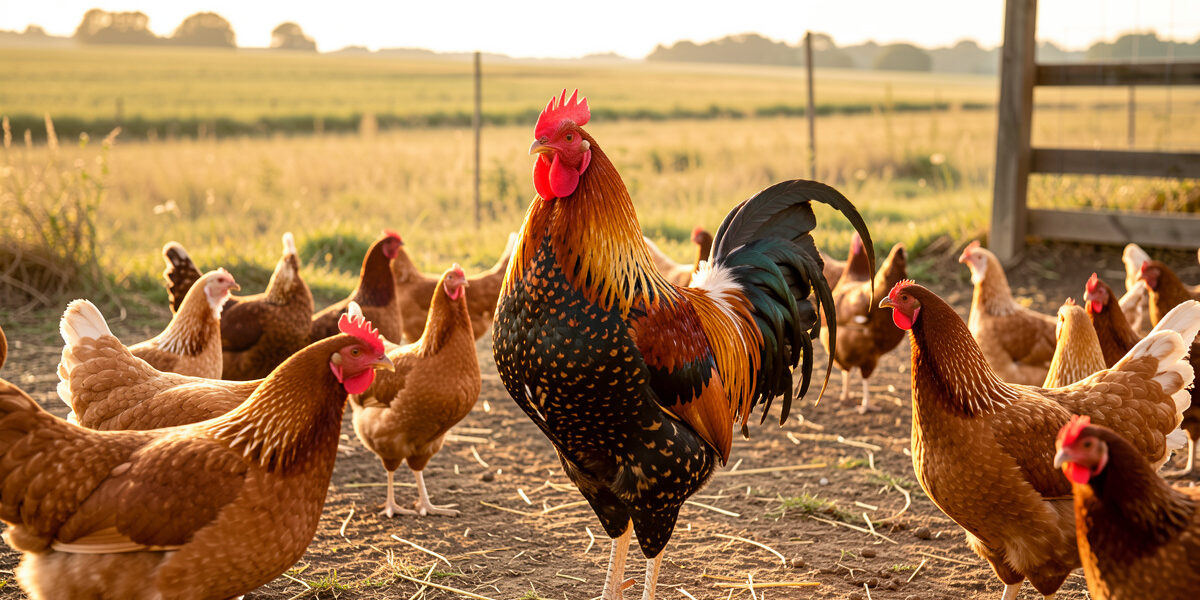
Roosters are banned in the large majority of residential and urban areas, even where hens are fully legal, because a rooster’s crow reaches 80 to 90 decibels and he sounds off at all hours rather than just at dawn. They are typically allowed only in rural or agricultural zones, on larger lots, or in the minority of suburbs that permit them with conditions.
The rooster question is the cleanest split in all of chicken law: hens, mostly welcome; roosters, mostly forbidden the moment you are within earshot of neighbors. And the good news for nearly everyone is that the ban costs you nothing — you do not need a rooster for eggs. This guide explains where roosters are and aren’t allowed, why the rule is so consistent, whether you actually want one, and what to do when a “pullet” turns out to crow. It pairs with the neighborhood law guide and the main urban chicken keeping guide.
Where Roosters Are and Aren’t Allowed
As a rule, roosters are prohibited in residential and urban zones, permitted in rural and agricultural zones, and a coin-flip in suburbs depending on lot size and local code. The deciding factor is almost always proximity to neighbors, which is why the same county can ban roosters downtown and allow them on the outskirts.
If you are on a standard city or suburban lot, assume a rooster is not allowed and verify the exception rather than the rule. Rural-residential and agricultural zoning is where roosters are typically fine, sometimes with a lot-size minimum. A handful of suburbs permit one rooster on lots above a certain size, or with a setback, or only with neighbor consent. The only way to know your case is to read the code on a free hosted library like Municode — the same stacking of municipal, zoning, and HOA rules covered in how urban chicken laws vary by neighborhood applies, and an HOA can ban a rooster your city would allow.
Why the Crow Is the Problem
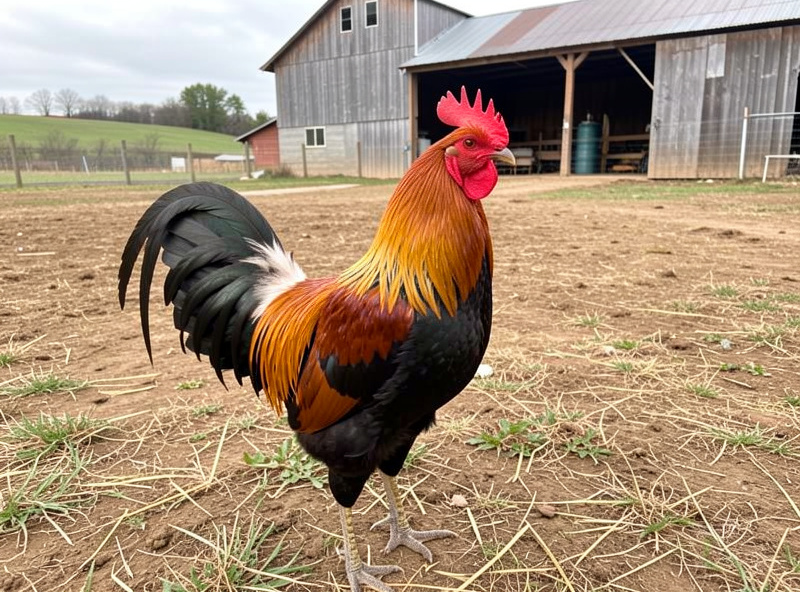
A rooster crows at 80 to 90 decibels — comparable to a barking dog or a lawnmower — and, contrary to the dawn myth, he does it throughout the day and often at night. That volume and unpredictability, carrying across several lots, is the entire reason residential codes single roosters out.
People picture a single picturesque crow at sunrise. The reality is a loud, repeated call triggered by light, other roosters, passing cars, or nothing at all, at a level that genuinely penetrates closed windows two houses away. I keep a hens-only flock by deliberate choice — not for lack of interest in a rooster, but because on a lot within earshot of other houses the noise math makes the decision for you. The couple of times I have heard a rooster open up well after midnight a few streets over, the decibel figures stopped being abstract. A hen, by contrast, makes her brief “egg song” at roughly 60 to 70 decibels — the level of normal conversation — and then goes quiet. That gap is why a flock of hens passes unnoticed while one rooster generates complaints, and why noise is the first thing to manage with neighbors, as covered in handling neighbor complaints about chickens.
You Don’t Need a Rooster for Eggs
Hens lay eggs with no rooster present — a rooster is only needed to fertilize eggs for hatching chicks. Since the overwhelming majority of urban keepers want eggs, not chicks, the rooster ban removes nothing they actually need.
This is the misconception worth killing outright: a hen’s laying cycle is driven by daylight and her own biology, not by a male’s presence. Keep six hens and no rooster and you get the same eggs you would with one — just infertile, which is exactly what you want to eat. A rooster earns his keep only if you intend to hatch your own replacements or you keep a free-ranging flock that benefits from his flock-guarding and predator-watching behavior. For a town flock focused on eggs, skip him and pick good layers from the top laying breeds; if temperament matters in a family yard, cross-reference the friendliest breeds.
When a “Pullet” Turns Out to Be a Rooster
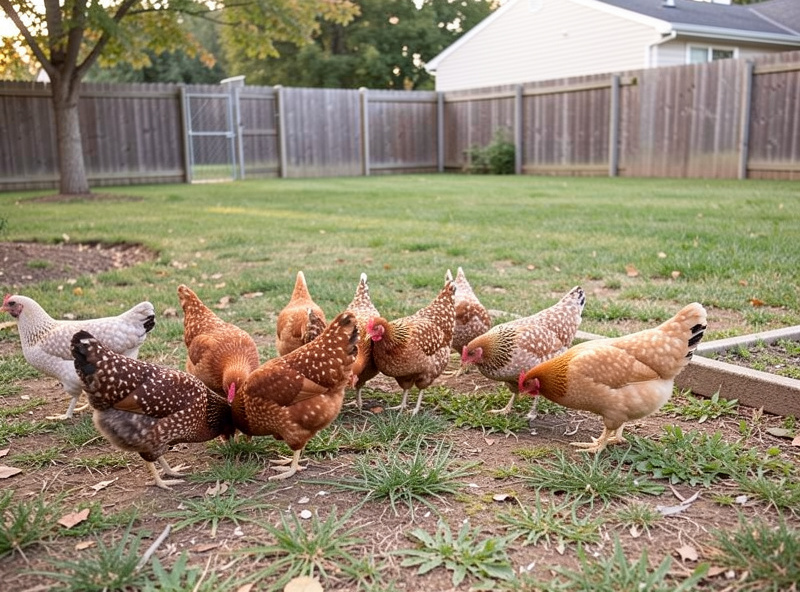
If you bought straight-run or sexed chicks and one begins to crow, you must rehome him where roosters are banned — the realistic options are a farm, a rural keeper, a poultry swap, or returning him to the breeder. Keeping him quietly and hoping no one notices is how people lose their whole flock to a complaint.
Sexing chicks is imperfect, and straight-run batches are a gamble, so surprise cockerels are common. The first crow usually comes somewhere around four to five months. When it does, line up a home: rural keepers and farms often take them, poultry swap meets and local farm groups are the usual marketplace, and many breeders will take one back. Anti-crow collars exist but only muffle the sound partially and are controversial on welfare grounds — they are not a reliable way to keep a banned bird. The clean answer is rehoming, before a neighbor complains and code enforcement gets involved. Counting birds correctly also matters here, since cockerels may push you over a hen-only limit, as in how many chickens are allowed in urban areas.
When a Rooster Is Genuinely Worth It
A rooster earns his place in exactly two situations: when you want to hatch your own chicks, and when a free-ranging flock benefits from his guarding and predator-watching. Outside those cases — and outside a zone that legally permits him — he is pure liability in a neighborhood.
I want to be fair to the rooster, because the blanket “never” misses real value on the right property. A good rooster watches the sky for hawks, sounds an alarm that sends hens to cover, breaks up squabbles, and shepherds the flock — meaningful behaviors for birds ranging over open ground far from the coop. And he is, obviously, non-negotiable if you intend to produce fertile eggs and raise your own replacements rather than buying pullets each season. But every one of those benefits assumes space, distance from neighbors, and legal permission. On a quarter-acre town lot surrounded by houses, the predator-guarding value is small (your predator-proof coop does that job) and the noise liability is large. Match the bird to the property: rural and ranging, a rooster can be an asset; urban and enclosed, he is a complaint waiting to happen.
Related Guides
- The Complete Urban Chicken Keeping Guide
- How Urban Chicken Laws Vary by Neighborhood
- How Many Chickens Are Allowed in Urban Areas
- Handling Neighbor Complaints About Chickens
- Best Egg-Laying Chicken Breeds
Frequently Asked Questions
Are roosters allowed in residential areas?
In most residential and urban areas, no. Roosters are banned even where hens are legal, because their crowing reaches 80 to 90 decibels at all hours. They are typically allowed only in rural or agricultural zones, on larger lots, or in the few suburbs that permit them with conditions.
Do hens need a rooster to lay eggs?
No. Hens lay eggs with no rooster present; a rooster is only required to fertilize eggs for hatching chicks. An egg flock should be all hens, which is also why rooster bans cost most keepers nothing.
Why are roosters banned but not hens?
Because of noise. A rooster crows at 80 to 90 decibels repeatedly and at unpredictable hours, carrying across several lots. A hen’s egg song is brief and around 60 to 70 decibels, similar to conversation, so hens go unnoticed while roosters generate complaints.
What do I do if my chick turns out to be a rooster?
Rehome him where roosters are banned. Farms, rural keepers, poultry swaps, and breeders who will take him back are the usual routes. The first crow often comes around four to five months, so line up a home before a complaint forces the issue.
Do anti-crow collars work for keeping a rooster in the city?
Only partially. They muffle but do not silence the crow and are controversial on welfare grounds. They are not a reliable way to keep a rooster where they are banned; rehoming is the dependable solution.
Are roosters ever allowed in the suburbs?
Sometimes. A minority of suburbs permit a rooster on lots above a certain size, with setbacks, or with neighbor consent. You must read your specific municipal code, zoning, and any HOA rule, since any one of them can prohibit a rooster the others would allow.
Related Guides

Handling Neighbor Complaints About Chickens
The best way to handle a neighbor complaint about your chickens is to prevent it: keep the coop odor-free, the…

Keeping Chickens in a Small Backyard
You can keep a happy flock of three to six hens in a backyard as small as a few hundred…
Urban Chicken Laws and How They Vary by Neighborhood
Urban chicken laws are set locally, not nationally, which is why they can change from one side of a city…