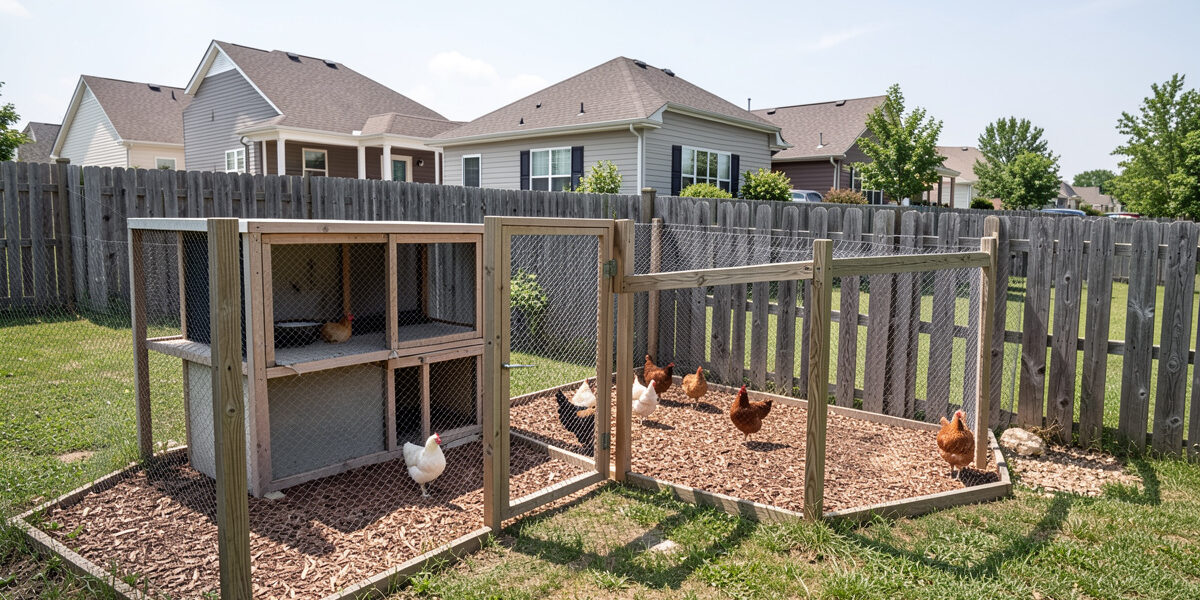
Backyard meat chicken rules vary enormously by location, so the only universal advice is to check four things with your local authorities before you order chicks: zoning, flock-size limits, home-slaughter rules, and whether you intend to sell. In the United States a federal exemption lets small producers process limited numbers of their own birds, but state, county, and city rules can be stricter — and your municipality, not a blog, is the final word.
I keep poultry under one country’s rules and write for readers under dozens, so I am not going to pretend to know your local ordinance. What I can do is map the categories of regulation that exist almost everywhere, explain what each one controls, and tell you exactly who to ask. Treat this as a checklist for your own research, not a statement of the law where you live. Getting this right before you start is far cheaper than unwinding a flock after a complaint.
Why You Must Check Before You Start
Raising and processing meat birds touches more rules than keeping a few laying hens does, because slaughter, sale, and larger bird numbers all bring in regulations that backyard egg-keeping never triggers. A setup that is perfectly legal for six laying hens can run straight into flock limits, slaughter restrictions, or nuisance rules the moment it becomes a batch of two dozen broilers headed for the freezer.
The cost of getting it wrong is real: a neighbor complaint, a zoning violation, or an order to remove birds mid-grow-out. None of that is worth the gamble when a few phone calls up front settle it. Rules also change, so confirm them for the current year rather than trusting a forum post from five years ago. The husbandry side is covered in the complete meat chicken guide; this page is purely about staying on the right side of the rules.
The Categories to Research
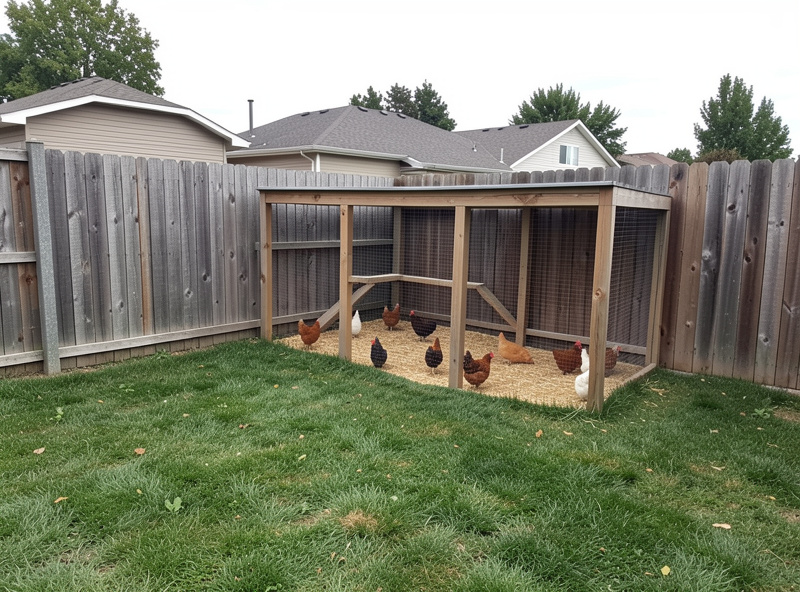
Almost every jurisdiction’s rules fall into five buckets. Work through each one for your specific address, because rules are often set at the city or county level, not the state or national one.
| Category | What it controls | Who to ask |
|---|---|---|
| Zoning | Whether poultry is allowed at all on your lot | City / county zoning office |
| Flock limits | Maximum number of birds, lot-size rules | Municipal ordinance |
| Slaughter | Home processing for personal use | State dept. of agriculture |
| Sale of meat | Inspection rules if you sell | State / federal agriculture |
| Nuisance | Roosters, noise, odor, setbacks | Local ordinance / HOA |
Zoning and Flock Limits
Zoning decides whether you can keep poultry at all, and flock-limit rules cap how many birds you can have — both are usually set by your city or county and both vary block to block. Some municipalities allow unlimited hens but ban roosters; others cap total birds, require minimum lot sizes, or mandate setbacks from property lines and dwellings.
For meat birds this matters more than for layers because a batch is larger and temporary. A flock limit written for laying hens may or may not accommodate 25 broilers for eight weeks, and “they’re only here for two months” is not a defense if the ordinance sets a hard cap. Check the number, check whether it counts temporary birds, and check setback and lot-size requirements for your specific parcel before you order.
Home Slaughter and Processing Rules
Processing your own birds for your own table is permitted in many places, but the rules around it are where jurisdictions differ most. In the United States, federal law provides exemptions that allow small producers to slaughter and process a limited number of their own poultry without continuous inspection, with conditions — but states can and do impose stricter requirements, and some regulate or restrict on-site slaughter entirely.
The practical takeaway is to confirm with your state department of agriculture what is allowed for personal-use processing at your scale, and under what conditions. If home slaughter is restricted where you live, a licensed custom processor is the route, as covered in the home processing basics guide. Never assume the federal exemption is the whole story; the binding rule is whichever is strictest among federal, state, and local.

Selling Meat Is a Different World
The moment you sell chicken rather than eat it yourself, you enter a far stricter regulatory tier built around inspection and food safety. Selling poultry meat typically requires that the birds be processed under inspection — at an inspected facility or under a specific exemption with its own limits, labeling, and sales-channel restrictions — and the details vary by country and state.
This is why the cost math in the cost of raising meat chickens guide assumes personal use, not sale — selling changes both the rules and the economics. If you are even considering selling, talk to your state agriculture department first, because the requirements for legal sale are specific and not something to improvise. For most backyard keepers, raising for the home freezer keeps things simple, and that is what this whole cluster assumes.
Registration, Biosecurity, and Nuisance Rules
Two more categories round out the picture. Some jurisdictions ask poultry keepers to register their flock for disease-tracking purposes, and voluntary programs like the NPIP in the United States exist around flock health and movement — worth knowing if you ever buy, sell, or show birds. Avian-influenza reporting obligations also apply in many places if birds fall sick unexpectedly, which is general husbandry awareness rather than red tape.
Then there are the everyday nuisance rules: roosters and noise, odor, flies, and how close your setup sits to the neighbors. These cause more backyard-poultry disputes than any slaughter law, and a homeowners’ association can add its own layer on top of municipal code. Good biosecurity and tidy management keep you clear of most of it, and a quiet word with neighbors before you start beats a complaint after.
When the Rules Seem Silent
Sometimes you call around and nobody has a clear answer, which is common in rural areas where poultry is simply assumed rather than codified. Silence is not the same as permission, but it usually means the binding constraints are the general ones — nuisance, setbacks, and your neighbors — rather than a specific poultry ordinance.
In that situation, document who you spoke to and what they said, keep your setup clean and well away from property lines, and err toward the conservative end of flock numbers. The keepers who get into trouble in lightly regulated areas almost always do so through odor, noise, or a runoff complaint, not a slaughter statute. Manage those well and a quiet, tidy operation rarely draws scrutiny in the first place.
The Gray Area Between Eating and Selling
Plenty of keepers wonder where giving birds to friends and family falls, and the honest answer is that it depends on your jurisdiction and you should not assume it is unregulated. Eating birds you raised yourself is personal use and the simplest case; the lines blur once meat leaves your household, even as a gift, a trade, or a “just covering my feed costs” arrangement with a neighbor.
Some places treat any transfer of meat as a sale that triggers inspection rules; others have room for limited sharing. The point is not to be paranoid but to ask rather than assume, because the penalties attach to the transfer, not to your good intentions. If you plan to share birds beyond your own table even informally, fold that question into the call you make to your state agriculture department — it is exactly the kind of thing they can answer in a sentence.
If You Rent or Share Property
Local ordinances are only half the picture if you do not own your land outright — a lease, a landlord, or a shared-property agreement can prohibit poultry even where the municipality allows it. Renters should check the lease and get written permission before building anything, because a permitted coop does not override a “no livestock” clause in a tenancy agreement.
The same goes for community garden plots, allotments, and any land you use by arrangement rather than ownership. It is far easier to ask the property owner before a batch of broilers arrives than to explain them afterward, and a brief written okay protects both sides. Sort the permission question at the same time as the zoning question, so you are not surprised by either one once chicks are on order.
How to Actually Find Your Rules
Make four contacts and you will have your answer: your city or county zoning office for whether and how many birds you can keep, your state department of agriculture for slaughter and sale rules, your local cooperative extension office for plain-language help interpreting all of it, and your HOA if you have one. Extension offices in particular are an underused, free resource staffed by people who answer exactly these questions.
Write down what each tells you and the date, because rules change and a paper trail protects you. Once you know your limits, the rest of the project — choosing a breed, budgeting the batch, and planning processing — falls into place within them. For the broader picture of keeping poultry beyond the basics, the backyard poultry guide is a useful companion. The rules are the boring part, but they are the part that lets everything else run without a knock at the door.
Related Guides

The Real Cost of Raising Meat Chickens
Raising your own meat chickens typically costs about 8 to 14 dollars per finished bird, or roughly 2 to 3…
Home Poultry Processing Basics: A Humane Overview
Home poultry processing for personal use is legal in most places and, with preparation, is a calm and humane part…
Dual-Purpose Chicken Breeds for Meat and Eggs
Dual-purpose chicken breeds lay a respectable 150 to 250 eggs a year and still dress out into a usable 3-to-4.5-pound…