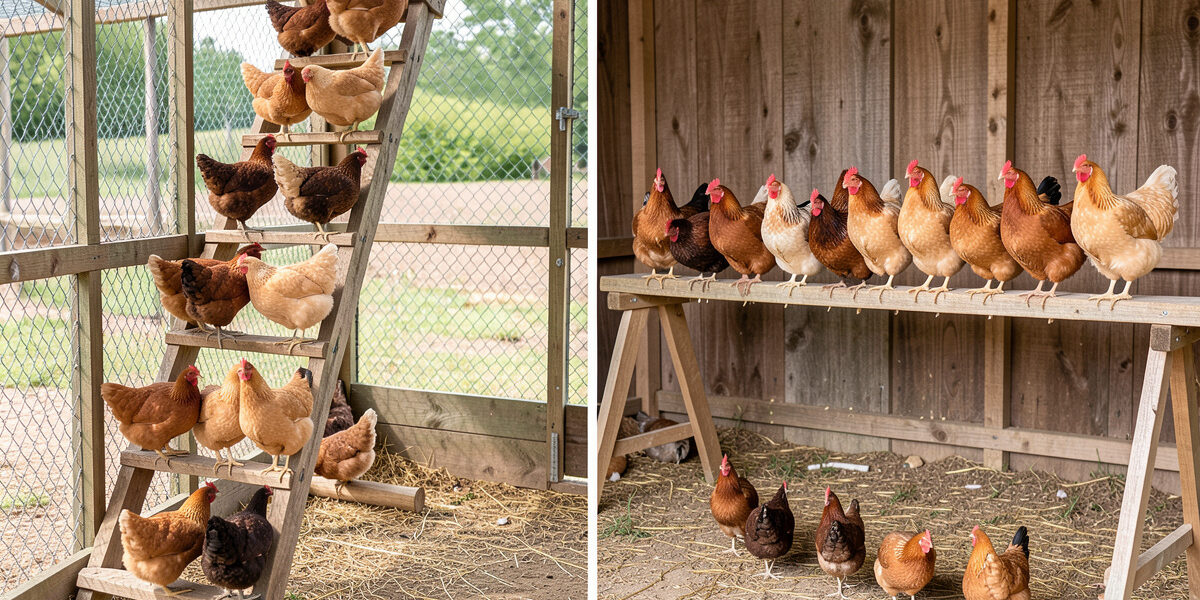
For most mixed-size backyard flocks, a single-level roost wins. Putting every bird on one horizontal bar at the same height removes the “best spot” that a ladder roost creates, so there’s no nightly fight for the top rung and no timid hen exiled to the cold bottom. A ladder roost earns its place only when floor space is genuinely tight or your flock leans toward light, flighty breeds that like to climb.
I ran a ladder roost in my first proper coop because it looked efficient and the plans I copied used one. What I actually built was a status ladder: my dominant hens claimed the top bars and my quietest Australorp got bumped down the rungs until she was sleeping on the floor. I tore it out and ran a single level, and the flock has been calmer at night ever since. Here’s the honest comparison — where each layout wins, where each fails, and the one hybrid I’d actually build — as part of my full roost design system.
What’s the Difference Between a Ladder and Single-Level Roost?
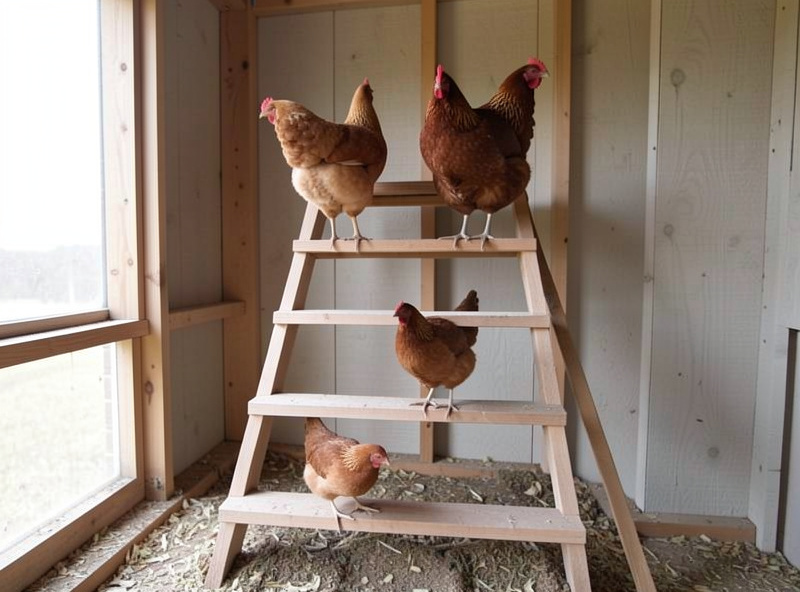
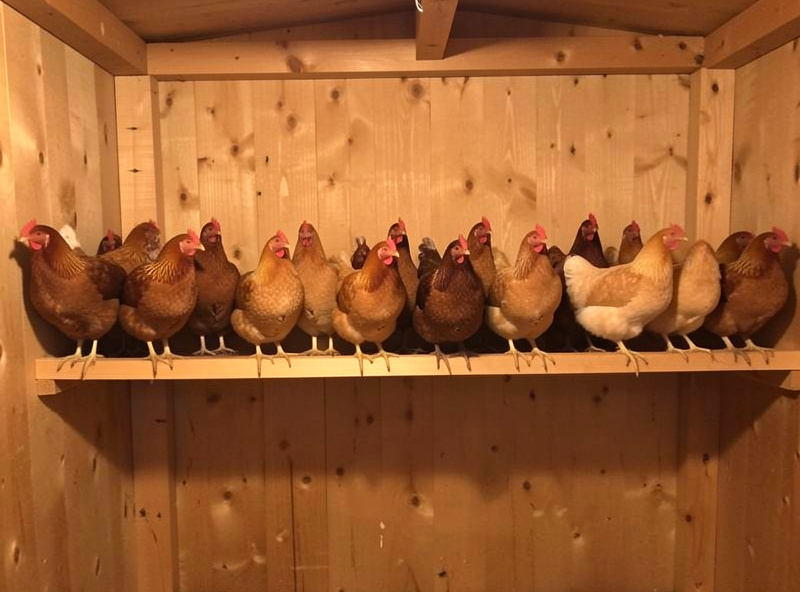
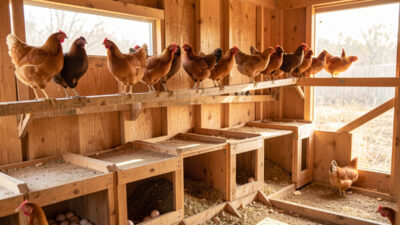
A single-level roost is one or more bars all mounted at the same height, so every bird roosts on the same plane. A ladder roost is a set of bars stepped at increasing heights, each higher bar set back horizontally like the rungs of a leaning ladder. The single level treats all birds equally; the ladder creates a vertical hierarchy the flock will fight over.
The physical difference sounds minor and the behavioral difference is enormous. On a single level, a hen picks a spot along the bar and that’s that — position is horizontal and low-stakes. On a ladder, height equals status: the highest rung is the warmest (heat rises), feels safest, and is furthest from the floor, so it’s the prize your top birds claim. The flock’s pecking order maps directly onto the rungs. That’s fine in a settled flock of similar birds and a real problem in a mixed one. A ladder does pack more roosting length into less floor area, which is its genuine advantage, and some light breeds enjoy climbing it. But the trade-off is that you’ve built competition into the sleeping arrangement.
Which Is Better for a Mixed-Size Flock?
Single-level is better for a mixed-size flock. When you keep heavy breeds alongside light ones, or a range of ages and temperaments, a single bar means no bird can claim a superior spot, so the bullying and displacement that a ladder encourages simply doesn’t happen. Every hen gets the same height, the same warmth, the same safety.
Mixed flocks are exactly where the ladder’s hierarchy does the most damage. A heavy Orpington isn’t going to out-climb a nimble Easter Egger to the top rung, so on a ladder the lighter, more agile birds often end up high and the heavy birds stuck low — which is backwards from what you’d want, since the big birds are the ones you’d least like jumping down from height each morning. On a single level, my Orpingtons and my Easter Eggers roost shoulder to shoulder with no drama. The flock-behavior guidance from sources like University of Minnesota Extension is consistent on this: reducing competition points in the coop lowers stress and pecking, and a single-level roost removes one of the biggest competition points there is. For any flock under a dozen mixed birds, I default to one level.
When Does a Ladder Roost Make Sense?
A ladder roost makes sense when floor space is severely limited and you need to fit more roosting length into a small footprint, or when your flock is made up of light, agile breeds that genuinely enjoy climbing and roost at varied heights by preference. In a tall, narrow coop, a ladder uses vertical space a single level wastes.
If you’re keeping bantams, Leghorns, or other flighty breeds that will happily rocket up to a high perch, a ladder can suit them — they self-sort by preference rather than being forced, and the height competition matters less among birds that all like to be up high. The other legitimate case is pure geometry: a coop that’s tall but short on floor area can hold more birds with a ladder than a single level, because you’re stacking roosting capacity vertically. The total linear roost length each bird needs doesn’t change, but a ladder lets you fit that length into a smaller floor plan. Just go in with eyes open about the hierarchy you’re building.
| Factor | Single-level roost | Ladder roost |
|---|---|---|
| Mixed-size flock | Best — no height competition | Poor — pecking order maps to rungs |
| Floor space use | Needs more floor length | Efficient — stacks vertically |
| Flighty light breeds | Fine | Good — they like to climb |
| Bullying / displacement | Low | Higher — top rung is a prize |
| Droppings management | Simple — one poop board | Complex — upper birds foul lower |
| Best for | Most backyard mixed flocks | Tight footprints, agile breeds |
How Do I Build a Ladder Roost Correctly?
If you do build a ladder, step each higher bar back horizontally as it rises so droppings from birds above don’t land on birds below. Use about 12 inches of vertical rise and 12 inches of horizontal offset between rungs. Without that offset, the top birds foul the birds beneath them every night — the single worst failure mode of a badly built ladder.
The geometry is the whole game. Picture the bars as the rungs of a ladder leaning against the wall: each one is both higher and further out than the one below, so a plumb line dropped from an upper bar falls in front of the lower bar, not onto it. Twelve inches of rise gives birds room to hop up without headbutting the next rung; twelve inches of offset keeps the drip lines separated. Get either wrong and you’ve built a machine for coating your lower-ranked hens in droppings. This is also why a ladder complicates poop-board management — you can’t catch everything on one board under one bar, so you’re either stepping boards or accepting a messier floor. Follow the same flat-bar profile and spacing rules for each rung that you’d use on a single level; the material and width don’t change, only the arrangement.
Which Roost Layout Is Warmer in Winter?
On a single level every bird gets the same warmth, because heat rises evenly off one plane and the flock can bunch along the bar to share body heat. On a ladder, the top rung is warmer and the bottom rung colder, so the lowest-ranked bird — already the one stuck down there — also gets the coldest spot. In a cold climate that stacks two disadvantages onto your most vulnerable hen.
This matters enormously in my Swedish winters. On a single-level bar my whole flock compresses into one warm feathered row on a hard-freeze night, combs tucked, everyone sharing heat equally — I’ve watched it on the coop camera at −15 °C. A ladder scatters the flock across heights, which spreads them out and reduces the shared-warmth effect, and it consigns the bottom bird to the coldest air near the floor where the coop’s cold incoming air settles. Roosting guidance collected by the Cooperative Extension poultry program emphasizes letting birds huddle in cold weather, and a single level makes that huddle easy. If you keep chickens anywhere with real winter, that’s a strong thumb on the scale toward one level.
Does a Ladder Roost Make Cleaning Harder?
Yes. A single level lets you catch the overnight droppings on one poop board under one bar, which is why 60-plus percent of a coop’s manure ends up in one easy-to-clean place. A ladder spreads the birds across several heights and horizontal positions, so no single board catches everything and you’re either stepping multiple boards or scraping more floor.
Cleaning is a chore you’ll do hundreds of times over a coop’s life, so making it a 30-second job matters. Under my single-level bar sits one removable poop board that I slide out and dump; done. A ladder breaks that tidy geometry — each rung has its own drip zone, offset from the others, so you can’t consolidate the mess. You end up either building a board under each rung (fiddly) or accepting more droppings on the coop floor, which means more bedding turnover and more moisture load for your ventilation to handle. When keepers ask me why their ladder-roost coop always seems messier than it should be, this is usually why. Simpler roost, simpler cleanup.
The Hybrid Layout I Actually Recommend
My preferred compromise for a space-constrained mixed flock is a wide single level with one slightly lower “step” bar in front of it — not a full ladder, just a single lower bar that helps heavy birds get up and down safely without creating a full status hierarchy. Everyone still sleeps on the main level; the step is a transition, not a bedroom.
This gives you most of the ladder’s practical benefit — an intermediate perch that breaks the jump for heavy breeds and lets birds stage their climb — without the nightly fight for a top rung, because there’s only one sleeping level and it’s the highest bar. The birds don’t roost on the step overnight; they use it as a stair. I’ve set this up for keepers with big, clumsy breeds in compact coops and it threads the needle nicely: safer landings, no bullying hierarchy. If your coop can fit a proper single level, though, even the step is optional. It’s a fix for the specific problem of heavy birds and limited height, not a general upgrade.
Can I Convert a Ladder Roost to a Single Level?
Converting a ladder to a single level is usually a quick job: pull the stepped bars, mount one long bar at the height of the old top rung along the wall, and give it enough length for every bird at 8 to 10 inches each. Then retrain the flock onto it by lifting each bird up after dark for a few nights until the new spot sticks.
The only real constraint is floor length — you need a wall long enough to fit the full single-level bar your flock requires, which is the whole reason ladders exist in tight coops. If you have the run, the conversion is worth doing for any mixed flock. When I did mine, the hardest part wasn’t the carpentry; it was the four nights of after-dark lift-and-place to break the old ladder habit. Tedious, but it works, and the calmer coop that follows makes it more than worth the effort.
The Ladder Roost Mistake That Cost a Hen Her Spot
My ladder roost taught me the hard way. I built three stepped bars thinking I was giving the flock options, and all I did was invent a prize. Within a week my two dominant hens owned the top bar, the middle birds took the second, and my quietest Australorp got shoved off every rung until I found her sleeping on the cold floor in the corner one morning, hunched and miserable.
That image — a good hen exiled to the floor because of a design choice I’d made — is why I default to single-level now. I ripped out the ladder that weekend, ran one long flat bar down the wall with room for everyone, and lifted each bird onto it after dark for a few nights to reset the habit. The floor-sleeping stopped immediately and the whole coop got quieter at night; the constant low-grade squabbling of birds negotiating rungs just went away. A ladder can work, and for the right flock in the right coop it’s a fine choice. But if you’re keeping a mixed flock and you’re not sure, build the single level. Your bottom hen can’t tell you she’s cold, but the layout can prevent it.
Keep Building
Related Guides
DIY Removable Roost Bars for Fast Cleaning and Mite Checks
The best roost you can build is one you can lift out in ten seconds without a tool. Removable roost…
Roost Above the Nesting Box: The Height Rule for Floor Eggs
The rule is simple: the roost must sit higher than the top of your highest nesting box — ideally 6…

Roost Material Showdown: Lumber, Branches, and What to Never Use
The best roost material for chickens is plain untreated softwood — a pine, spruce, or fir 2×4 laid flat. It’s…