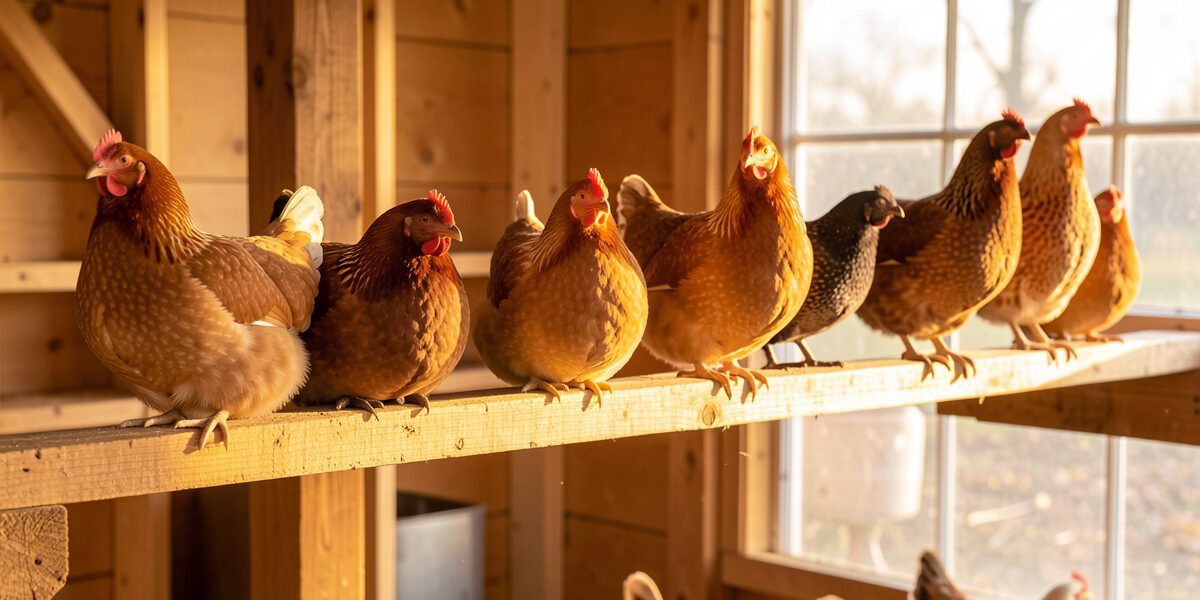
Give each standard-size chicken 8 to 10 inches of linear roost length. Bantams manage on 6 inches each, and broad heavy breeds like Brahmas and Jersey Giants want a full 10 to 12 inches. Measure your usable bar, divide by the right number for your biggest breed, and that’s your real roosting capacity — not the number printed on the coop box.
This is the number that quietly decides whether your lowest-ranked hen sleeps warm on the bar or cold on the floor. I’ve watched a good Australorp get bumped off a too-short roost night after night until she gave up and slept in a nest box, and it took me embarrassingly long to realize the problem wasn’t her — it was that I’d done the math on the birds I planned to have, not the eleven I actually ended up with. Here’s how to size roost space properly, by breed, with the linear inches I actually cut to across my whole roost design.
How Many Inches of Roost Does a Standard Chicken Need?
A standard-size hen needs 8 to 10 inches of linear roost length. That’s the space for a bird like a Wyandotte, Orpington, Australorp, Plymouth Rock, or a typical brown-egg layer to sit without being crowded off by her neighbor. Eight inches is the practical minimum; ten is comfortable and lets a broody or cranky bird claim a little distance.
I build to 10 inches per standard bird as my default, because the extra two inches per hen is cheap insurance against the pecking-order squabbles that break out when birds are packed. My mixed flock runs mostly to the dual-purpose, cold-hardy classes, and every one of them fits comfortably in a 10-inch slot. The figure holds up against the roosting guidance compiled by the Cooperative Extension poultry program, which I’ve found runs a touch conservative — fine, because conservative here means the low hen still has room. The one place 8 inches genuinely suffices is a settled, same-age flock with no bullies. The moment you’ve got a mixed-age or mixed-breed group, size up.
How Much Roost Space Do Bantams Need?
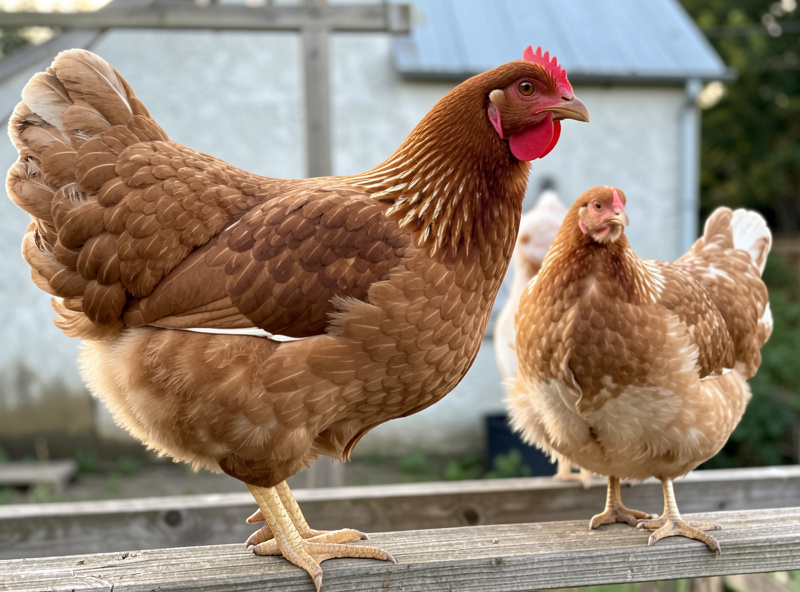
Bantams need about 6 inches of roost length each. They’re roughly a quarter to a third the size of a standard fowl, so they pack in tighter, and a bar full of bantams looks almost comically dense compared to the same length holding large hens. Six inches keeps them from jostling without wasting bar.
The catch with bantams is that many of them are strong fliers, so while they need less horizontal space, they’ll happily use a much higher bar — I’ve seen bantams rocket to a 4-foot roost that a heavy Orpington would never attempt. If you keep a mixed flock of bantams and standards, don’t average the space; some bantams will self-select to a higher bar and free up the main roost. But never assume it. Provide the full linear space as if everyone’s sharing one level, then let them sort out the vertical arrangement themselves. Under-provisioning because “the bantams take up less room” is how you end up one perch short on a cold night.
How Much Roost Space Do Large and Heavy Breeds Need?
Large and heavy breeds — Brahmas, Jersey Giants, Cochins, big Buff Orpington roosters — need 10 to 12 inches of roost length each. They’re wider through the body, they carry more feather, and in winter that bulk means they still want room even when the flock is bunching for warmth. Undersize their space and they simply displace smaller birds.
Body weight is the tell. A Jersey Giant cock can top 13 pounds and a Brahma isn’t far behind; the American Poultry Association’s breed standards, published by the American Poultry Association, spell out just how much heavier these classes run than a Leghorn. That mass has to sit somewhere. My biggest bird sets the number for the whole roost — if I keep even two large hens in a mixed flock, I size every bird’s allotment to the large-breed figure rather than doing a weighted average, because at lights-out the big birds take the space they want and the math has to have already accounted for it.
| Breed class | Examples | Roost length per bird |
|---|---|---|
| Bantam | Silkie, Sebright, bantam Cochin | 6 in |
| Light standard | Leghorn, Ancona, Andalusian | 8 in |
| Dual-purpose standard | Wyandotte, Australorp, Plymouth Rock, Sussex | 8–10 in |
| Heavy / large | Orpington, Rhode Island Red, Easter Egger | 10 in |
| Giant | Brahma, Jersey Giant, Cochin | 10–12 in |
How Do I Calculate Total Roost Length for My Flock?
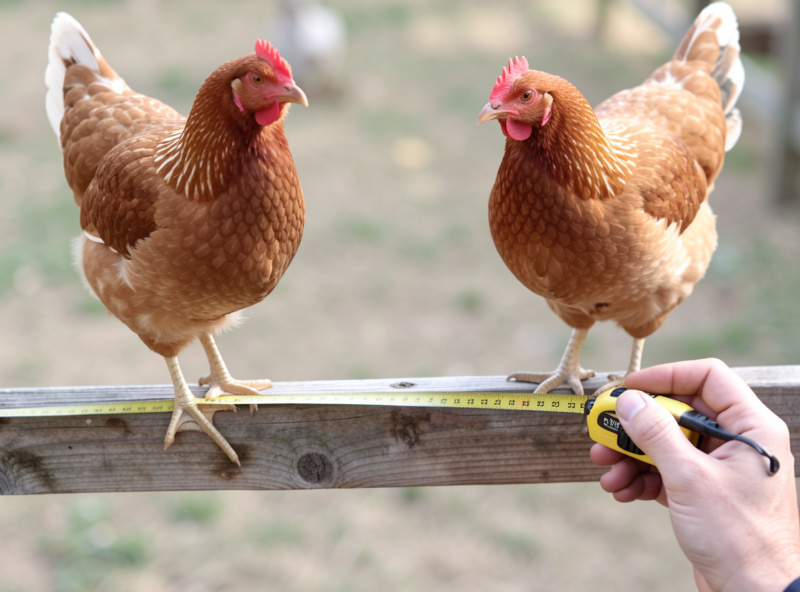
Multiply your bird count by the per-bird inches for your largest breed, then add a margin. Ten standard hens at 10 inches each is 100 inches — call it a full 8-foot 2×4 (96 inches) with a bit of a second bar, or round up to two bars. Always build for more birds than you have, because you will get more.
This is where “chicken math” stops being a joke and starts being a design constraint. Every keeper I know built a coop for a number and now houses a larger one. When I sized my roost I ran a single 8-foot flat 2×4 down one wall — 96 inches of usable bar — deliberately over-provisioning for the six birds I “had.” Good thing, because I’m now at eleven and everyone still clears 8 inches. The exact height and spacing for those bars is in the roost bar height and spacing numbers. If your total comes out awkward, run two shorter bars on one level 12 to 18 inches apart rather than stacking them, which keeps the pecking order calmer than a ladder does — the full trade-off is in ladder roost versus single-level. One more practical note: measure the usable bar, not the raw length. Subtract the few inches at each end where a bracket, a wall, or the ceiling slope means no bird will actually settle. On my 8-foot bar the real usable length is closer to 90 inches once you knock off the dead space against each end wall, and planning around the honest number keeps you from quietly under-provisioning.
Why Winter Changes How Much Space They Actually Use
In winter, cold-hardy birds voluntarily pack tighter than the per-bird numbers suggest, huddling to share body heat, then spread back out in summer to dump it. The space still has to exist for the nights one bird wants distance — but don’t be alarmed when a January flock bunches into half the bar you built.
On a −15 °C Swedish night my whole flock compresses into a tight feathered row, combs tucked, no gaps — it’s genuinely one of the better sounds in keeping chickens, that low contented settling once they’re packed and warm. Come July they’ll be strung out along the full length with wings held slightly off their bodies, not touching. That seasonal swing is exactly why you size to the generous summer number and let winter huddling be a bonus, never the design basis. A roost sized only for the winter huddle leaves birds fighting for space in the heat, when good airflow over the roost matters most.
What Happens When the Roost Is Too Small?
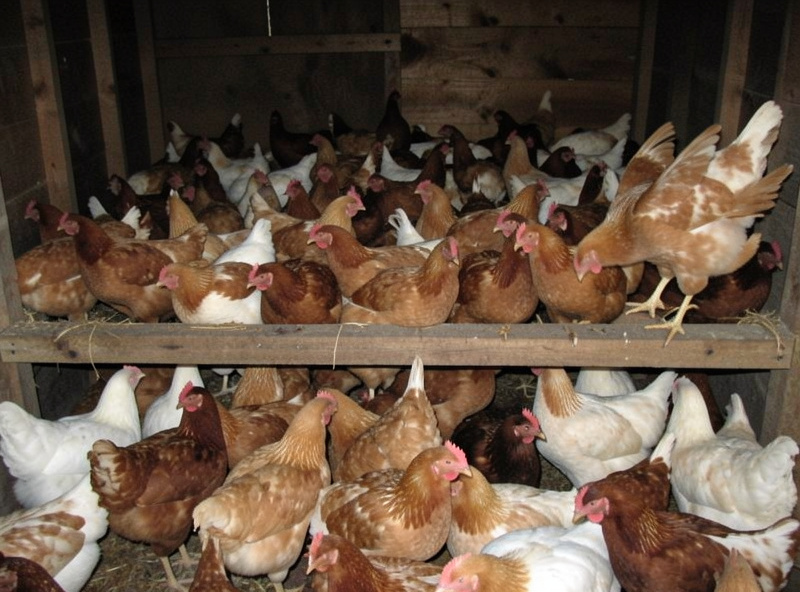
An undersized roost forces the lowest-ranked birds off the bar entirely. They end up sleeping on the coop floor — cold, exposed to droppings, and first in line for any predator that breaches the run — or crammed into nest boxes, which fouls the bedding and dirties the eggs. Crowding also drives feather-pecking and stress.
The floor-sleeper is the clearest symptom, and it’s always the same bird: the bottom of the pecking order. When I found my quietest Australorp on the floor three mornings running, that was the coop telling me my roost was two feet too short. A bird on the floor overnight in a cold climate is a bird losing heat to the ground and sitting in the ammonia layer near the litter — a fast track to respiratory irritation and a chilled, run-down hen. If you see a persistent floor-sleeper or a hen who’s colonized a nest box for the night, don’t treat it as a behavior quirk. Measure the bar, count the birds, and check whether you’ve actually given everyone their 8-plus inches. Usually you haven’t.
Does Nest Box Space Count as Roost Space?
No. Nest boxes are for laying, not sleeping, and they should never be counted toward your roosting capacity. If your birds are treating the boxes as extra roost space at night, that’s a design failure — the roost is either too small or not high enough, a relationship covered fully in the roost-versus-nest-box height rule — not a bonus that lets you build a shorter bar.
Keepers sometimes look at a coop with four nest boxes and eight roost slots and figure they’ve got room for twelve sleeping birds. They don’t. A bird sleeping in a nest box fouls the bedding with overnight droppings, and clean eggs turn stained fast — the exact problem good nest box design and roll-away boxes are meant to prevent. The rule of thumb is roughly one nest box per three or four hens for laying, sized and placed entirely separately from the roost. Keep the two functions distinct: the roost is where they sleep, sized in linear inches by breed; the boxes are where they lay, sized by hen count. Blur them and you get dirty eggs and a short roost at the same time. If the birds are sleeping in the boxes, lengthen and raise the roost — don’t count the boxes as beds.
The Chicken Math Mistake That Cost Me a Rebuild
My first roost was sized for six birds at exactly 8 inches each — 48 inches, neat and tidy, and completely wrong within a season. I added five birds (as everyone does), the bar was suddenly two-thirds short, and the bottom hens got evicted to the floor. I had to tear out the whole roost and run the full 8-foot bar I should have built the first time.
The lesson wasn’t “chickens multiply” — I knew that. It was that roost length is the cheapest thing in the whole coop to over-build and one of the most disruptive to fix later. An extra four feet of 2×4 costs a few dollars and ten minutes at build time. Retrofitting it means pulling brackets, re-siting the poop board, and retraining the flock onto the new layout after dark for a week. Build the roost for the flock you’ll have in two years, not the one in the box you brought home. Your future self, and your bottom hen, will both thank you.
How much roost space does a chicken need?
A standard-size hen needs 8 to 10 inches of linear roost length. Bantams manage on about 6 inches each, and large or heavy breeds like Brahmas and Jersey Giants want 10 to 12 inches. In a mixed flock, size every bird’s space to your largest breed rather than averaging.
How do I calculate total roost length for my flock?
Multiply your number of birds by the per-bird inches for your largest breed, then add a margin for more birds. Ten standard hens at 10 inches each need about 100 inches of bar. Always over-provision, because most flocks grow beyond their original size.
Do chickens need more roost space in winter?
No. Cold-hardy birds voluntarily pack tighter in winter to share body heat, so they use less bar than the per-bird numbers suggest. Size the roost to the more generous summer spacing so birds can spread out to shed heat, and let the winter huddle be a bonus.
What happens if the roost is too small?
The lowest-ranked birds get pushed off the bar and sleep on the cold floor or crowd into nest boxes, fouling the bedding. Crowding also drives feather-pecking and stress. A persistent floor-sleeper is usually a sign the roost is too short, not a behavior quirk.
Keep Building
Related Guides
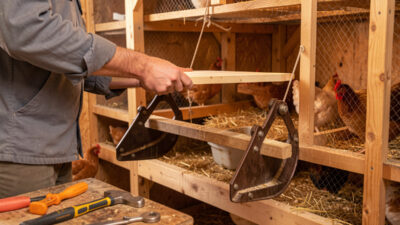
DIY Removable Roost Bars for Fast Cleaning and Mite Checks
The best roost you can build is one you can lift out in ten seconds without a tool. Removable roost…
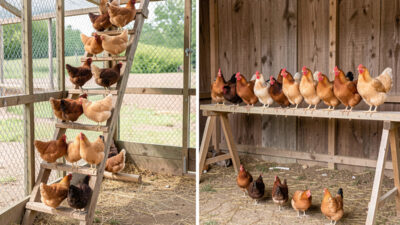
Ladder Roost vs Single-Level: Which Suits a Mixed Flock
For most mixed-size backyard flocks, a single-level roost wins. Putting every bird on one horizontal bar at the same height…
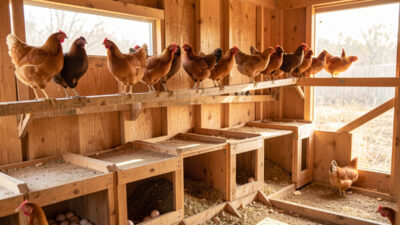
Roost Above the Nesting Box: The Height Rule for Floor Eggs
The rule is simple: the roost must sit higher than the top of your highest nesting box — ideally 6…