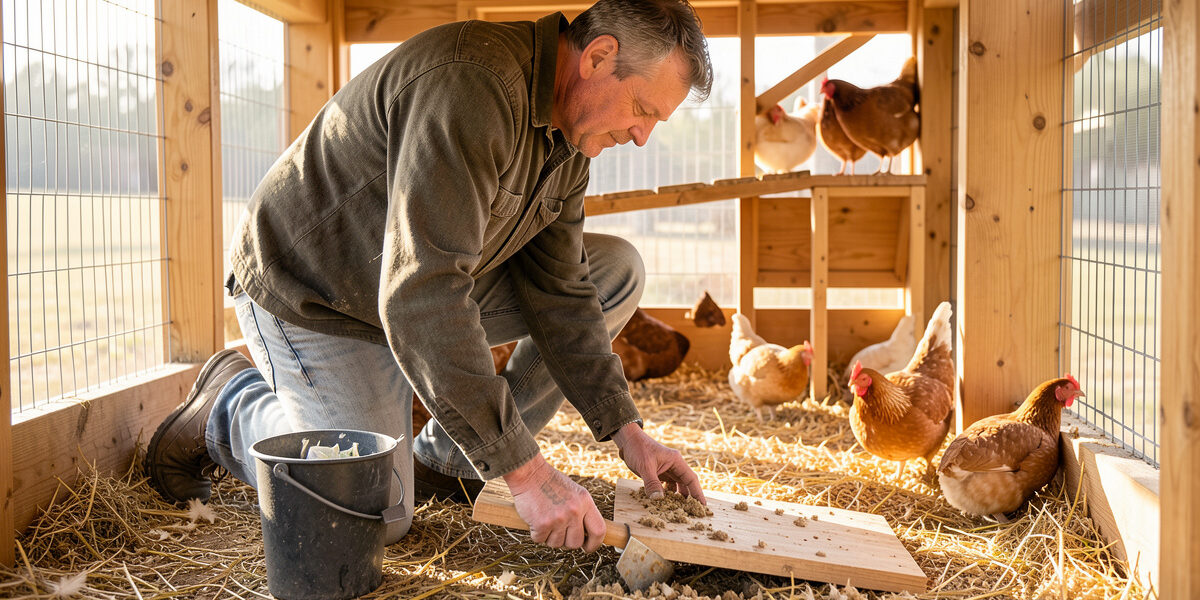
A chicken coop cleaning schedule should take about five minutes a day, fifteen minutes a week, under an hour a month, and a half-day twice a year — not the daily scrubbing most new keepers brace for. The trick is tiering the work so the small daily habit prevents the big jobs from ever getting big. On my flock in Sweden this rhythm keeps the air dry, the litter composting, and the deep-cleans rare. Here’s the exact schedule, tier by tier.
Most coop-cleaning advice is either “clean it whenever it looks dirty” (too vague to follow) or “scrub it daily” (so much work you’ll quit). Neither works. What works is a tiered routine where each level has defined tasks and a defined, small time budget, and where the daily layer does the heavy lifting of keeping moisture under control. Skip the daily layer and every other tier balloons.
The Schedule at a Glance
Here’s the whole system on one table. The times assume a typical backyard flock of 6–12 birds in a coop with a poop board and a deep-litter or standard bedding floor. Scale up for bigger flocks, but the structure holds: tiny daily habit, modest weekly reset, monthly inspection, seasonal overhaul.
| Tier | Tasks | Time |
|---|---|---|
| Daily | Scrape poop board; collect eggs; check & top up water; quick glance at litter and birds | 3–5 min |
| Weekly | Turn/top up litter; refresh nesting box bedding; wipe waterer rim; spot-clean wet patches; scrape roost bars | 10–15 min |
| Monthly | Deep-stir or partial litter change; scrub waterer & feeder; inspect roost ends and cracks for mites; check ventilation vents for blockage | 30–45 min |
| Seasonal (2×/yr) | Full strip-out; scrub surfaces; dry completely; treat roost joints; disinfect; fresh bedding base | 2–3 hrs |
The Daily Tier: Five Minutes That Prevent Everything Else
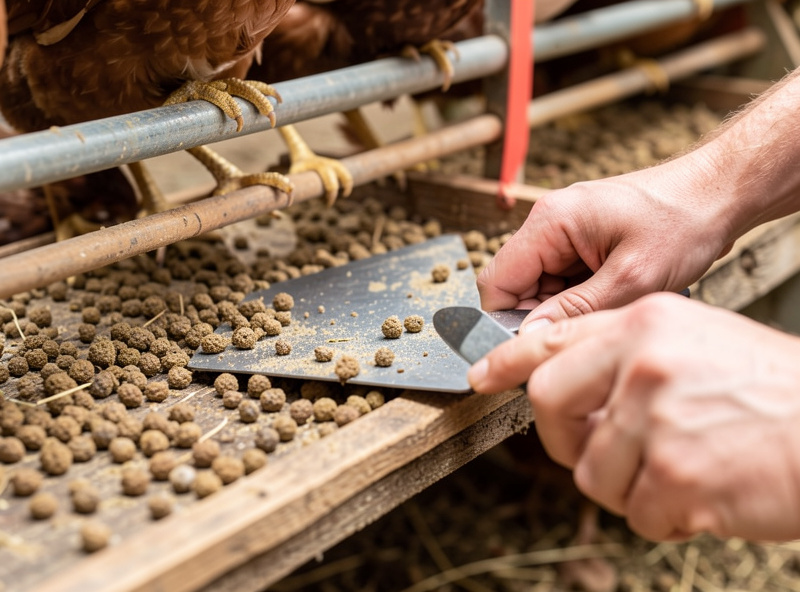
The daily job is small by design, because a small job gets done. The anchor task is scraping the poop board — the removable tray under the roost where the flock deposits 60–70% of its droppings overnight. Sixty seconds with a scraper removes the single biggest source of moisture in the coop before it spreads into the floor litter. The rest of the day’s droppings, scattered across a deep floor, the bedding handles on its own.
Alongside that: collect eggs (daily collection protects egg quality and discourages egg-eating), check and top up the waterer, and take a ten-second look at the litter and the birds. That glance is underrated — you’re checking for a wet patch under a leaking waterer, a hen acting off, a dirty nest. Catching those at ten seconds a day is how you avoid the thirty-minute problem later. This daily layer is the foundation of the whole coop cleaning and maintenance system.
The Weekly Tier: Reset the Litter and the Nest
Once a week, give the system a reset. Turn the deep litter with a fork — folding the wet roost-zone surface down and the drier bottom up — and toss a fresh layer of carbon bedding over the top, heaviest under the roost. This is the aeration that keeps the floor composting aerobically instead of going sour, and it’s the difference between litter that lasts six months and litter that turns in three weeks.
Refresh the nesting box bedding the same day; hens won’t reliably use a soiled nest, and clean nests mean clean eggs. Wipe the waterer rim to stop biofilm building, scrape any droppings off the roost bars, and spot-clean any wet patches you flagged during the week. Fifteen minutes, once a week, and the coop never gets ahead of you. If you’re not sure which bedding to top with, my bedding types comparison covers what composts and what doesn’t.
The Monthly Tier: Inspect Before You Clean
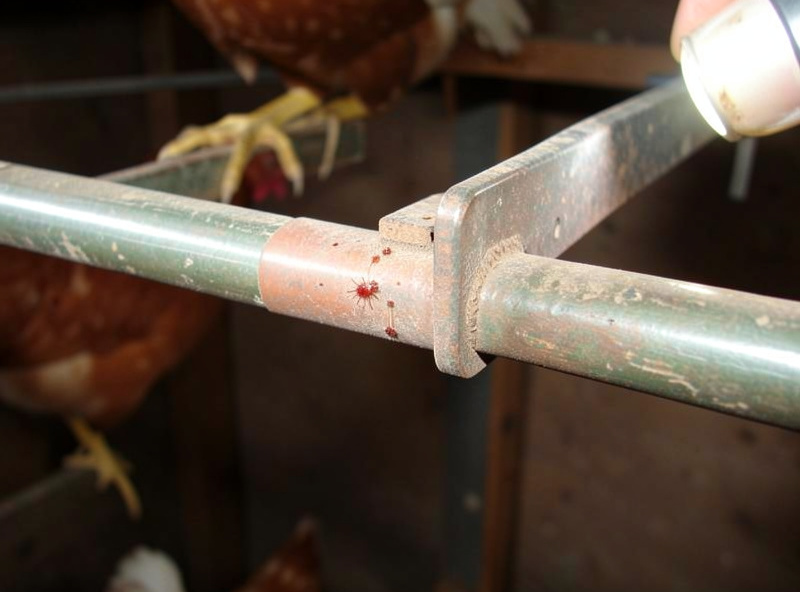
The monthly job is as much inspection as cleaning. Scrub the waterer and feeder properly — a monthly biofilm reset, not just a wipe — and do a deep stir or partial change of the litter depending on how the floor is holding up. But the most valuable monthly task is the mite inspection: pull a roost bar and look at the ends and the joints where they sit in their brackets. Red mites hide in exactly those cracks during the day — the daytime-hiding, night-feeding behavior is documented in poultry extension resources — and a monthly check catches an infestation while it’s still small.
Run a finger along the underside of the roost and in the corner seams; if you see grey-white ash-like residue or tiny moving specks, you’ve caught it early. Also check the ventilation vents aren’t blocked by dust or cobwebs — airflow is half of moisture control and it silently degrades as dust accumulates. The full coop-side treatment if you do find mites is in coop mite and pest control.
The Seasonal Deep Clean: Twice a Year
Two or three times a year — I do it in spring and autumn — you do the full overhaul. Strip everything out: all bedding, nest material, the lot. The spent deep litter goes to the compost pile (it’s already half-composted and garden-bound). Then scrub the floor, walls, roosts, and nesting boxes; let everything dry completely; treat the roost joints and cracks against mites; and only then lay down a fresh deep base of bedding.
This is the one tier where disinfecting belongs. Remove all organic matter first — disinfectants are inactivated by manure and bedding — let surfaces dry, and use a poultry-safe coop disinfectant rather than household bleach in an enclosed space. The seasonal timing matters: a spring clean clears the winter’s accumulated moisture and knocks back mites before the warm-season population explodes, and an autumn clean sets up a fresh, dry, deep base going into the cold months.
What NOT to Put on the Schedule
Two things people add that they shouldn’t. First, daily or weekly disinfecting. A healthy deep-litter coop runs on beneficial microbes that suppress odor and harmful bacteria; bleaching the floor every week sterilizes your allies and accomplishes nothing the dry bedding wasn’t already doing. Save disinfectant for the seasonal clean and disease response.
Second, frequent full strip-outs. If you’re stripping the coop monthly, something upstream is wrong — usually a moisture problem (leaking waterer, poor ventilation, too-shallow bedding) forcing you to compensate with brute-force cleaning. Fix the moisture source and the deep litter will hold for months. Over-cleaning is a symptom, not a virtue. If the coop smells despite the schedule, work the diagnostic in coop odor control rather than just cleaning harder.
Automating the Reminders
The schedule only works if it actually happens, and that’s where a little automation helps. The coop I run feeds a temperature-and-humidity sensor into Home Assistant; when relative humidity at roost height crosses 70%, I get a notification that effectively says “the litter isn’t keeping up — go turn it.” That turns the weekly task from a calendar guess into a condition-based trigger. A coop camera lets me check the litter, waterer, and nests without opening the pop door and chilling the coop in winter.
None of this does the physical work — you still need the scraper and the fork — but it removes the guessing about when, which is where most schedules quietly fall apart. If you want to tie sensors to the routine, my smart coop maintenance checklist shows the setup.
Adjusting the Schedule by Season
The tiers stay the same year-round, but the emphasis shifts with the weather, and in a cold climate that shift matters. In winter, moisture is the enemy and it builds faster because the coop is more closed up and everything dries slower. I lean harder on the daily poop-board scrape and the weekly litter turn in the cold months, and I top up dry carbon bedding more often, because damp litter at sub-zero temperatures is exactly what frostbites combs. The seasonal deep clean is best done in autumn here, so the flock goes into winter on a fresh, deep, dry base that can run untouched through the worst of it.
Summer flips the priorities toward pests and smell. Warmth lets mites breed fast and makes any damp litter go sour and attract flies quickly, so the monthly mite inspection becomes the tier I never skip, and a wet patch I might tolerate for a day in January gets dealt with immediately in July. Ventilation also does more work in summer — you want maximum airflow to carry heat and moisture out — so the monthly vent check pays off most in the warm season. The schedule is a framework, not a rigid calendar: read the coop and the weather, and shift the weight between the tiers accordingly. It is the same instinct that tells an experienced keeper to turn the litter today rather than tomorrow.
Quick Reference
Pin this somewhere near the coop. Daily (3–5 min): scrape poop board, collect eggs, check water, glance at litter and birds. Weekly (10–15 min): turn and top litter, refresh nests, wipe waterer, scrape roosts. Monthly (30–45 min): scrub waterer and feeder, deep-stir litter, inspect roost cracks for mites, clear vents. Seasonal, twice a year (2–3 hrs): full strip-out, scrub, dry, treat joints, disinfect, fresh bedding. Get the daily layer right and everything above it stays small.
More From the Coop
- Coop Cleaning, Bedding & Maintenance: The Complete System
- The Deep Litter Method: A Complete Guide
- Chicken Bedding Types Compared
- Coop Mite and Pest Control
- Chicken Coop Odor Control
- Smart Coop Maintenance Checklist
Related Guides
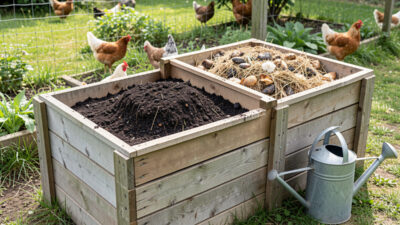
How to Compost Chicken Manure for the Garden
Fresh chicken manure is the richest free fertilizer you’ll ever produce — its nitrogen runs roughly 1.1–1.5%, hotter than cow…
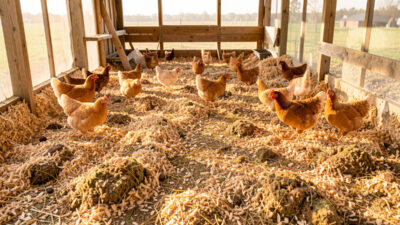
The Deep Litter Method: A Complete Guide for Chicken Coops
The deep litter method is a system where you let the bedding and droppings compost in place on the coop…
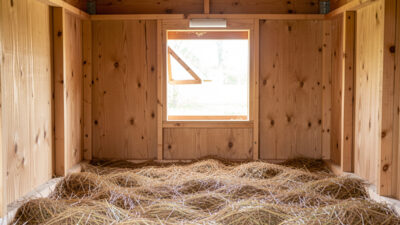
Chicken Coop Odor Control: A Diagnostic Approach
A chicken coop should smell faintly of earth and warm birds — never of ammonia. That sharp, eye-watering note isn’t…