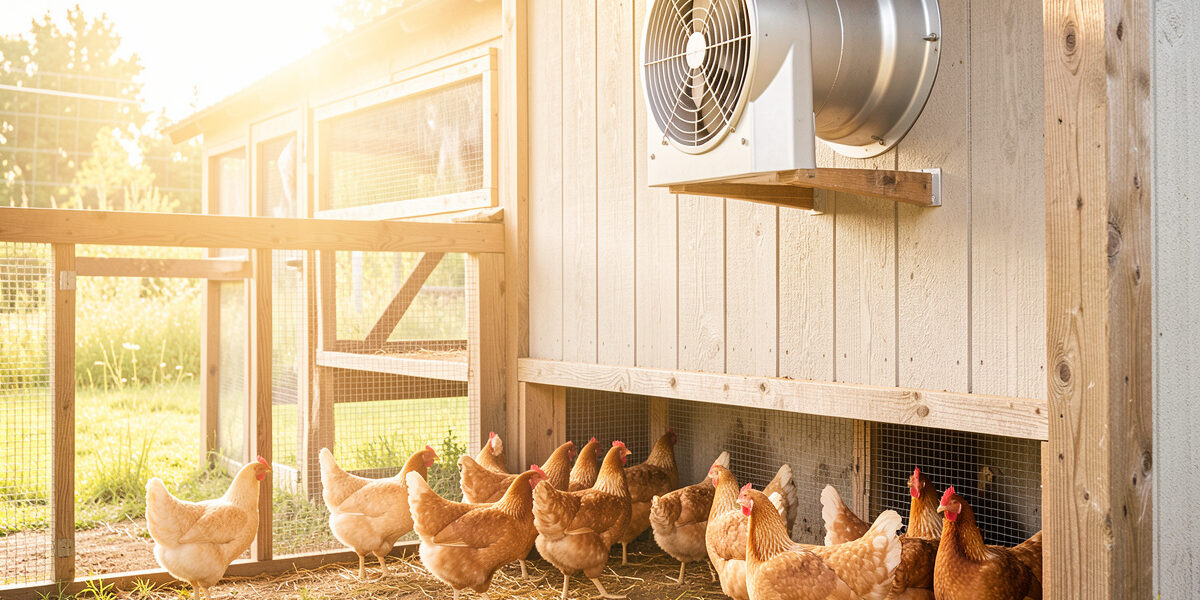
The best fan for a chicken coop in summer is a thermostat-controlled exhaust fan sized to roughly 5 to 8 air changes per hour, with a solar-powered fan the better pick for runs with no wiring. The key is that any fan must move air over the birds and run only when it is hot — a fan droning 24/7 wastes power and can create the very draft you spent winter avoiding.
Let me set expectations first: a fan does not refrigerate a coop. It moves air, and moving air over a panting hen dramatically improves how well she sheds heat — the same reason a breeze feels good to us. That makes a fan a genuinely useful summer tool once shade and cross-flow venting are maxed out, which I cover in cooling a chicken coop in summer. Here is how I choose one, by type, power source, and how it is controlled.
What a coop fan actually does
A fan earns its place by helping the birds cool themselves, not by chilling the air. Chickens cannot sweat; they dump heat by panting and by holding their wings out to expose skin, and both work far better in moving air. A well-placed fan also pulls the day’s trapped heat out of a closed-up coop and pushes stale, humid air toward the exits, backing up your passive ventilation when buoyancy alone cannot keep up on a still, hot afternoon. What a fan does not do is replace shade or cross-flow — if the coop is baking in direct sun, a fan just circulates hot air. So I treat a fan as the third step after shade and open cross-flow venting, the booster for the worst hours, not the first thing I reach for. Match the fan to that job and it is worth every watt; expect it to air-condition the coop and you will be disappointed.
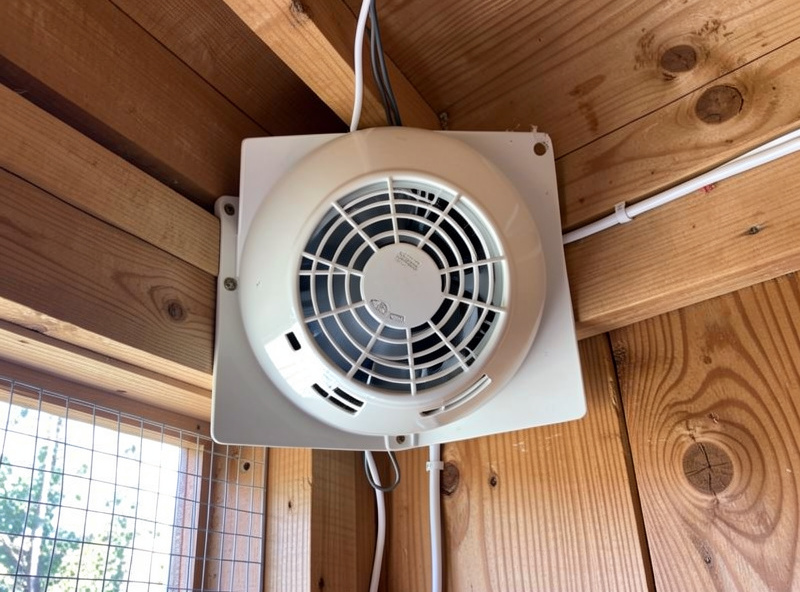
Fan types compared
There is no single best fan for every coop — it depends on your power situation, coop size, and how hot your summers get. Here is how the main types trade off across the setups I have wired and run.
| Fan type | Power | Best for | Trade-offs |
|---|---|---|---|
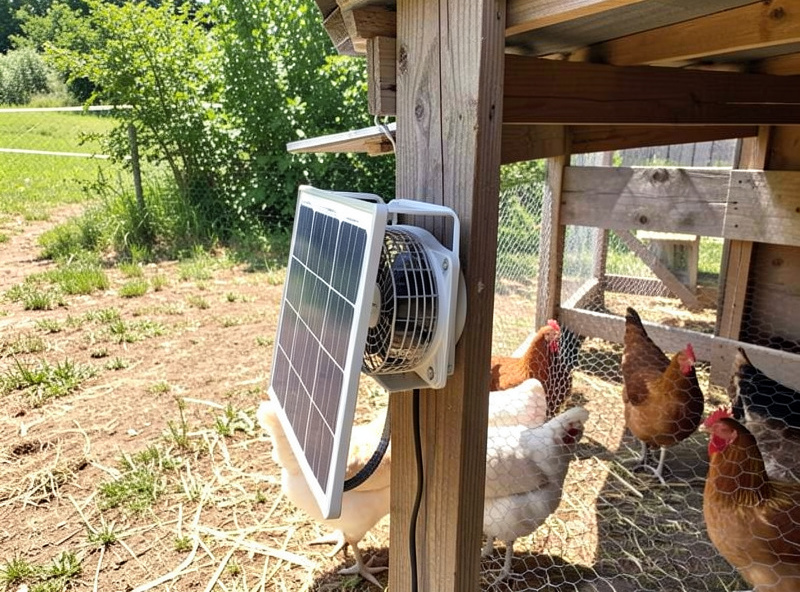
| Solar-powered fan | Solar panel + small battery | Runs and sheds with no mains wiring | Modest airflow; works hardest in sun, which is when you want it |
| Low-voltage DC fan | 12V / USB / PoE | Smart-coop setups, quiet circulation | Needs a low-voltage supply; smaller air volume |
| AC box / wall fan | Mains 120/230V | Strong airflow in a wired coop | Needs safe mains wiring; dust and weather rating matter |
| Inline / exhaust duct fan | Mains or low-voltage | Forced exhaust through a vent opening | Best cooling per watt; needs an opening and mounting |
| Misting fan | Mains + water line | Dry, hot climates only | Adds humidity; counterproductive in humid heat |
Solar versus wired
The first fork is power. As an Amazon Associate I earn from qualifying purchases. A solar-powered coop fan is the obvious answer for a run or coop with no electricity nearby — it needs no trenching, no wiring, and conveniently runs hardest exactly when the sun is beating down and the coop is hottest. The trade-off is modest airflow and dependence on a sunny sky. A wired fan moves far more air and runs on demand regardless of cloud, but only if you have safe power out at the coop; running mains to a damp, dusty hen house is a job to do properly, covered in smart coop wiring. For most off-grid or rental situations I lean solar; for a permanent wired coop where summers genuinely cook, a proper thermostat-controlled exhaust fan moves the most heat per watt.
Control it with a thermostat, not a switch
This is the detail that separates a useful fan from an annoyance. A fan left running around the clock wastes power, wears out faster, and on a cool night becomes a draft blowing across roosting birds — the exact thing I spend winter preventing. The fix is a thermostat or smart trigger so the fan runs only above a set temperature, say when the coop climbs past the high 20s Celsius, and shuts off as it cools. In my coop the fan is driven by Home Assistant off a temperature sensor, the same brain that runs the auto-door on a sunrise offset and the freeze-watch on the heated waterer; it kicks on during the hot hours and stops itself by evening. Even a simple plug-in thermostat does the job on a wired fan. The monitoring and alert thresholds I use are in coop temperature alerts, and the wider automation logic is in smart coop monitoring.
Sizing and mounting a coop fan
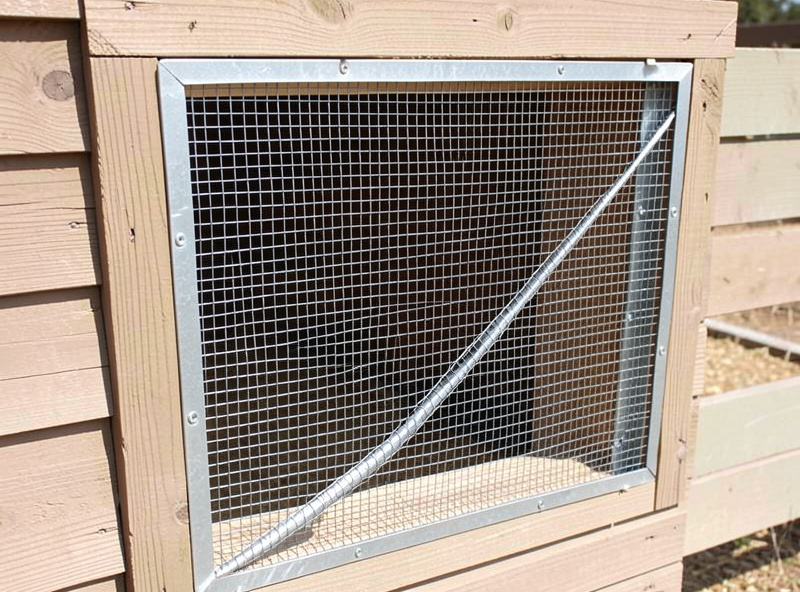
Match the fan to the coop volume and mount it to do real work. As a rough guide, you want enough airflow to turn the coop’s air over several times an hour, so a bigger or more crowded coop needs more cubic-feet-per-minute than a small one. A rough target is the coop floor area in square feet times five for summer CFM, so a 4-by-8 walk-in wants a fan near 160 CFM, not a 40 CFM clip fan. Undersizing is the common error, fitting a tiny clip fan to a walk-in and wondering why nothing changes. Mount an exhaust fan high, where the hot air collects, pulling it out through a vent opening, with fresh-air intake low so it has something to draw in. Position a circulating fan to move air across the birds at roost level during the day, but not as a permanent night-time stream. And critically, every fan opening is still a hole in your predator barrier: back it with ½-inch hardware cloth, never leave a fan grille as the only thing between a raccoon and your flock. That intersection of airflow and security is covered in the hardware cloth guide.
Safety: power, dust, and weather
A coop is a hostile place for electrics, so the fan and its wiring have to suit it. Dust from bedding and feathers coats everything and can clog or overheat a cheap motor, so I favour sealed or easily cleaned fans and blow them out periodically. Any mains wiring belongs in proper conduit on a GFCI/RCD-protected circuit, kept away from where birds and moisture reach — do not improvise with an indoor extension lead. Low-voltage DC and solar setups sidestep most of the shock risk, which is part of why they suit DIY smart coops. Whatever you fit, make sure it fails safe: if the fan dies on a hot day you want passive cross-flow venting still carrying the load, never a coop that relies on one motor to stay survivable. A fan is a booster on top of good passive design, not a substitute for it — University poultry-extension guidance lands on the same priority order — Cooperative Extension poultry housing resources put air exchange and moisture removal ahead of any mechanical cooling — and the full passive system is in the coop ventilation guide.
Frequently Asked Questions
What is the best fan for a chicken coop in summer?
For a wired coop, a thermostat-controlled exhaust fan sized to the coop moves the most heat per watt. For a coop with no wiring, a solar-powered fan is the best pick because it needs no mains and runs hardest in the sun. Either way, it should run only when hot.
Do chickens actually need a fan in summer?
Not always. Shade and open cross-flow venting handle most hot days. A fan helps on still, very hot afternoons by moving air over panting birds so they shed heat better. Treat it as a booster after shade and ventilation, not the first or only cooling step.
Should a coop fan run all the time?
No. A fan running around the clock wastes power and can draft roosting birds on cool nights. Put it on a thermostat or smart trigger so it runs only above a set temperature and shuts off as the coop cools. Even a simple plug-in thermostat does this.
Is a solar fan good enough to cool a coop?
A solar fan provides modest airflow and runs hardest when the sun is strongest, which is convenient timing. It will not cool a coop baking in direct sun on its own, so pair it with shade and good passive venting. For wired coops needing more air, an exhaust fan moves more.
Where should I mount a fan in a chicken coop?
Mount an exhaust fan high where hot air collects, pulling it out through a vent with low fresh-air intake. A circulating fan should move air across the birds during the day. Back every fan opening with half-inch hardware cloth so it does not become a predator entry point.
Are coop fans safe with all the dust?
They can be if chosen and wired for it. Bedding dust clogs cheap motors, so favour sealed or cleanable fans and clear them periodically. Keep mains wiring in conduit on a protected circuit away from moisture, or use low-voltage and solar fans to reduce the shock risk.
Related Articles
Related Guides
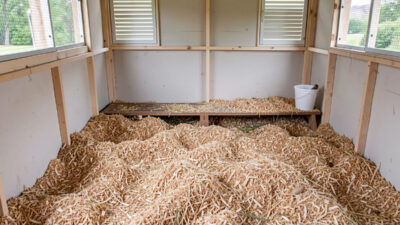
Controlling Coop Ammonia and Humidity
Controlling coop ammonia and humidity is mostly about keeping the litter dry and the air moving: ammonia forms when wet…
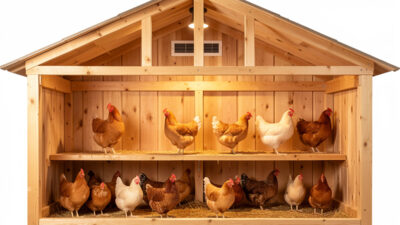
Chicken Coop Ventilation vs Draft: The Difference That Saves Combs
The difference between ventilation and a draft is direction: ventilation is air moving above your birds, a draft is air…
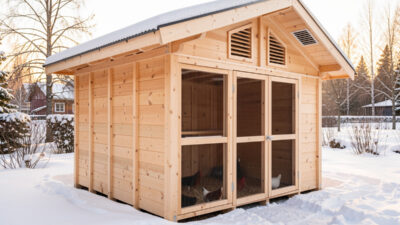
Coop Ventilation Guide: Climate Control for a Healthy Flock
Coop ventilation is the single system I design first, because it is the one that quietly kills birds when you…