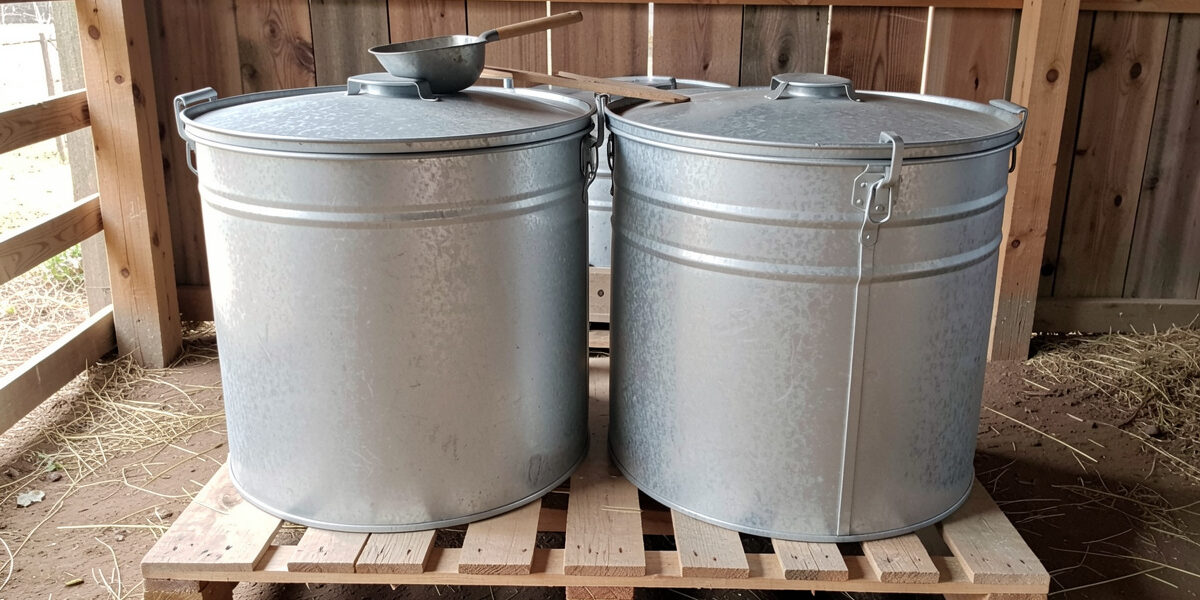
The fastest way to invite rats and mice into a coop is to leave a bag of feed where they can reach it. Rodent-proof feed storage comes down to one rule: keep feed in galvanized steel cans with tight-fitting lids, because rats and mice cannot chew through metal the way they shred plastic totes and paper bags. Pair that with a rodent-resistant feeder and the habit of never leaving feed out overnight, and you cut off the food supply that draws rodents to the coop in the first place.
I learned this the hard way — the first rat I caught at the wire had been living off a chewed-open feed bag in the shed. Since I switched to sealed steel and a treadle feeder, the problem simply stopped. Here is the whole feed-storage system I run now, why metal beats every alternative, and how storage ties into the rest of the coop’s predator perimeter.
Why Metal Cans Beat Everything Else
Rodents gnaw constantly, and their incisors go through plastic, wood, and cardboard with ease — a determined rat can open a plastic storage tote overnight. Galvanized steel trash cans with snug lids are the cheap, proven answer, because metal defeats the gnawing entirely. I weight or clip the lids so a raccoon or a clever rat cannot nose them off, and I keep the cans up off a damp floor on a pallet so the steel does not rust through at the base.
Plastic bins marketed as “rodent proof” are better than a bag but not in the same league as metal; a hungry rodent will test the lid seam and the corners. If you must use plastic, choose the thickest-walled containers with locking lids and inspect them often for the first signs of gnawing. The principle is the same one I apply to the whole build — use the material that actually stops the animal, which for rodents and feed means steel, the same way hardware cloth rather than chicken wire is what actually stops a predator in my predator-proof coop.
Feed Storage Options Compared
Here is how the common storage choices actually stack up against a determined rodent. The pattern is simple: the harder the material, the safer the feed.
| Storage Type | Rodent Resistance | Notes |
|---|---|---|
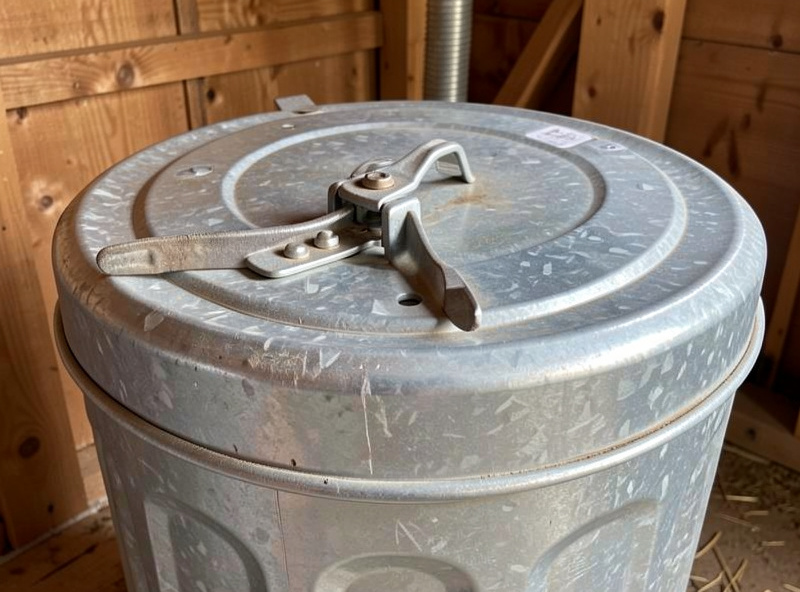
| Galvanized steel can + tight lid | Excellent | Best choice; weight or clip the lid, keep off damp floors |
| Heavy-duty locking plastic bin | Moderate | Better than a bag; inspect seams and corners for gnawing |
| Original paper/plastic feed bag | Poor | Chewed open easily; never store loose in a shed |
| Open bin or bucket, no lid | None | An open invitation; also spoils feed with damp |
Where You Store Matters as Much as How
The container is only half the equation; location does real work too. I keep the feed cans in a dry shed a short walk from the coop rather than inside it, because storing a winter’s worth of feed in the coop itself concentrates the attractant exactly where you least want rodents digging in. A separate, dry, well-sealed storage spot keeps the reserve away from the birds’ living space and makes any rodent activity easier to spot before it becomes an infestation.
Damp is the other enemy of stored feed. A can sitting on a cold concrete or earth floor sweats and can rust through at the base, and feed that draws moisture goes moldy fast. Up on a pallet, off the floor, in a spot with some airflow is the setup I trust — it keeps the steel sound and the feed dry through a wet, cold season. Buying feed in quantities you will actually use within a few weeks helps too, since even perfectly stored feed loses freshness over months and the longer it sits the more chances something has to find it.
The Feeder Is Half the Battle
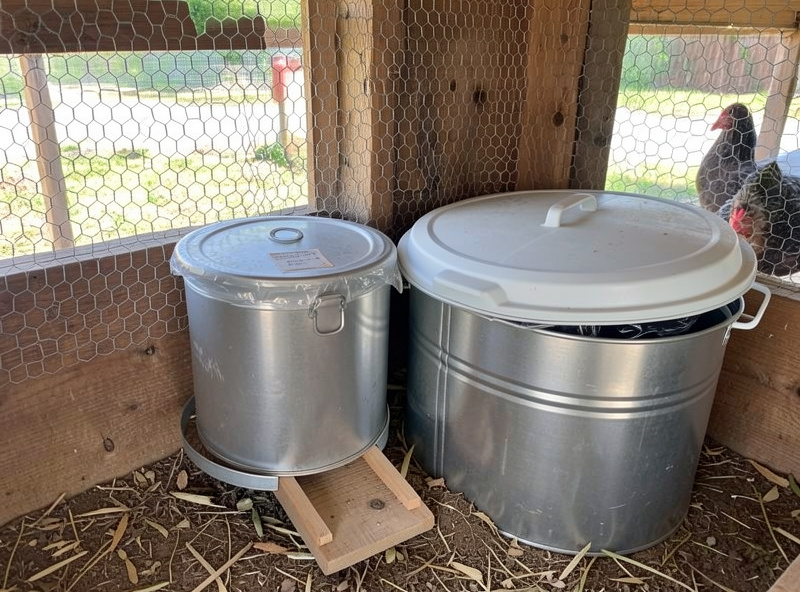
Storage stops rodents raiding the reserve, but an open feeder full of food overnight feeds them just as well. The fix is a treadle feeder, where the bird’s weight on a step opens the lid and it closes again when they step off — the rats that used to work my old gravity feeder gave up and left once the food was sealed behind the treadle. It is the single most effective rodent measure in the coop after sealed storage, and I cover the feeder types in detail in my automatic chicken feeder guide.
A treadle feeder needs the birds trained to it — they learn to stand on the step within a few days, and it is worth keeping a small open feeder alongside for the first week so no bird goes hungry while it figures out the mechanism. Once the flock has it, the feeder stays sealed to everything lighter than a chicken, which is most of what raids feed at night.
Whatever feeder you run, the overnight rule holds: do not leave feed out in the coop or run after dark. I keep my treadle chicken feeder as the daytime station and the sealed cans for the reserve, and bring any loose feed in at night. As an Amazon Associate I earn from qualifying purchases. Denying rodents an easy meal is what makes them move on, and a treadle feeder plus sealed storage is the one-two punch that does it.
Building the Storage Setup
A complete rodent-proof storage setup is cheap and lasts years. I use a pair of galvanized steel cans with lids — one for layer feed and one for scratch and supplements — kept on a pallet in a dry shed, with the lids clamped down using a simple set of lid locks so nothing can nose them off. That is the entire system, and it has kept my feed rodent-free for years.
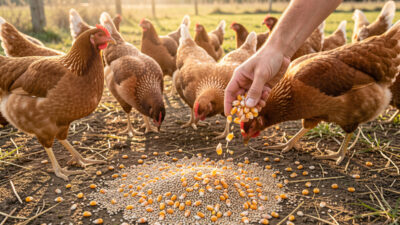
Keeping the feed dry is the quiet second benefit. Sealed steel keeps out not just rodents but damp, which means the feed stays fresh and free of the mold that makes spoiled feed a genuine health risk rather than just waste. Grit, oyster shell, and scratch all live in the same sealed system alongside the main feed, which keeps the whole feeding operation tidy — the broader picture of which is in my complete chicken feeding guide. Scratch grains deserve special mention here, because their high palatability makes them a particular rodent magnet; a loose bag of grain is the single most tempting target in the shed, so it goes in steel like everything else and never sits out by the door.
Label the cans if you keep several, since layer feed, grower, scratch, and supplements all look broadly similar once they are out of the bag and a mix-up means feeding the wrong ration. It is a small habit, but it pays off on a dark winter morning when you are scooping by feel — the steel keeps the rodents out, and a bit of organization keeps the right feed going to the right birds.
Storage Is Part of Predator Control
It is worth seeing feed storage as one edge of the whole coop’s defense rather than a separate housekeeping job. Rodents are not just a feed-cost problem — they gnaw structure, foul nesting material, can carry disease, and their presence draws the larger predators that hunt them straight to your coop. Cutting off the feed supply is therefore upstream of a lot of trouble, which is why I treat the sealed cans as seriously as the hardware cloth and the latches.
A coop with no easy food is a coop rodents pass by, and a coop they pass by is one fewer thing drawing a fox or a mustelid to the wire at night. My cameras have caught the pattern directly over the years: the nights with the most predator activity at the perimeter tend to follow any lapse in feed discipline, a spilled bag or a feeder left open. Cut the food and the traffic at the wire drops off, because the rodents that were the bait have moved on. That whole-system thinking — feed locked away, feeder rodent-resistant, perimeter tight — is how the parts reinforce each other. If you do find evidence of rodents despite good storage, the next steps are exclusion and trapping rather than poison anywhere near the flock, and any sign of illness in the birds is a question for my chicken health guide and an avian vet.
Frequently Asked Questions
How do I store chicken feed to keep rodents out?
Store feed in galvanized steel cans with tight, weighted or clamped lids, since rats and mice cannot chew through metal the way they shred plastic and paper. Keep the cans off damp floors and never leave feed out overnight.
Can rats chew through plastic feed bins?
Yes. Rodents gnaw constantly and can open most plastic totes, especially at seams and corners. Heavy locking plastic bins are better than a bag but galvanized steel cans are far more reliable for long-term feed storage.
What feeder keeps rodents out of chicken feed?
A treadle feeder works best, since the bird’s weight opens the lid and it closes when they step off, sealing the food from rodents. Combined with sealed steel storage and bringing feed in at night, it cuts off the rodent food supply.
Why does feed storage attract rats to a coop?
Loose or bagged feed is an easy meal that draws rodents in, and once they arrive they gnaw structure, foul bedding, and attract the larger predators that hunt them. Sealing feed removes the attractant at its source.
Does sealed storage keep feed fresh too?
Yes. Galvanized steel cans keep out damp as well as rodents, so feed stays dry and free of mold. Moldy feed is a real health risk rather than just waste, making sealed storage a feed-quality measure as much as a pest one.
Related Guides
Related Guides
Scratch Grains for Chickens: Treat, Not a Meal
Scratch grains are the most overfed thing in backyard chicken keeping. Scratch is a treat — a cracked-corn-and-grain mix that…

Fermented Chicken Feed: A Practical Keeper Guide
Fermenting chicken feed is the cheapest upgrade in the coop that actually earns its place. Soaking complete feed in water…
What Treats Can Chickens Eat? Safe and Unsafe Foods
Chickens are enthusiastic about almost anything you hand them, which is exactly why treats are where good intentions wreck a…