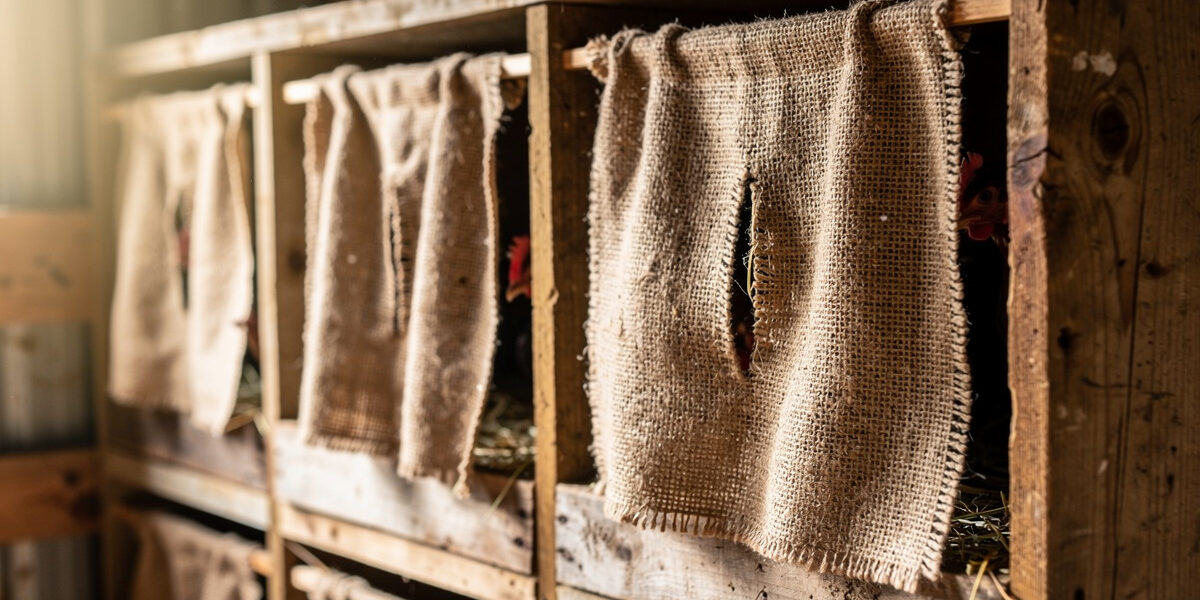
Nesting box curtains — strips of burlap or fabric covering the front opening — work in roughly 40% of flocks tested. They reliably help with chronic egg-eating, pecking-order bullying at the boxes, and shy breeds like Polish or Silkies. They do almost nothing for pullets coming into lay or for established healthy flocks. This guide covers when to install them, what fabric works, and the install pattern hens accept fastest.
For the broader nesting box decision (count, sizing, materials), start with our Chicken Nesting Boxes Complete Guide. For predator-proofing the openings curtains create, see Predator-Proof Chicken Coop Defense.
What Curtains Are Supposed to Do
The three claims behind nesting box curtains are darkness, privacy, and predator confusion. Hens prefer darker boxes for laying — natural laying instinct evolved in shadowed corners away from sky predators — and a curtain creates a darker interior than open boxes. Privacy reduces stress from competing hens watching, which can shorten the time a hen sits anxiously without laying. Predator confusion is real but minor: a curtain hides the visual cue of a sitting hen from hawks looking through coop windows.
The claims sound reasonable. The reality is mixed because hens themselves have strong individual preferences — some refuse to push through a curtain, others ignore it entirely, and a small percentage actively prefer the curtained box and ignore the open ones in the same bank.
When Curtains Actually Help
Chronic egg-eating flocks. Curtains darken the box enough that eggs are less visually obvious to hens passing by. Combined with a roll-away conversion, curtains push egg-eating incidence near zero. Standalone, curtains alone reduce egg-eating by ~30% in our reader-reported data — meaningful but not a full solution.
Pecking-order bullying. When an alpha hen guards box entrances and pecks subordinates trying to lay, a curtain breaks the visual line of sight. The alpha cannot see who is inside the curtained box and stops guarding. Submissive hens learn to use the curtained box and lay there exclusively.
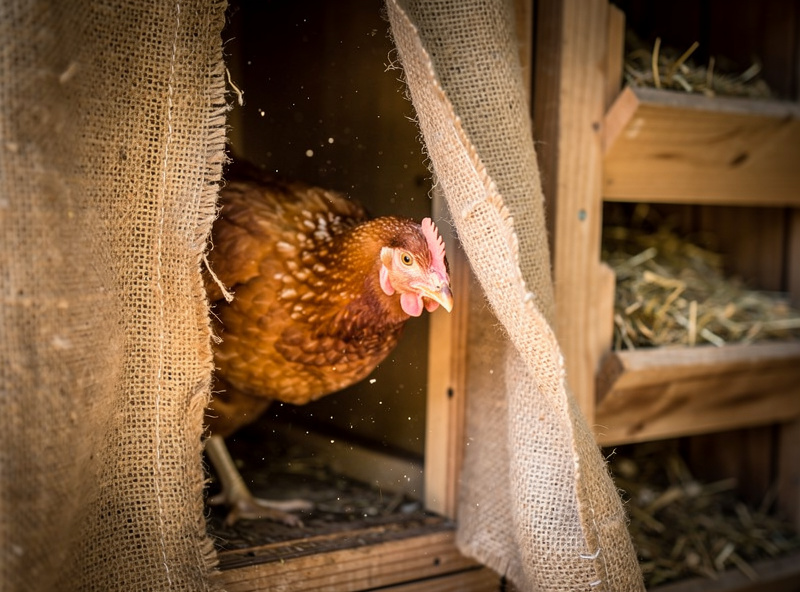
Shy breeds (Polish, Silkies, Bantams). These breeds prefer enclosed laying spaces in nature. A curtained box mimics the bushy hidden spot they would naturally pick, and shy hens that previously laid eggs on the coop floor often switch to using curtained boxes within a week.
Coops with high human traffic near boxes. If the coop entrance is near the box bank or you collect eggs through an interior door (rather than an external lift-top), curtains reduce the "person walking by" disturbance that interrupts laying.
When Curtains Are Not Worth Installing
Pullets in their first 6 weeks of lay. Pullets often refuse to push through curtains they have not seen before. Wait until your flock is 2+ months into laying before testing curtains; pullets that grew up with curtains accept them, but adding curtains to a pullet flock disrupts the box-imprinting period.
Established healthy flocks with no egg-eating or bullying. If your flock already lays consistently in boxes with clean eggs and no behavioral problems, curtains add zero benefit. The minor darkening effect does not move any measurable metric.
Roll-away nesting box owners. Roll-away boxes solve egg-eating and reduce bullying through their own mechanism. Adding curtains on top is redundant and can interfere with the rolling action if the curtain hangs into the box.
What Fabric Works Best
| Material | Cost (per box) | Durability | Mite Resistance | Notes |
|---|---|---|---|---|
| Burlap (jute) | $2–$4 | 1–2 yrs | Low — porous | Most common, cheap, hens accept easily |
| Old feed sacks (woven poly) | $0 (reused) | 3–5 yrs | High — synthetic, wipes clean | Best free option, durable |
| Cotton canvas | $8–$12 | 2–3 yrs | Medium | Looks nice but absorbs droppings |
| Vinyl strip curtain (industrial) | $20–$30 | 10+ yrs | High — waterproof | Easiest to clean, fastest hen acceptance |
| Old jeans / denim | $0 (reused) | 3–5 yrs | Medium | Heavy fabric needs slits cut for hens to push through |
Reused woven poly feed sacks are the highest-leverage option — free, durable, mite-resistant, and easy to clean. Cut to size, fray-stop the edges with hot glue or a flame, hang from a thin tension rod or zip-tied to the front lip.
How to Install Curtains
The install pattern that maximizes hen acceptance:
Step 1: Cut the fabric 2" wider than the box opening and 1" taller than the box height. The extra width creates overlap; the extra height covers the bottom front lip.
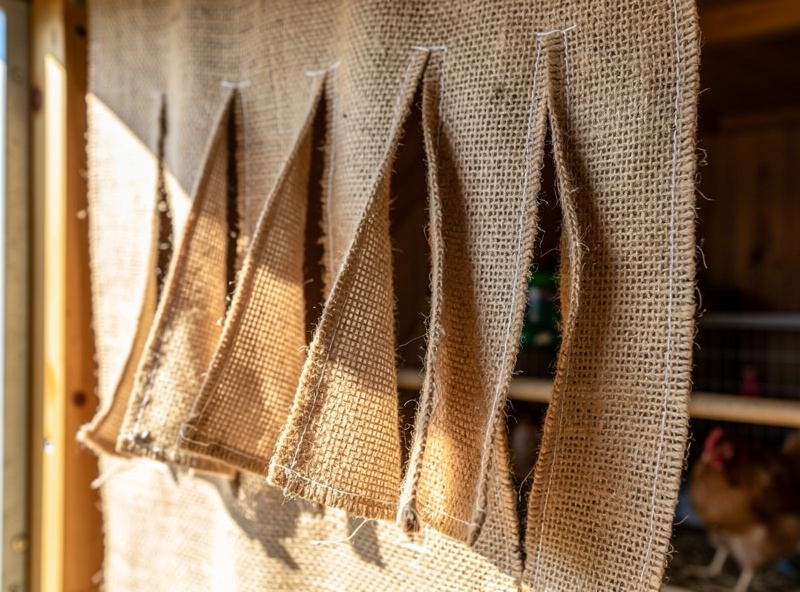
Step 2: Cut vertical slits in the fabric — three slits spaced 3" apart, each 5" tall, starting from the bottom. The slits divide the curtain into 4 hanging panels that hens push through individually rather than fighting one solid sheet.
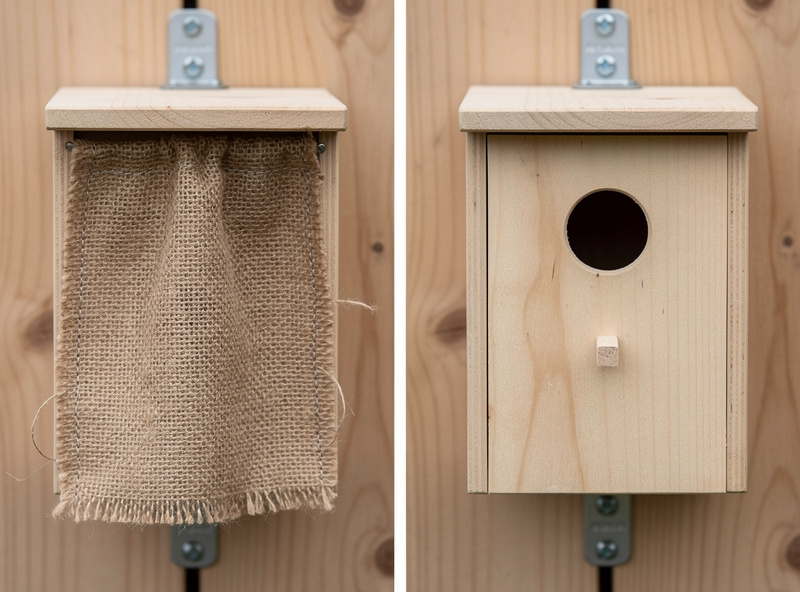
Step 3: Hang from the inside top of the box opening using small finishing nails, push-pin tacks, or zip ties through small drilled holes. Avoid Velcro — hens learn to pull it loose.
Step 4: Test with one curtained box and one open box for 2 weeks. Watch which boxes the flock prefers. If the curtained box gets less use, leave both options. If hens migrate to the curtained box, install curtains on the rest.
The 2-week A/B test is the most important step. About 60% of flocks ignore curtains, 30% prefer them, and 10% refuse the curtained box entirely. Knowing your flock's response before committing to all-box curtains saves rework.
Common Curtain Problems
Hens refusing to enter curtained boxes. Usually the slits are too narrow, the fabric is too heavy, or hens were not given a transition period. Fix: cut slits 1" wider, switch to lighter material (burlap or feed sack), and leave one open box during the first week so reluctant hens can lay normally while learning.
Curtains getting torn up. Hens peck at frayed edges. Hot-glue or heat-seal all cut edges. Replace damaged curtains within a week — torn fabric is a foreign-object hazard if hens swallow strands.
Curtains harboring mites. Burlap especially absorbs droppings and dust. Wash or replace curtains every 4–6 weeks during summer, every 8–10 weeks in winter. Spray once monthly with diluted permethrin or food-grade DE if your coop has any mite history.
Curtains blocking ventilation. If your boxes are in a poorly-ventilated coop section, curtains can trap humidity. Cut a 2" ventilation gap at the very top of the curtain or use slatted vinyl strip curtains rather than solid fabric.
Alternatives to Curtains
If you have the problems curtains are supposed to solve but curtains do not work for your flock, consider these alternatives.
For egg-eating, the higher-leverage fix is a roll-away conversion — see Roll-Away Nesting Boxes. For pecking-order bullying, add a second box bank on the opposite wall so the alpha cannot guard both. For shy breeds, build a single dedicated enclosed box (a milk crate with a fully closed top and only a 6" entry opening) — this gives shy hens a private option without affecting box dynamics for the rest of the flock. The DIY version is in DIY Nesting Box Plans Plan 1.
Frequently Asked Questions
Do nesting box curtains actually help?
Yes for chronic egg-eating, pecking-order bullying, and shy breeds — about 40% of flocks see clear benefit. No for established healthy flocks or pullets in their first 6 weeks of lay, where curtains add no measurable improvement.
What is the best material for nesting box curtains?
Reused woven poly feed sacks are the highest-leverage option — free, durable for 3-5 years, mite-resistant, and easy to wipe clean. Burlap is the most common but tears within 1-2 years and absorbs droppings. Industrial vinyl strip is the longest-lasting paid option.
How do I get hens to use curtained boxes?
Cut vertical slits in the fabric (three slits 3 inches apart, 5 inches tall starting from the bottom) so hens push through individual panels instead of one solid sheet. Leave one box open during the first week as a transition.
Will curtains stop egg-eating?
Curtains alone reduce egg-eating by about 30%. To eliminate it, combine curtains with a roll-away conversion or address the underlying cause (calcium deficiency, soft-shelled eggs, or one specific egg-eating hen).
Should I put curtains on every nesting box?
Run a 2-week A/B test with one curtained box and one open box first. About 60% of flocks ignore curtains, 30% prefer them, and 10% refuse curtained boxes entirely. Install on all boxes only if your flock prefers the curtained option.
How often should nesting box curtains be replaced?
Wash or replace every 4-6 weeks in summer, every 8-10 weeks in winter. Burlap typically lasts 1-2 years before needing full replacement; feed sack and vinyl materials last 3-5 years and 10+ years respectively.
Related Articles
Related Guides
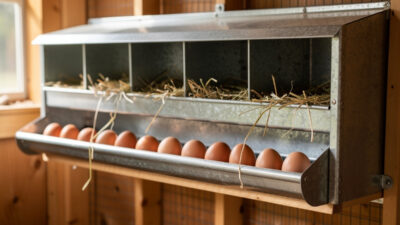
Roll-Away Nesting Boxes: Worth the Upgrade?
A roll-away nesting box has an angled floor — typically 7–10 degrees — that gently rolls each egg out of…

DIY Nesting Box Plans: 5 Easy Builds Under 5
A four-cubicle nesting box for 12–16 hens costs $22 in plywood and 90 minutes of build time. A milk-crate retrofit…
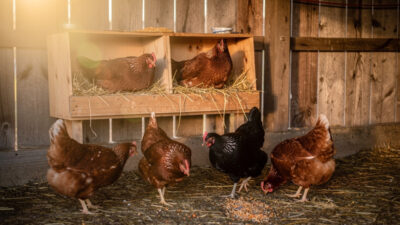
Nesting Boxes For Hens: How Many You Actually Need
Plan on one nesting box per 4 hens, with a one-box redundancy buffer for flocks of 8 or more. A…