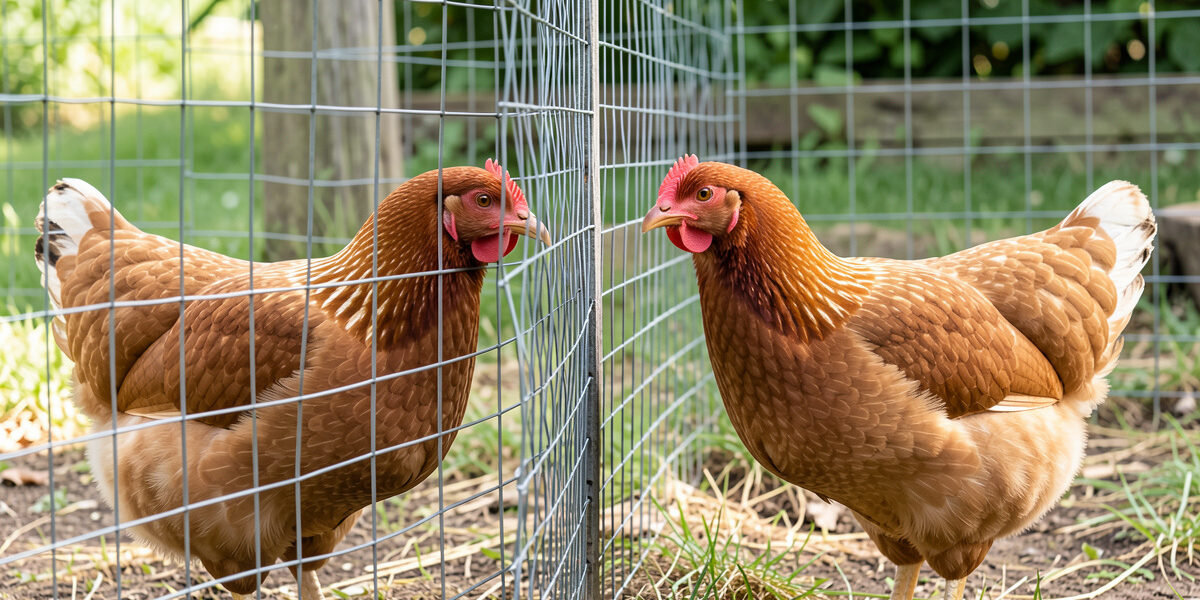
Introducing new chickens to an established flock is the single most dangerous thing you’ll do as a keeper, because it forcibly re-opens a settled pecking order. Done right — with quarantine and a gradual “see but don’t touch” stage — it’s uneventful. Done wrong, by dropping strangers straight into the run, it can leave a bird seriously injured within minutes. The whole job takes about 3 to 6 weeks of patience.
I’ve integrated new birds into my Swedish flock enough times to have made the mistakes so you don’t have to. The temptation is always to rush it — you’ve got the new pullets home, there’s space in the coop, why wait? Because to the resident flock, an unfamiliar bird isn’t a new flockmate, it’s an intruder, and the response is immediate and serious. The method below is slow on purpose. It trades a few weeks of patience for a flock that integrates as a rank dispute instead of a war. This is one of the highest-stakes skills in the whole flock management guide, and it builds directly on understanding the pecking order you’re about to disturb.
Why You Can’t Just Add Birds to the Flock
You can’t drop new chickens straight into an established flock because chickens are territorial and run a fixed social hierarchy. Unfamiliar birds are treated as intruders, and the resident flock — led by the dominant hens — will attack to drive them out. With no escape route, a cornered new bird can be injured or killed in a single afternoon.
The deeper reason is that the existing flock’s pecking order is settled and stable, and a stranger has no place in it. There’s no recognition, no gradual rank-testing — just a flock defending its territory against an outsider. This is why time and familiarity are the whole game: the integration methods that work all do the same thing, which is convert “intruder” into “low-ranking flockmate” before the birds ever share space. Skip that conversion and you’re not introducing a bird, you’re feeding it to the flock.
Step 1: Quarantine New Birds First
Quarantine every incoming bird for 2 to 4 weeks before it goes anywhere near your flock, housed completely separately with its own food and water. This isn’t about the pecking order yet — it’s biosecurity. A new bird can carry mites, lice, respiratory illness, or worse, and quarantine protects the flock you already have.
During quarantine, watch for any sign of illness: sneezing, discharge, lethargy, abnormal droppings, or external parasites. A bird that looks perfectly healthy in the seller’s pen can break with something a few days after the stress of a move. I keep quarantined birds out of sight and downwind of the main coop, and I handle them last in my chore order so I’m not carrying anything back. If anything looks wrong, the bird stays isolated and the situation goes to an avian vet — never integrate a sick bird. Cross-check anything suspicious against chicken biosecurity and mites and lice before the bird gets anywhere near your flock.
Step 2: The See-But-Don’t-Touch Stage
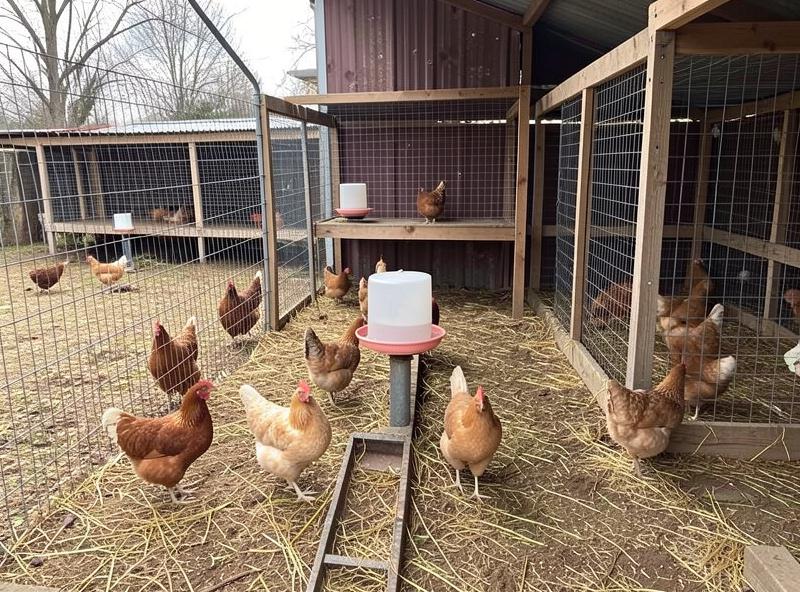
After quarantine, house the new birds adjacent to the flock behind hardware cloth for 1 to 2 weeks so the two groups can see, hear, and smell each other without physical contact. This is the most important stage and the one most keepers skip — and skipping it is the leading cause of integration injuries.
The mesh divider lets both groups normalize the presence of the other. By the end of a week or two, the new birds aren’t strangers anymore — they’re familiar faces the flock has lived alongside without being able to attack. When you finally combine them, the encounter reads as a rank dispute between known birds rather than an invasion by intruders, and the difference in violence is night and day. I run this stage through a temporary panel of the same 19-gauge half-inch hardware cloth I clad the run in, set up so the groups eat their meals on either side of the mesh. Watching them go from frantic at the wire to bored beside it is exactly the signal you want before opening the divider.
Step 3: Combine on Neutral Ground at Dusk
Combine the groups for the first time on neutral territory — a space neither group considers “theirs” — and ideally at dusk so the birds wake up together the next morning. Reducing territorial advantage and letting the first shared night pass on the roost takes a lot of heat out of the introduction.
The dusk trick works because chickens are calm and sleepy at roosting time and wake the next day already sharing space, which softens the “where did this bird come from” reaction. If you can’t manage neutral ground, the next best thing is to make the existing run feel new — rearrange feeders, add a fresh perch or a new dust-bathing spot — so the residents are distracted and the territory feels less rigidly owned. Expect some chasing and pecking when they first mix; that’s the pecking order re-sorting and it’s normal. What you’re watching for is escalation: a bird pinned and unable to escape, or blood drawn. Plenty of space and multiple feed and water stations give a chased bird somewhere to go and prevent the squabbles from turning into injuries.
Integrating Younger Birds and Single Chickens
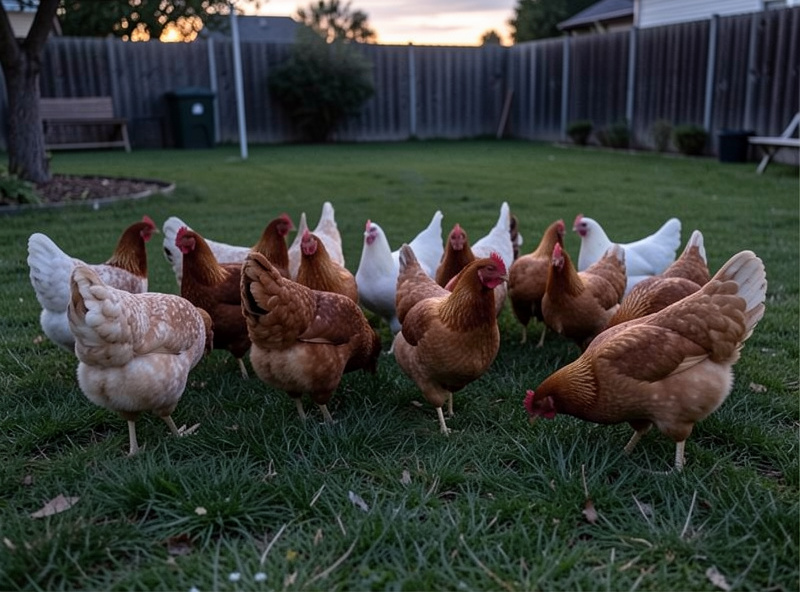
Two situations need extra care: integrating young pullets into a mature flock, and adding a single lone bird. Point-of-lay pullets are smaller and lower-energy than mature hens and can be bullied hard, so they often need a longer see-but-don’t-touch stage and a “panic room” — a space with food and water they can fit into but the big hens can’t.
A single new bird is the hardest case of all, because the whole flock’s aggression focuses on one target with no flockmate to share the pressure. Wherever possible, integrate birds in pairs or groups of similar age and size so the newcomers have allies and the residents’ attention is divided. If you’re moving brooder-raised youngsters out to the main flock, the timing and space rules are slightly different and worth reading in integrating chicks into the flock. Whatever the age, the principle holds: more space, more resources, more time, more escape routes.
Integration Timeline at a Glance
The full sequence from new-bird-home to fully-integrated flock, with the typical duration of each stage.
| Stage | Duration | What Happens | Key Risk to Avoid |
|---|---|---|---|
| Quarantine | 2-4 weeks | New birds housed fully separately | Skipping it and importing disease/parasites |
| See-but-don’t-touch | 1-2 weeks | Adjacent housing behind hardware cloth | Skipping it — leading cause of injuries |
| First combine | Day 1, at dusk | Mixed on neutral ground | No escape routes or single feed station |
| Re-sorting | 3-7 days | Pecking order re-stabilizes | Over-intervening and resetting the process |
| Settled | 1-2 weeks after combine | New birds hold a stable rank | Assuming trouble if low birds defer normally |
What’s Normal vs What Needs Intervention
Expect chasing, pecking, feather-grabbing, and a lot of noise for the first few days after combining — that’s the pecking order doing its job, and intervening too early just prolongs it. The line for stepping in is injury and access: a bird drawing blood, a bird pinned and unable to escape, or a bird blocked from food and water.
If you see genuine injury, separate the aggressor for a few days rather than the victim — removing the bully lets the rest settle, and she usually re-enters lower in rank. If a new bird is being kept from resources, add more stations and more space; the problem is almost always a bottleneck, not the birds. Most integrations look ugly for 3 to 5 days and then quietly resolve. Patience through that window is the whole skill — and an open wound or a bird that stops eating goes to an avian vet, not a home remedy.
Frequently Asked Questions
How long does it take to introduce new chickens to a flock?
Budget 3 to 6 weeks total: 2 to 4 weeks of quarantine, then 1 to 2 weeks of see-but-don’t-touch housing behind hardware cloth before combining birds on neutral ground at dusk. The re-sorting then settles over another 1 to 2 weeks.
Can I just put new chickens in with my flock?
No. Dropping unfamiliar birds straight into an established flock triggers territorial attacks that can injure or kill the newcomer in a single afternoon. Chickens treat strangers as intruders until familiarity converts them into low-ranking flockmates.
Why introduce chickens at night?
Combining birds at dusk means they wake up together the next morning already sharing space, which softens the territorial reaction. Chickens are calm and sleepy at roosting time, so the first shared night takes heat out of the introduction.
How do I stop my flock from bullying the new chickens?
Use a longer see-but-don’t-touch stage, integrate in pairs rather than singly, and provide plenty of space, multiple feed and water stations, and escape routes. Separate any bird that draws blood, not the victim, and route injuries to an avian vet.
Do I need to quarantine new chickens?
Yes. Quarantine every new bird for 2 to 4 weeks separately before integration to protect your flock from mites, lice, respiratory illness, and other diseases. A bird that looks healthy can break with something days after the stress of a move.
Is it harder to add a single chicken?
Yes. A lone newcomer absorbs the whole flock’s aggression with no flockmate to share it, making single introductions the hardest case. Whenever possible, add birds in pairs or small groups of similar age and size.
Related Guides
Related Guides
Backyard Chicken Noise and Neighbors: Keeping the Peace
Backyard chicken noise is manageable for hens and a genuine problem for roosters — that distinction is the whole story.…
Free Range vs Confined Chickens: Which Is Right?
Free-range versus confined isn’t a question of which is “better” — it’s a trade between forage, behavior, and predator risk,…
Chicken Bullying and Feather Picking: Causes and Fixes
Bullying and feather picking are behavior problems, not a flock’s nature, and they almost always trace to a specific stressor:…