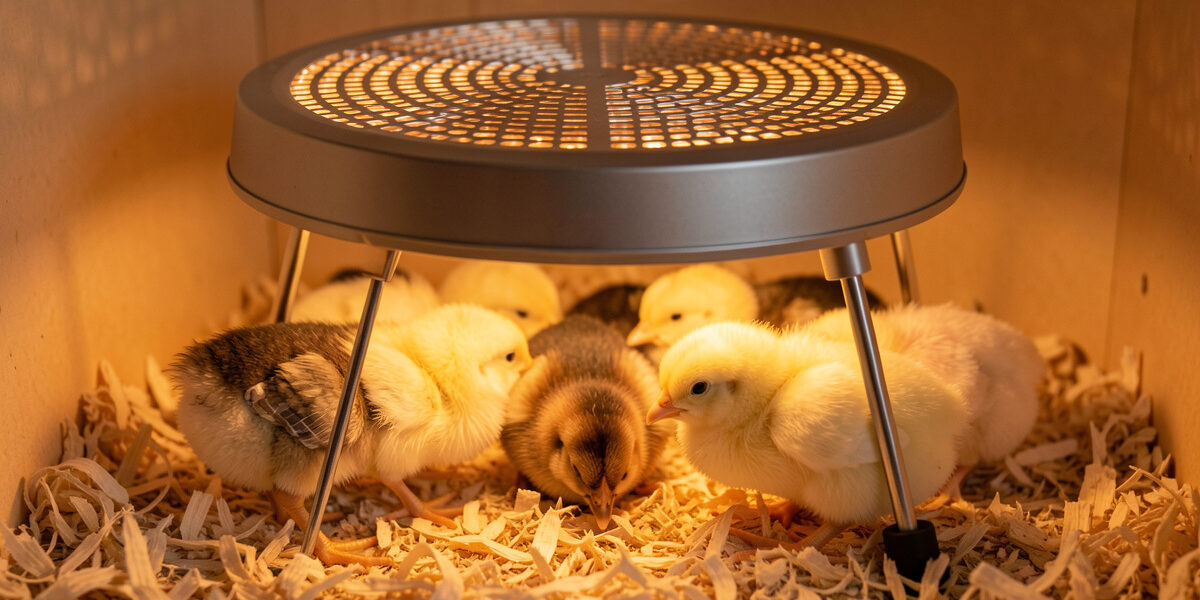
For most home brooders, a radiant heat plate beats a heat lamp on safety, running cost, and the chicks’ sleep cycle — and the only place a lamp still wins is heating a large batch in a genuinely cold space. That is the short version of a debate that gets far more heated than it should. I have run both, through Swedish winters, and I switched to plates years ago for reasons that have nothing to do with fashion and everything to do with not burning down my utility room.
This is the decision to make before the chicks arrive, because retrofitting heat onto a brooder full of day-old chicks is exactly the kind of stress you want to avoid. Here is how the two actually compare, where each genuinely belongs, and why I land where I do.
As an Amazon Associate I earn from qualifying purchases. The gear linked below is brooder equipment I’d use myself; it costs you nothing extra.
How Each One Heats
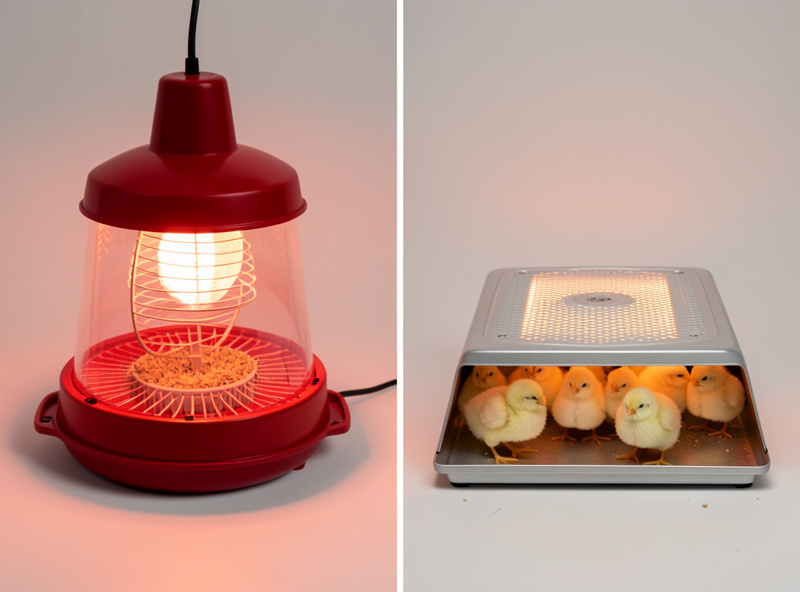
The two work on completely different principles, and that difference drives everything else. A heat plate is a low-wattage radiant panel on adjustable legs. The chicks duck underneath it for warmth and come out to eat and explore — it mimics the way they’d shelter under a broody hen. The surface stays cool enough to touch, it gives off no light, and it warms the chicks directly rather than heating the whole room.
A heat lamp is a 250-watt infrared bulb in a reflector that floods a wide zone with radiant heat from above. It warms the air and everything under it, which makes it good at fighting a cold ambient room — but it runs hot, draws a lot of power, and (in the white or red bulb versions) throws light around the clock.
The Head-to-Head
| Factor | Heat plate | Heat lamp |
|---|---|---|
| Fire risk | Very low — surface stays cool | High — leading cause of coop and home fires |
| Power draw | Low (tens of watts) | High (typically 250 W) |
| Light at night | None — natural dark | Constant light disrupts sleep |
| Cold-room performance | Can struggle below freezing | Strong — heats a wide cold zone |
| Large batches | Limited by plate size | Covers many chicks at once |
| Upfront cost | Higher | Lower |
| Self-regulation | Chicks choose contact warmth | You manage height and bulb wattage |
Why I Run Plates Indoors
The fire issue alone settles it for an indoor brooder. A heat lamp that slips its clamp and drops into pine shavings starts a fire, and that scenario plays out somewhere every single brooding season. A radiant heat plate simply cannot do that — there is no exposed hot bulb to fall, and the surface won’t ignite bedding. For a brooder living in a spare room, bathroom, or utility space, that is the whole argument.
The second reason is the dark. Chicks raised under a plate sleep in natural darkness and keep a normal day/night rhythm, which makes for calmer, less stressed birds. A lamp blazing 24/7 — even a red one — keeps the brooder lit around the clock, and constant light is associated with more pecking and restlessness. After watching both, the plate-raised broods are visibly more settled at night.
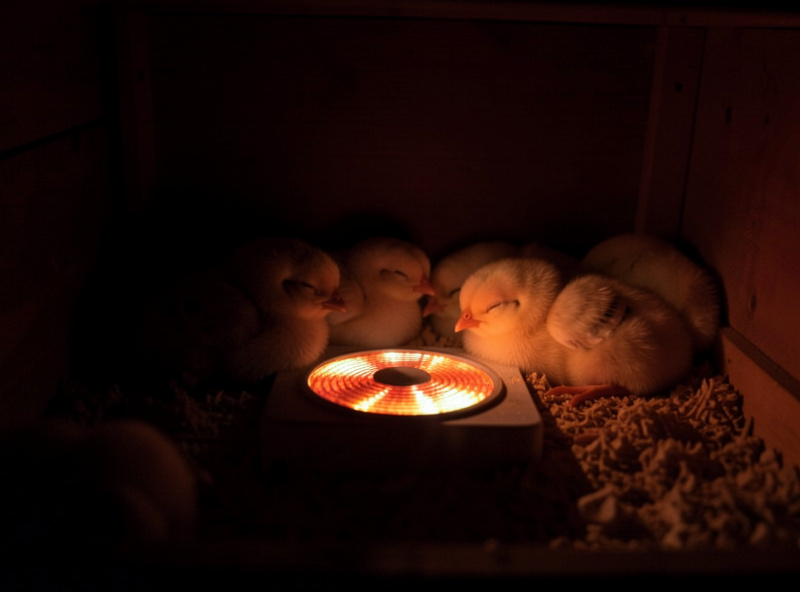
The third is power and quiet. A plate sips a fraction of the electricity a 250-watt lamp burns continuously, which matters over six weeks. None of this is exotic — it is just that the plate is the better tool for the common case, and the common case is a small backyard brood in a heated building.
When a Lamp Still Makes Sense
I am not anti-lamp, and there are real situations where a plate can’t keep up. A heat plate warms by contact and radiates only a short distance; in a genuinely cold space — an unheated outbuilding hovering near freezing — it can struggle to keep chicks warm, because there isn’t a pool of warm air for them to step out into. A lamp’s flood of heat handles that better. Large batches are the other case: a single plate only shelters so many chicks, while a lamp covers a wide group at once.
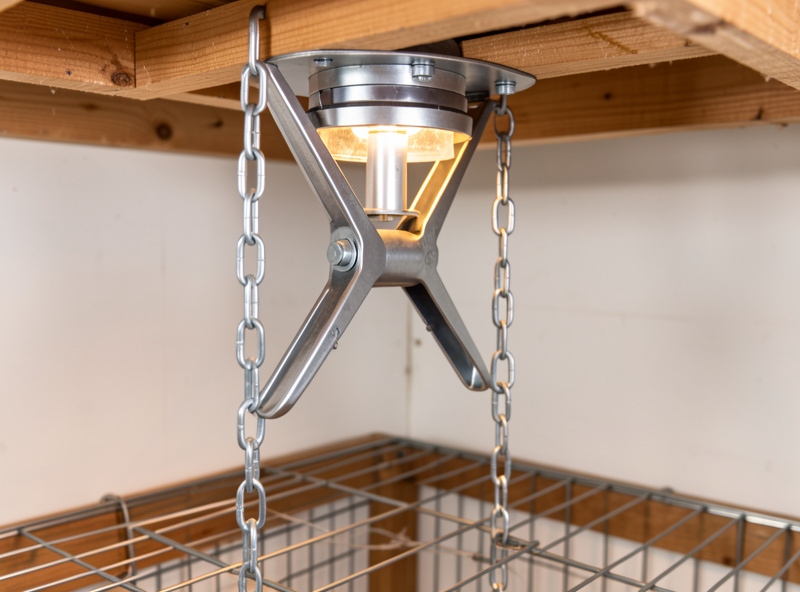
If you do run a lamp, the safety rules are non-negotiable. Secure it with two independent fasteners — never trust the spring clamp alone — using something like a proper brooder heat lamp with a wire guard, hang it well clear of anything flammable, and keep the bulb height correct rather than cranking wattage. A guard cage around the bulb stops bedding and feathers from contacting a hot element. Treat the lamp as the fire hazard it is and it can be run safely; treat it casually and it’s a matter of time.
The Brooder-Hen Middle Ground
There is a third option worth knowing about, even though it isn’t for everyone: letting a broody hen raise the chicks instead of any artificial heat at all. A committed broody is the original heat plate — she shelters the chicks, regulates their temperature perfectly, teaches them to eat and drink, and integrates them into the flock for you. It is the lowest-tech and arguably the best brooding method when it works, but it depends on having a reliably broody hen at the right moment, which you can’t schedule around a hatchery delivery date. For incubator hatches and shipped chicks, you’re back to a plate or a lamp.
The point of mentioning it is to frame the artificial sources correctly: both the plate and the lamp are substitutes for a mother hen. The plate substitutes the contact-warmth-and-darkness part of her; the lamp substitutes the radiant-warmth part. That is exactly why the plate feels more natural to the chicks — it behaves more like the thing they evolved to shelter under. A heat lamp keeps them warm but never lets them experience the dark, tucked-in cycle a hen provides.
Either Way, Heat One End
Whichever you choose, the rule that decides chick survival is the same: create a heat gradient and let the chicks choose. Warm zone at one end, cool zone at the other. Chicks piled tight under the heat are cold; chicks pressed to the far wall panting are hot; chicks spread evenly and busy have it right. A brooder thermometer in the warm zone is a useful sanity check — about 95 °F (35 °C) week one, dropping roughly 5 °F a week — but the chicks’ behavior is the real instrument. Read the birds and you’ll be right far more often than the chart.
Heat is one piece of the larger brooder picture — container, bedding, feed, and water all matter too. The full setup walkthrough is in the chick brooder setup guide, and the whole journey from day-old to point of lay lives in the complete chick and pullet care guide.
Frequently Asked Questions
Is a heat plate better than a heat lamp for chicks?
For most home brooders, yes. A heat plate is far safer (no exposed hot bulb to start a fire), uses much less power, and gives off no light so chicks keep a natural sleep cycle. A heat lamp only has the edge for very cold spaces or large batches where its wide flood of heat is needed.
Are heat lamps dangerous for chicks?
Heat lamps are the leading cause of coop and home fires in chick-keeping. A 250-watt bulb that falls into bedding ignites it quickly. They can be used safely with two independent fasteners, a guard cage, and correct height, but they demand respect — a heat plate removes the fire risk entirely.
Can a heat plate keep chicks warm enough in winter?
In a heated room, easily. In a genuinely cold space near freezing, a heat plate can struggle because it warms by contact and short-range radiation rather than heating the surrounding air. For unheated outbuildings in winter, a carefully secured heat lamp or a warmer brooder location is the better choice.
What wattage heat plate do I need for chicks?
Heat plates are sized by the number of chicks they shelter rather than by a single wattage you choose, so pick a plate rated for your brood size and a bit of growth. They draw far less power than a lamp regardless. The key is that all your chicks can fit underneath at once with room to spare in the first weeks.
Do chicks need light at night with a heat plate?
No. Chicks do not need light at night, and a dark sleeping period is actually better for them — calmer birds and a normal day/night rhythm. A heat plate gives warmth without light, which is one of its main advantages over a lamp that keeps the brooder lit around the clock.
How high should a heat lamp be above chicks?
Set the height by the chicks’ behavior, not a fixed number. Start higher, then lower it until the chicks spread evenly under the warm zone — piling directly beneath means too cold and lower it, scattering to the edges panting means too hot and raise it. Adjust the height weekly as the chicks feather and need less heat.
Keep Building
- Chick Brooder Setup: Building a Warm, Safe Home for Day-Old Chicks — the full brooder walkthrough.
- Raising Baby Chicks: The Complete Chick and Pullet Care Guide — day-old to point of lay.
- Solar Chicken Coop Heater: Winter Heating Guide — heating the grown flock’s coop in cold climates.
Related Guides
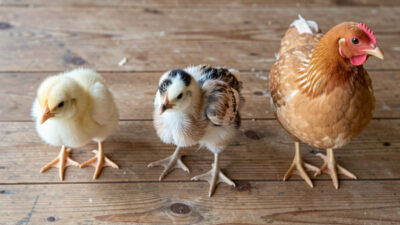
Chick Growth Timeline: From Day-Old to Point of Lay
A chick goes from a fragile day-old fluffball to a laying hen in roughly five months, passing through four recognizable…
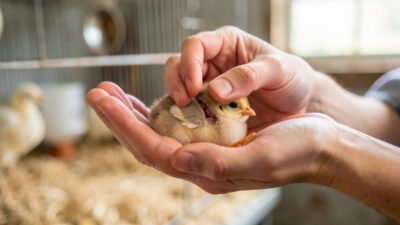
Common Chick Problems: Signs, Prevention, and When to Get Help
Almost every common chick problem is an environment problem first — chilling, damp bedding, crowding, or dehydration — which is…
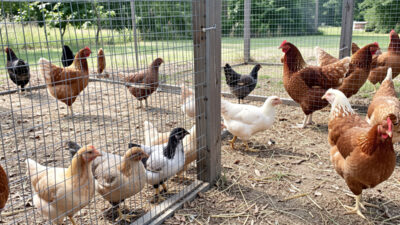
Integrating Chicks Into the Flock Without Bloodshed
You never just tip young birds into an established flock — chickens enforce a strict pecking order and a sudden…