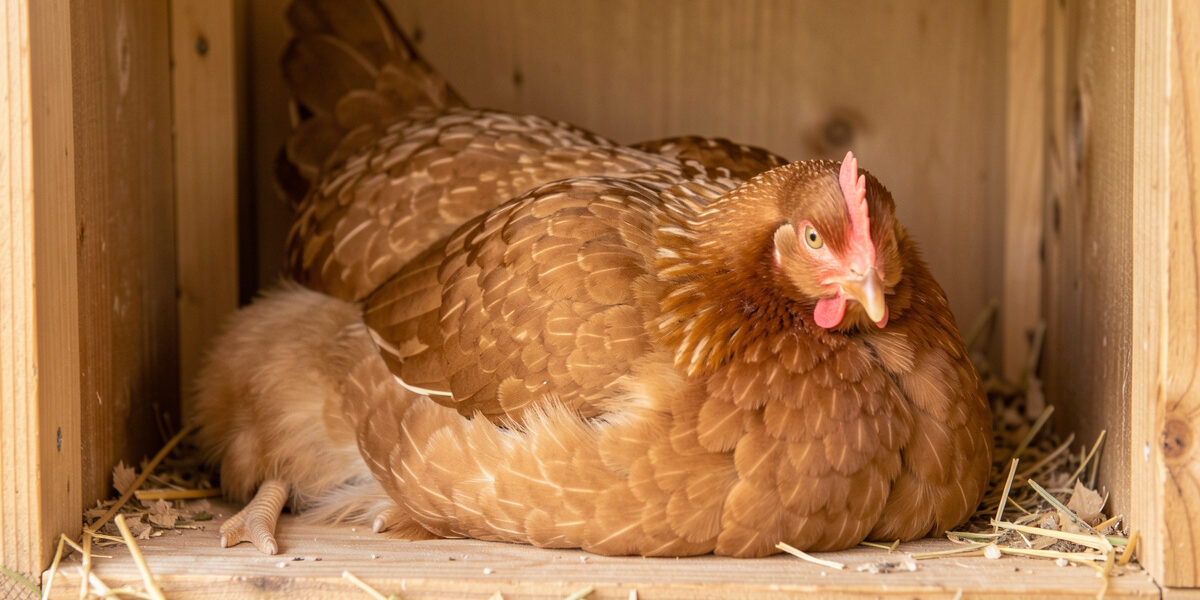
A broody hen has had her hormones flip into full incubation mode: she plants herself on the nest day and night, fluffs up and growls when you reach under her, stops laying, and may barely eat or drink. Left to run its course, broodiness lasts about 21 days — the length of a hatch — and in a flock with no rooster and no fertile eggs, it’s usually something to break rather than indulge.
Broodiness catches a lot of new keepers off guard because it looks like illness. The hen is flat in the nest box, puffed and cranky, off her feed — and the instinct is to worry. She’s not sick; she’s wired by instinct to sit a clutch, fertile or not. Across my own flock I’ve had reliably broody hens go down every spring like clockwork, and once you can recognize it, managing it is straightforward. The question is only ever which path you want: break her promptly, or let her hatch or foster chicks if that’s your plan. This is one piece of the broader flock management guide, and it ties directly to how a sitting hen scrambles the pecking order by monopolizing a nest box.
What Is a Broody Hen?
A broody hen is one whose hormones have triggered the urge to incubate eggs and raise chicks. She sits the nest relentlessly, leaving only briefly once a day to eat, drink, and pass a large “broody dropping,” and she defends the nest with fluffed feathers, a flattened posture, and an unmistakable growl-and-peck when disturbed.
It’s an instinct, not a choice, driven mainly by the hormone prolactin and triggered by a combination of daylight, warmth, and the feel of eggs accumulating under her. Some hens never go broody; others go down repeatedly every season. The key thing to understand is that a broody hen will sit whether or not the eggs are fertile — she’ll devotedly incubate an empty nest, golf balls, or a single unfertilized egg for weeks, which is exactly why a hen with no rooster still needs managing. Recognizing broodiness for what it is, rather than mistaking it for illness, is the first step.
How to Tell If a Hen Is Broody
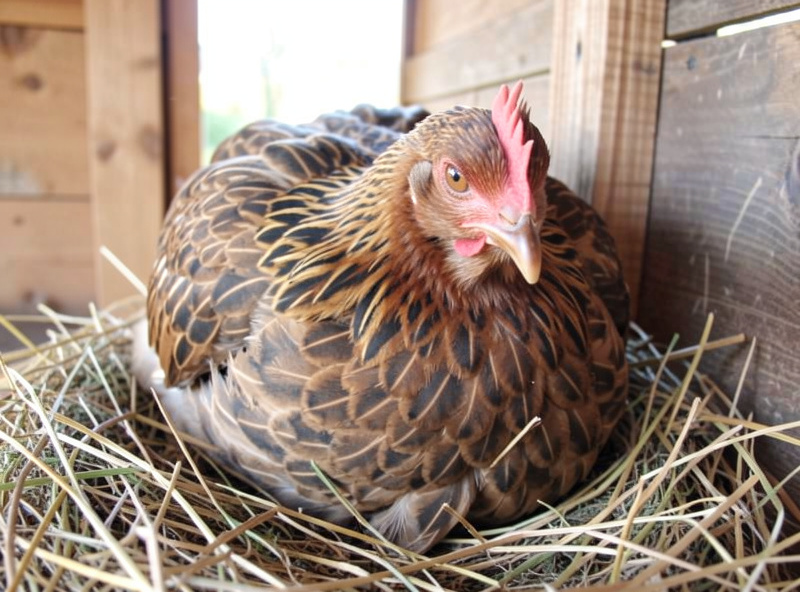
The clearest signs are a hen who stays in the nest box overnight and through the day, fluffs up and growls or pecks when you approach, flattens herself over the nest, and has stopped laying. You may also notice a bare patch on her breast — she plucks her own chest feathers to bring warm skin against the eggs.
The bare brood patch is the giveaway that separates true broodiness from a hen simply hogging a favorite box. Other tells: she’ll be the last off the roost or won’t leave at all, her comb may pale slightly, and when she does step off she’s frantic — eating, drinking, and dust-bathing in a rush before bolting back. None of this is illness, but it does carry a cost: a hen sitting an empty nest for three weeks loses condition, skips dust-bathing (which invites mites), and blocks a nest box other hens need. If you genuinely suspect she’s unwell rather than broody — sustained lethargy off the nest, abnormal droppings, labored breathing — that’s a question for an avian vet, not a broody-breaking cage.
How to Break a Broody Hen
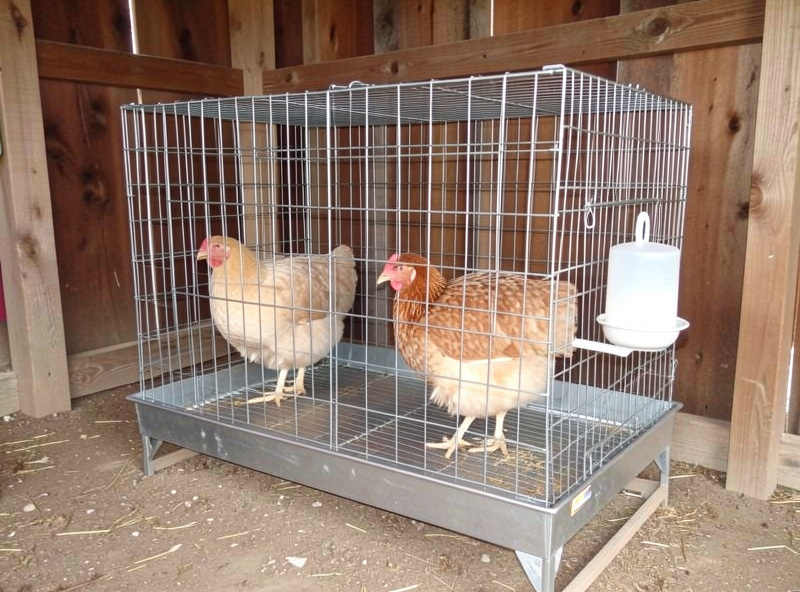
To break broodiness you have to lower the hen’s body temperature and remove the dark, enclosed nesting trigger. The standard method is a wire-bottomed “broody breaker” cage — a dog crate with a wire floor works — set up off the ground with food and water but no bedding, so cool air circulates under her and there’s nothing to nest in.
Keep her in the breaker for 2 to 5 days, checking that she’s eating and drinking; most hens snap out of it within 3 days, and you’ll know it worked when you return her to the flock and she heads for the feeder instead of the nest. The mechanism is simple: a broody hen’s underside runs warm to incubate, and a cool, airy, bedding-free floor defeats that while removing the enclosed-nest cue that sustains the hormone loop. Gentler half-measures — repeatedly lifting her off the nest, blocking the nest boxes in the evening, popping a frozen water bottle under her — sometimes work for a mildly broody hen but routinely fail on a determined one, which is why the wire-floor breaker is the reliable tool. Never let a hen run a 3-week broody cycle on an empty nest just because breaking her feels harsh; the condition loss is the bigger welfare cost.
When to Let a Hen Stay Broody
If you actually want chicks, a broody hen is the easiest incubator there is — she does the temperature, humidity, turning, and chick-rearing herself with no electricity involved. To use her, give her fertile eggs (from your own rooster or bought in), let her sit undisturbed in a quiet, separate spot, and she’ll hatch and mother them through the 21-day cycle.
A few practicalities decide whether this works. The hen needs to be genuinely committed — a flighty first-timer may quit halfway — and she needs her own protected space so other hens don’t add fresh eggs to the clutch or bully her off it. Broody breeds like Silkies, Orpingtons, Cochins, and Brahmas are the dependable sitters; Leghorns and most production hybrids rarely go broody at all, which is worth knowing when you choose a flock — several of the dependable sitters also happen to be solid cold-hardy breeds, a handy overlap if you keep birds through hard winters. If hatching isn’t your goal, you can sometimes graft day-old chicks under a broody hen at night and let her raise them as her own — a tidy way to skip the brooder entirely, covered alongside the rest of integrating chicks into the flock. Either way, fertility, hatching, and incubation specifics beyond general management are worth confirming with experienced local keepers or a vet.
Break-or-Keep Decision Table
The quick logic I use when a hen goes broody, depending on whether chicks are part of the plan.
| Your Situation | Best Action | Why |
|---|---|---|
| No rooster, no chicks wanted | Break her promptly | She’ll lose condition sitting infertile eggs |
| You want chicks and have fertile eggs | Let her sit in a separate space | Natural incubation, no equipment |
| You want chicks but no fertile eggs | Break her, or graft day-old chicks | Sitting infertile eggs is pure cost |
| Repeat broody, losing weight | Break her every time, monitor condition | Chronic broodiness wears a hen down |
| Flighty first-time broody | Break her | Likely to quit a hatch midway |
Preventing and Managing Repeat Broodiness
You can’t switch off a hen’s broody instinct, but you can reduce how often it fires and how long it lasts. Collect eggs at least once or twice a day so a clutch never accumulates to trigger her, and break broodiness early — at the first day or two of sitting — before the hormone loop sets in hard.
For chronically broody hens, prompt and consistent breaking matters more than any prevention trick: the longer she sits before you act, the longer she takes to snap out and the more condition she loses. Roll-away nest boxes that remove eggs from under the hen, and simply choosing less broody-prone breeds if you don’t want sitters, both cut the frequency. What you should not do is leave a repeat-broody hen to cycle unmanaged season after season — she’ll spend weeks each time off her feed and off the dust bath, and a run-down hen is a hen more vulnerable to mites and other problems. Managing broodiness is ultimately about protecting her condition, the same goal behind every other piece of good flock husbandry.
Frequently Asked Questions
How long does a hen stay broody?
Left alone, broodiness lasts about 21 days, the length of a natural hatch, and can repeat if the urge isn’t broken. Breaking a hen early with a wire-bottomed cage usually snaps her out of it within 2 to 5 days.
How do you break a broody hen?
Lower her body temperature and remove the nesting trigger by placing her in a wire-bottomed cage off the ground with food and water but no bedding for 2 to 5 days. Cool air under her defeats the warm brood patch that sustains the broody hormones.
Will a hen go broody without a rooster?
Yes. Broodiness is hormonal and unrelated to whether eggs are fertile, so a hen with no rooster will devotedly sit an empty nest or unfertilized eggs for weeks. That is exactly why hens with no rooster still need their broodiness managed.
Is it bad to let a hen stay broody?
If you don’t want chicks, yes. A hen sitting for three weeks stops laying, eats and drinks little, skips dust-bathing, and loses condition, which leaves her more vulnerable to mites and weakness. Break her unless you intend to hatch.
Which chicken breeds go broody most?
Silkies, Orpingtons, Cochins, and Brahmas are reliable broody sitters, making them ideal if you want natural hatching. Leghorns and most production hybrids rarely go broody, which suits keepers who only want a steady egg supply.
Keep Reading
Related Guides
Backyard Chicken Noise and Neighbors: Keeping the Peace
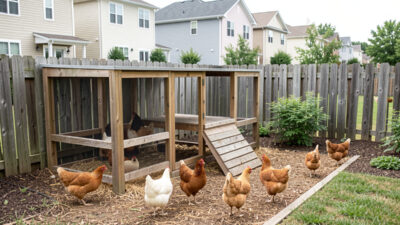
Backyard chicken noise is manageable for hens and a genuine problem for roosters — that distinction is the whole story.…
Free Range vs Confined Chickens: Which Is Right?
Free-range versus confined isn’t a question of which is “better” — it’s a trade between forage, behavior, and predator risk,…
Chicken Bullying and Feather Picking: Causes and Fixes
Bullying and feather picking are behavior problems, not a flock’s nature, and they almost always trace to a specific stressor:…