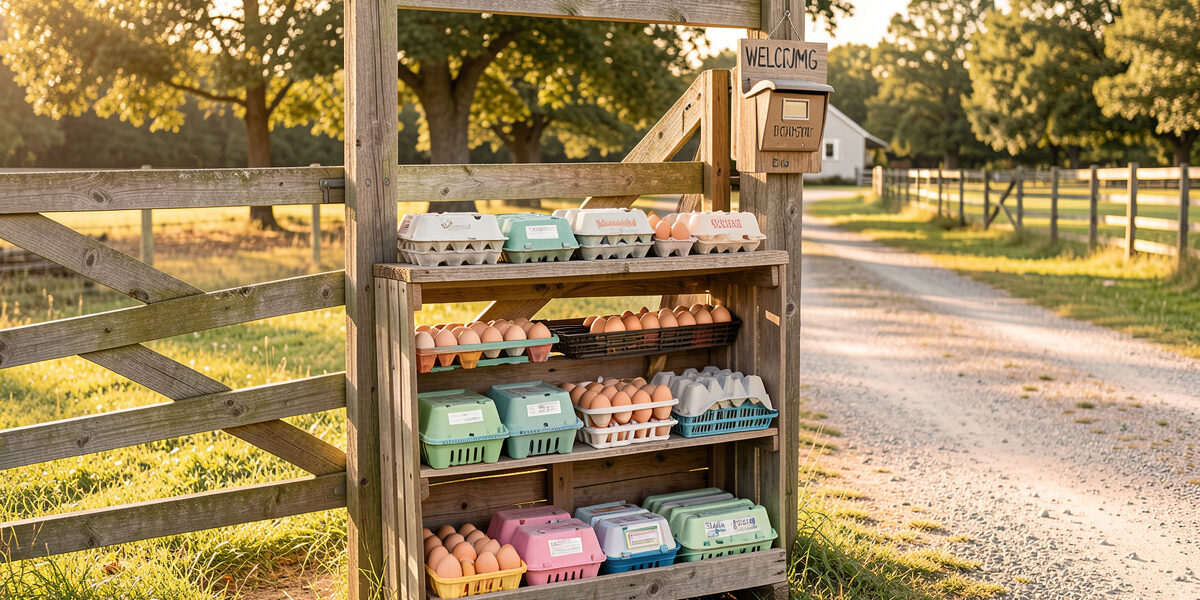
In most places, a small backyard keeper can legally sell ungraded eggs directly to consumers — at the farm gate, to neighbors, or to coworkers — with little or no licensing. The rules tighten fast once you sell at farmers markets or stores, scale past a few dozen hens, or make grading claims. The catch: egg-selling law is genuinely jurisdiction-specific, so the only universal advice is to verify your own.
I keep a flock in Sweden, but I’ve researched these rules across enough regions to know one thing for certain: there is no single correct answer, and anyone who confidently quotes you “the law” without asking where you live is guessing. What I can give you is the framework every jurisdiction shares, the thresholds that usually trigger more regulation, and exactly who to ask. This sits inside the broader complete guide to selling backyard eggs; here we go deep on the legal layer.
The One Rule That Applies Everywhere
Before any specific regulation, every jurisdiction agrees on one principle: eggs are a perishable food, and you are responsible for selling them safely. Even where small sellers are formally exempt from licensing, that exemption does not exempt you from selling clean, cool, accurately labeled eggs. The exemptions exist because small-scale, direct sales are low-risk, not because the eggs don’t matter.
That’s why the first step isn’t paperwork — it’s getting your handling right. Clean nesting boxes, correct washing only when needed, proper cooling, and honest labeling will satisfy the spirit of nearly every egg regulation on earth. Get the food-safety chain solid and the legal layer becomes mostly administrative. When I started handing eggs over the fence to neighbours, I deliberately got the handling right first — clean boxes, the wash-or-don’t decision made on purpose, eggs cooled and honestly dated — before I ever worried about a label format. Doing it in that order meant that by the time I read the actual rules, I was already most of the way compliant without changing a thing.
Who to Actually Ask
The single most useful action in this entire article: contact your state, provincial, or local department of agriculture before you sell. In the United States that’s your state Department of Agriculture (egg rules are set at the state level, not federal, for small producers); in the UK it’s your local authority and the relevant food standards body; in the EU, national competent authorities under shared egg-marketing regulations. A five-minute phone call or a search for “[your state] selling eggs regulations” gives you the real answer that no blog — including this one — can promise.
Ask three specific questions: Is there a flock-size or sales-volume exemption for small producers? What sales channels am I allowed to use without a license? And what is required on my label? Those three answers define your entire legal picture. Those are exactly the three questions I worked through for my own setup, and the honest takeaway was how fast a vague worry turned into a short, clear checklist once a real official answered instead of a forum thread. Five minutes with the right office is worth more than a week of reading other keepers argue past each other online.
How Federal Rules Fit In (US Example)
In the United States, federal egg-safety regulation through the FDA’s shell-egg rule (21 CFR Part 118) only applies to producers with 3,000 or more laying hens — a scale far beyond any backyard flock. That means as a small keeper you fall under state rules, which is why the answer varies so much from one state to the next. Some states explicitly exempt producers below a certain flock size or who sell only on-farm; others require a basic egg-handler license or registration even for small direct sales.
USDA grading (the AA/A/B grade shields you see on supermarket cartons) is a separate, voluntary federal program. You do not need to grade your eggs to sell them at a small scale — but if you don’t grade to the standard, your label generally must say the eggs are “ungraded,” and you can’t display official grade shields. Understanding the difference keeps your label honest; the mechanics are in the guide to grading backyard eggs.
Thresholds That Usually Trigger More Regulation
While specifics vary, the pattern of what escalates regulation is remarkably consistent across jurisdictions. Knowing these triggers tells you in advance when a phone call is overdue.
| Situation | Typical Regulatory Burden | Why It Escalates |
|---|---|---|
| Selling on-farm / at the gate | Lightest, often exempt | Direct, low-volume, buyer can see the source |
| Selling to neighbors / coworkers | Light, same as on-farm in most areas | Still direct-to-consumer |
| Farmers market stall | License, labeling, often refrigeration rules | Public venue, anonymous buyers |
| Selling to shops or restaurants | Heavy: grading, inspection, licensing | Resale, broader public exposure |
| Flock above the small-producer cap | Full commercial egg rules | Volume crosses the food-safety threshold |
| Claiming “organic,” “grade A,” etc. | Certification or standards compliance | Regulated marketing claims |
The throughline: the more anonymous your buyer and the larger your volume, the more the law wants to see. A dozen eggs handed to a neighbor is almost universally fine; a pallet to a grocery chain is a regulated business. Most backyard keepers live permanently in the first row of that table.
Labeling: The Most Common Compliance Miss
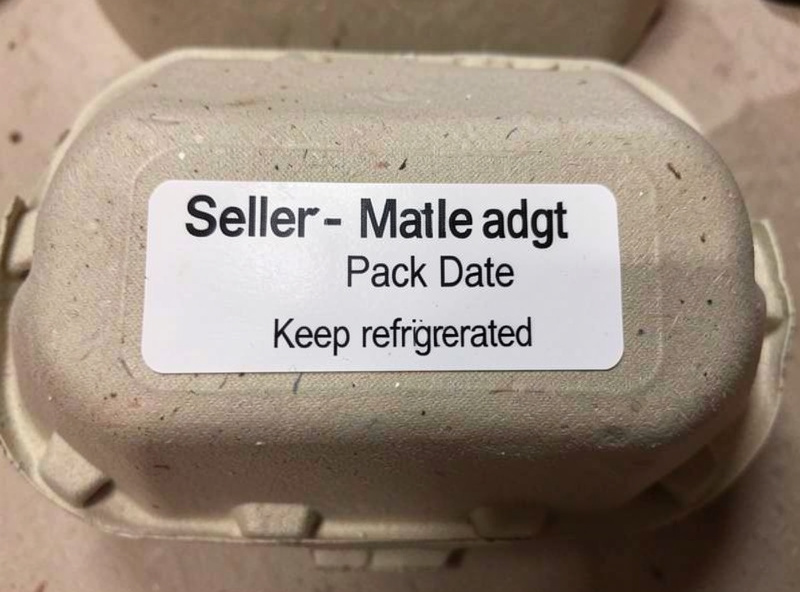
Labeling trips up more small sellers than licensing does, because it applies even to many exempt sellers. The widely shared requirements are a name and address (so a buyer can trace the source), a pack or lay date, and a “keep refrigerated” instruction where eggs are washed. Many regions also require an “ungraded” statement if you haven’t graded. Reusing branded supermarket cartons without removing the original branding is a labeling violation in many areas — the label must reflect your eggs, not someone else’s farm.
None of this requires a designer or a printer. A rubber stamp or a sheet of printed stickers on blank cartons covers it. The full breakdown of what goes on the label and where to source compliant cartons is in the guide to egg cartons and branding for sellers.
Refrigeration and the Wash Connection
Whether you must refrigerate for sale is often tied directly to whether you washed. In the US system, eggs are washed and then must be kept refrigerated; in much of Europe, unwashed eggs are legally sold at room temperature because the natural bloom is intact. For a small seller this is a genuine decision with legal weight: wash and you’re in the refrigerate-and-use-soon lane; keep them unwashed and you may have more flexibility, depending on where you live. Get the technique right either way using the guide to cleaning and washing fresh eggs, and store them correctly per the egg storage guide.
A Note on Income and Expectations
Keep the legal effort proportional to the reality: for a backyard flock, selling eggs offsets feed and carton costs, not much more. That framing also keeps you on the right side of the line — small, direct, hobby-scale sales are exactly what the light-touch exemptions are designed for. The moment you start thinking like a commercial egg business, the regulations that apply to commercial egg businesses start thinking about you. Stay small, stay direct, stay honest, and the legal picture stays simple. That is the lane I keep my own surplus in: a dozen to a neighbour, a few to a coworker, the cartons stamped and dated, and not a single regulator who has any reason to care. The day I would want a farmers-market stall is the day I would make the phone call first, not after.
Frequently Asked Questions
Is it legal to sell eggs from my backyard chickens?
In most places, yes, small direct-to-consumer sales at the farm gate or to neighbors are legal with little or no licensing. Rules tighten for farmers markets, retail, and larger flocks. Always confirm with your state or local department of agriculture first.
Do I need a license to sell eggs at a farmers market?
Usually yes. Selling at a public market typically triggers licensing, labeling, and sometimes refrigeration or grading requirements that do not apply to on-farm sales. The exact rules depend on your jurisdiction, so check before you book a stall.
How many chickens can I have before egg rules change?
It varies by jurisdiction. In the US, federal FDA egg-safety rules begin at 3,000 hens, far above backyard scale, but individual states set their own small-producer thresholds. Ask your state department of agriculture for the cap that applies to you.
What must I put on my egg carton label to sell legally?
Common requirements are your name and address, a pack or lay date, a keep-refrigerated note for washed eggs, and an ungraded statement if you have not graded. Requirements vary, and reusing branded store cartons is often prohibited.
Do I have to refrigerate eggs I sell?
It often depends on whether they are washed. Washed eggs generally must be refrigerated because washing removes the protective bloom. Unwashed eggs are legally sold at room temperature in many regions. Confirm your local rule before choosing a method.
Related Guides
Related Guides
Selling Backyard Eggs: The Complete Handling Guide
Yes, you can almost certainly sell backyard eggs from a small flock, but the rules, washing, grading, and cartoning all…
Egg-Bound Hen: Signs, Risk Factors, and Prevention
An egg-bound hen has an egg stuck in her oviduct that she cannot pass. It is a serious, time-sensitive situation…

Double-Yolk Eggs: Causes, Safety, and Hatching
A double-yolk egg happens when a hen releases two yolks close together and both get wrapped in one shell. It…